IIT Guwahati Develops Taro Plant-Based 'Zig-Zag' System To Treat Polluted Swine Wastewater At Decentralised Livestock Farms
IIT Guwahati researchers have developed a low-energy wastewater treatment system using taro plants and a zig-zag flow design to treat highly polluted swine wastewater. The nature-based technology could help decentralised pig farms manage nutrient-rich and pathogen-laden waste sustainably.

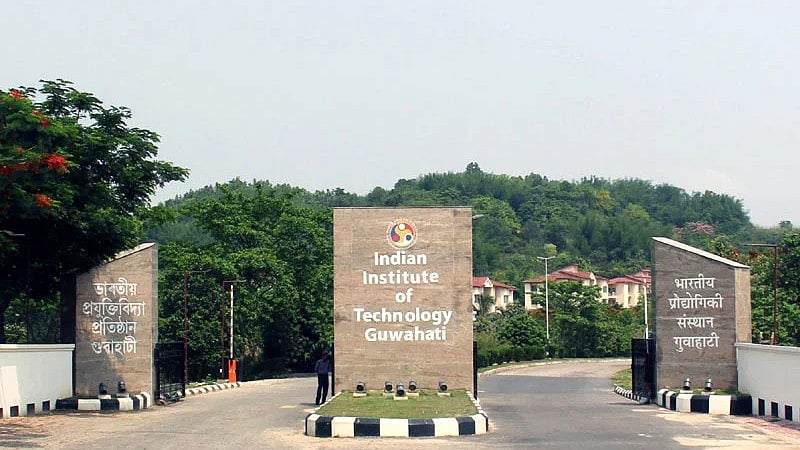
IIT Guwahati Develops Taro Plant-Based 'Zig-Zag' System To Treat Polluted Swine Wastewater At Decentralised Livestock Farms |
New Delhi: Researchers at the Indian Institute of Technology (IIT), Guwahati, have developed an innovative nature-based wastewater treatment system to treat highly polluted swine wastewater.
Also Watch:
This low-energy and compact technology uses taro plants (Colocasia esculenta) and an engineered "zig-zag flow" design. The new technology offers a promising solution for decentralised livestock farms, particularly in rural and resource-limited regions where conventional wastewater infrastructure is often impractical, the institute said.
The findings of the research have been published in the Journal of Environmental Management, a peer-reviewed international journal published by Elsevier that focuses on environmental sustainability, natural resource management and related topics.
According to Ajay S Kalamdhad, Professor at Department of Civil Engineering, IIT Guwahati, the research intends to address a fastest-growing environmental challenge arising from expanding livestock production, which is the safe management of nutrient-rich and pathogen-laden piggery wastewater before it enters rivers, lakes and agricultural ecosystems.
ALSO READ
Piggery wastewater is the liquid waste generated from pig (swine) farming operations, consisting of a mixture of pig manure, urine, wash water used to clean pens, leftover feed, and sometimes staff domestic sewage.
Swine wastewater used in the experiments was sourced from ICAR-National Research Centre on Pig (ICAR-NRCP), Assam, under an R&D collaboration with IIT Guwahati.
"The study demonstrates how engineering innovation can boost the performance of natural wetland treatment systems. Beyond piggery wastewater, the engineered wetland concept could be adapted for other decentralised agricultural and rural wastewater treatment applications, contributing to cleaner water bodies, reduced nutrient pollution and improved environmental sustainability," Kalamdhad said in a statement.
ALSO READ
The research team's next objective is to scale the laboratory-scale innovation for long-term field validation, with the vision of making sustainable, low-cost wastewater treatment accessible to decentralised livestock farming systems across India.
Monish Goswami, PhD Scholar, IIT Guwahati, informed that unlike conventional constructed wetlands where wastewater flows directly through the treatment bed, this system incorporates "internal baffles" (built-in partitions) that force wastewater to travel along a longer zig-zag pathway and undergo aerobic-anoxic transitions.
"This increases the contact time between wastewater, plant roots, beneficial microorganisms and gravel media, allowing multiple biological and chemical treatment processes to occur more efficiently. The technology has significant potential for decentralised livestock wastewater management, especially for small and medium-sized pig farms located away from centralised treatment facilities," Goswami said.
(Except for the headline, this article has not been edited by FPJ's editorial team and is auto-generated from an agency feed.)
RECENT STORIES
-
-
-
-
-