India Can Become Global AI Use-Case Capital, Not Just Chip Hub: Nandan Nilekani
Infosys co-founder Nandan Nilekani said India’s AI opportunity lies in developing real-world applications rather than competing with global players in advanced chips and large language models. He highlighted India’s digital public infrastructure, multilingual capabilities and small businesses as key drivers for scaling AI adoption across agriculture, healthcare and education

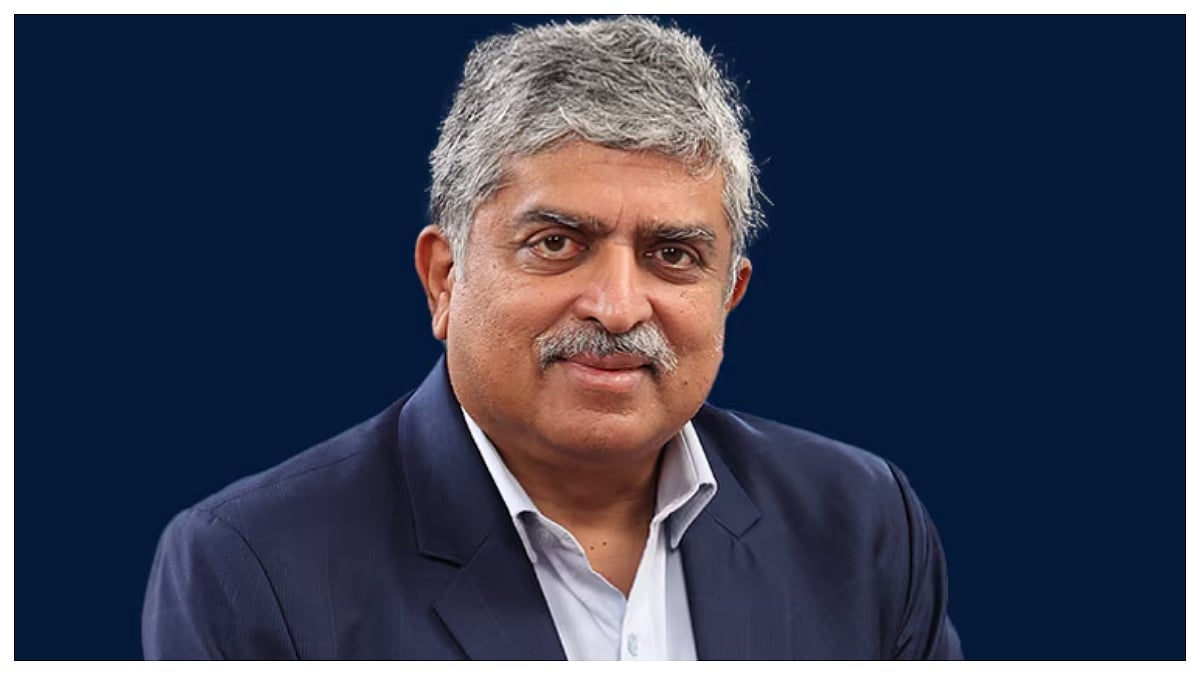
Infosys co-founder Nandan Nilekani has said India is well positioned to lead the next phase of the artificial intelligence (AI) revolution by focusing on practical applications of the technology rather than competing in the global race for advanced chips and large language models.
Speaking at the NCAER India Policy Forum 2026, Nilekani said India could emerge as the world’s “AI use-case capital” by deploying AI solutions at population scale across sectors such as agriculture, healthcare and education.
ALSO READ
India’s AI Opportunity Lies In Applications And Accessibility
Nilekani said while Western countries are largely focused on AI infrastructure, including bigger models, more computing power and data centres, such infrastructure will eventually become a commodity.
According to him, the greater value will shift towards the application layer, where India has a significant advantage.
He highlighted the success of India’s digital public infrastructure (DPI) as a model for AI adoption, saying technology should be designed to benefit citizens at a massive scale rather than only serve businesses.
Nilekani stressed that AI systems in India must be built around local requirements, including Indian languages and voice-based interactions.
He said AI should focus on solving everyday challenges, including improving agricultural productivity, strengthening healthcare services and enhancing education outcomes.
Small Businesses Could Drive AI-Era Employment
Nilekani also discussed the impact of AI on jobs, arguing that employment opportunities in the AI era may emerge from millions of small enterprises rather than large corporations.
He said large companies with highly structured workflows could face greater automation risks, while smaller businesses often involve employees handling multiple responsibilities, making them more adaptable to AI adoption.
“We have to rethink how jobs get created,” Nilekani said, suggesting that future employment could come from “a million companies employing one person each” rather than a few large companies hiring millions.
RECENT STORIES
-
-
-
-
-