EPF Rule Change Ahead? Mandatory PF May Stay Capped At ₹1,800, What It Could Mean For Salaried Employees
The new EPF Scheme 2026 may cap mandatory provident fund contributions at Rs 1,800 each from employer and employee, based on the Rs 15,000 wage ceiling. Higher contributions may continue only if both sides agree, raising questions for high-salaried employees and employers.

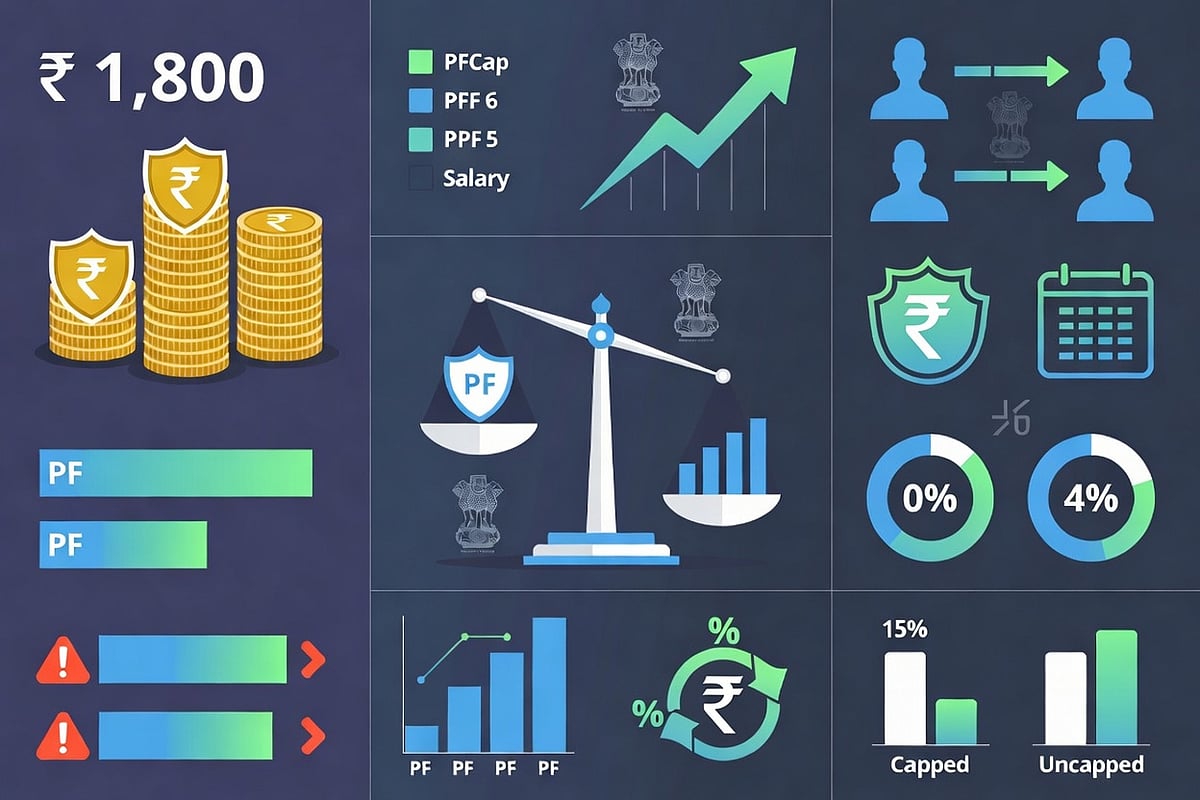
The new EPF Scheme 2026 may cap mandatory provident fund contributions at Rs 1,800 each from employer and employee. |
New Delhi: The Centre has notified the new EPF Scheme 2026 under the Code on Social Security, 2020. This replaces the older EPF Scheme, 1952 and could change how provident fund contributions are calculated for many salaried employees.
Under the revised rules, mandatory EPF contribution remains linked to the statutory wage ceiling of Rs 15,000 per month.
Since EPF contribution is 12 percent of wages, both employee and employer may now be required to contribute only Rs 1,800 each per month as a mandatory amount.
ALSO READ
Earlier Practice
Under the old system, the Rs 15,000 wage ceiling mainly decided whether an employee had to be covered under EPFO.
However, many companies continued calculating EPF contributions on actual basic salary, even when salaries were much higher than Rs 15,000.
For example, if an employee had a basic salary of Rs 50,000, both employer and employee often contributed 12 percent on the full salary. This helped build a much larger retirement corpus over time.
ALSO READ
New Rule Explained
The new scheme makes the contribution rule more explicit.
It says that EPF contributions will be subject to the wage ceiling notified by the Central Government. If wages are above the ceiling, contributions 'shall be limited' to the amount payable on the wage ceiling.
This means the mandatory contribution may remain capped at Rs 1,800 each unless both employer and employee agree otherwise.
What Happens To Higher Contributions?
Higher PF contributions are not banned.
Employees can still choose voluntary provident fund contributions, and employers can also continue contributing on higher salaries if both sides agree.
But the key difference is that contributions above the wage ceiling may no longer happen automatically.
ALSO READ
Why It Matters?
This change could significantly affect high-salaried employees who currently receive PF contributions on full salaries.
If companies shift to the minimum mandatory limit, monthly PF savings could fall sharply.
For employers, however, the new structure may reduce payroll costs and simplify compliance. The Labour Ministry is yet to clarify how existing higher-contribution employees will be treated.
RECENT STORIES
-
-
-
-
-