Pentagon Flags China's Claim Over Arunachal Pradesh As 'Core Interest'
A Pentagon report to the US Congress flags China’s claim over Arunachal Pradesh as a “core interest,” highlighting the fragility of India-China ties. It says Beijing has expanded its core interests to include contested territories under its 2049 national rejuvenation strategy, backed by military power, while India continues a pragmatic engagement despite disputes.

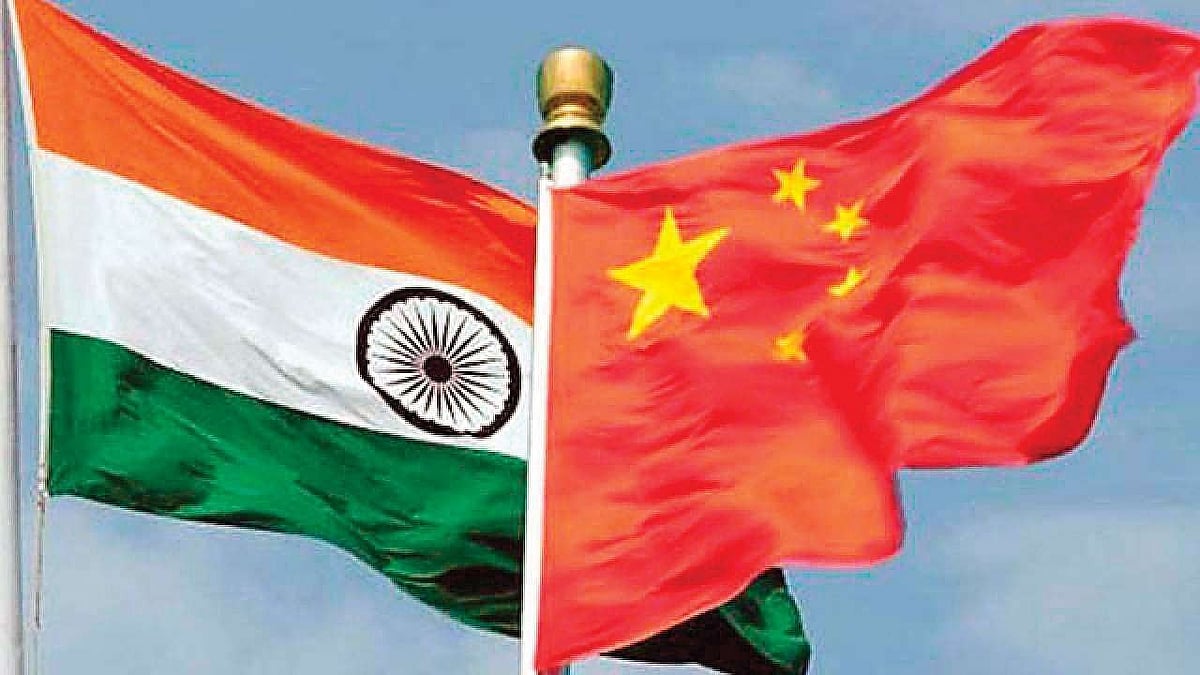
Pentagon Flags China's Claim Over Arunachal Pradesh As 'Core Interest' | File
Mumbai: A recent Pentagon report submitted to the US Congress has underscored the fragility of India-China ties by explicitly flagging China’s claim over Arunachal Pradesh as part of Beijing’s stated “core interests”, placing it within a broader national strategy aimed at achieving the “great rejuvenation of the Chinese nation” by 2049.
Details
The assessment, titled Military and Security Developments Involving the People’s Republic of China, notes that China’s leadership has expanded scope of its core interests to include contested territories and maritime claims. These now encompass Taiwan, sovereignty disputes in the South China Sea, the Senkaku Islands, and Arunachal Pradesh. According to the report, Chinese officials have repeatedly described unification with contested territories — particularly Taiwan — as a “natural requirement” for national rejuvenation.
Under this strategic vision, the report says, a rejuvenated China would operate at a new global level, backed by a “world-class” military capable of “fight and win” operations, while resolutely safeguarding what Beijing defines as its sovereignty, security and development interests. It identifies three pillars that China considers nonnegotiable: the control of the Chinese Communist Party (CCP), the promotion of sustained economic development, and the defence and expansion of territorial claims.
The document also highlights the political sensitivity surrounding these priorities. It notes that the CCP remains acutely alert to any perceived threats to its authority, whether external pressure or domestic criticism suggesting that the party is failing to protect Chinese interests. As a result, unfriendly political voices in Hong Kong, Xinjiang and Tibet, along with political leadership in Taiwan, are routinely labelled as separatist elements allegedly influenced by “external forces”, which Beijing views as unacceptable challenges to its legitimacy.
Commenting on the Pentagon’s findings, former diplomat KP Fabian said China’s view of Arunachal Pradesh as part of its territorial outlook linked to Tibet was neither surprising nor new. “The Pentagon is right in the sense that China sees Arunachal Pradesh as one of the five fingers of Tibet,” Fabian said in an interview to ANI news agency, placing this perception in a historical context that predates the current Chinese leadership. He argued that such thinking reflects a long-standing expansionist approach and a lack of respect for India’s territorial integrity.
At the same time, Fabian underlined that India has continued to pursue a pragmatic course. He said New Delhi has sought to maintain workable relations with Beijing, particularly in areas such as trade and investment, despite fundamental disagreements over territory. “I don’t think the Pentagon is telling us anything we did not already know,” he remarked.
RECENT STORIES
-
-
-
-
-