Noble Prize Day 2025: Here's List Of Indians Who Received The Peace Award; Know Their Contributions, Achievement & More
Alfred Nobel, also known as Alfred Bernhard Nobel, was a Swedish chemist, inventor, engineer, and businessman. He is known for inventing the Nobel Peace Prize. Mr Alfred was born in the prominent Nobel family in the capital of Sweden, Stockholm.

Noble Prize Day 2025 | Pinterest
The Nobel Prizes are the most prestigious international awards that Alfred Nobel established. It is an annual award for those who have done the most for fraternity and the abolition of war over peace in the world. The Nobel Peace Prize is one of the five Nobel Prizes that were established by Alfred Nobel. He was from Sweden, who was also an industrialist, inventor, and armaments manufacturer. As of late 2025, there have been over 1,000 Nobel Prize laureates (individuals and organisations) receiving awards across Physics, Chemistry, Medicine, Literature, Peace, and Economics. IIn this article, we will discuss which Indian received the peace award and what their contributions were.
Who was Alfred Nobel?
Alfred Nobel, also known as Alfred Bernhard Nobel, was a Swedish chemist, inventor, engineer, and businessman. He is known for inventing the Nobel Peace Prize. Mr Alfred was born in the prominent Nobel family in the capital of Sweden, Stockholm. He was a very enthusiastic person who always loved to learn new things and was always keen towards studies, especially inclined towards Chemistry and languages. His curiosity made him learn numerous languages, including Swedish, English, Italian, Russian, and French. Mastering these languages through private tutoring generated curiosity in him to write poetry in English and manage his international explosive business.
Other inventions of Alfred Nobel
Alfred Nobel's most famous invention includes inventing dynamite in 1867, but his other inventions include a blasting gelatin, a more powerful form of dynamite, also known as jelly. It is an explosive material consisting of collodion-cotton (a type of nitrocellulose or guncotton) dissolved in either nitroglycerine or nitroglycol and mixed with wood pulp and saltpeter (sodium nitrate or potassium nitrate). He also invented Ballistite, A type of smokeless powder and the first double-base propellant. Later, the Italian army adopted and replaced it with black powder ammunition, or simply gunpowder. Beyond explosive, he also invented leather and artificial silk.
Indian laureate who received Noble Prize
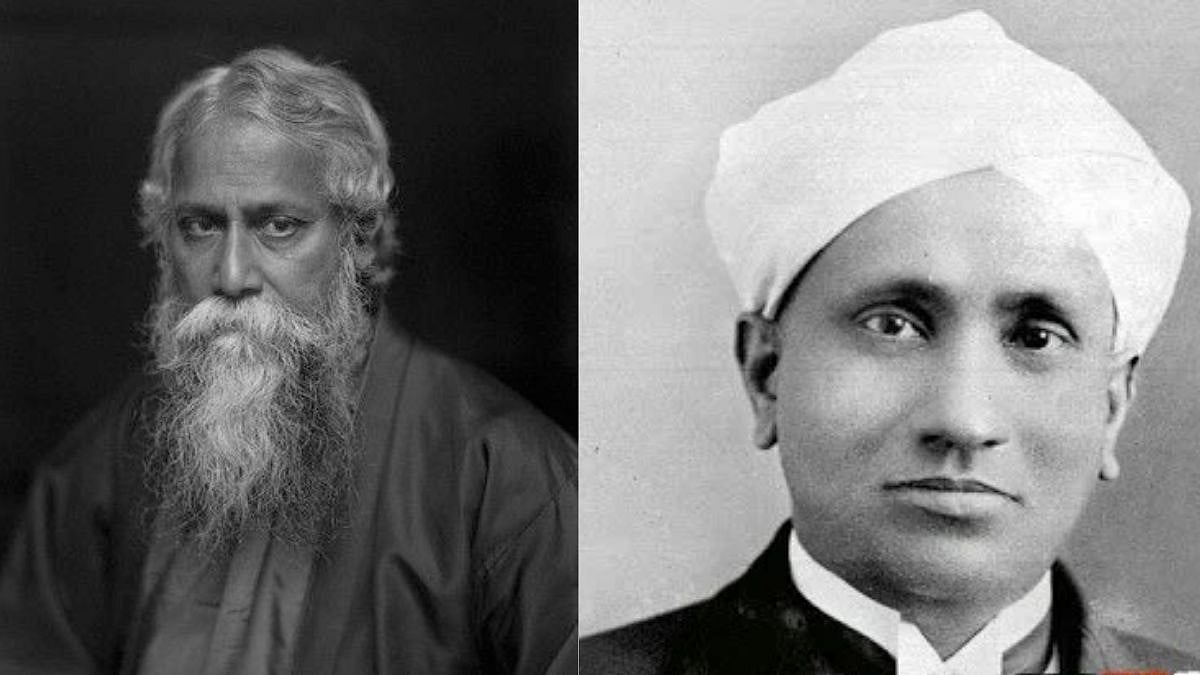
Rabindranath Tagore was honoured with the Nobel Prize in 1913. He received the award in the category of literature. Rabindranath Tagore was a Bengali polymath who significantly contributed to literature, music, and art, which shaped India's literature. The brilliant Indian poet was born in the Jorasanko mansion in Calcutta, and he died on August 7, 1941. He is known for his beautiful poetry, novels, and plays. He was the first Asian to win the Nobel Prize in Literature. Tagore also composed the national anthems of India (Jana Gana Mana) and Bangladesh (Amar Shonar Bangla).
CV Raman- A physicist who received Noble Prize
Sir Chandrasekhara Venkata Raman was a scientist who won the Nobel Prize in 1930 for his contributions to science. He was the first Asian and also the first person of colour to receive the award. He got the Nobel Prize for the discovery of the Raman effect. He was also awarded the highest civilian honour, Bharat Ratna in 1934. Sir CV Raman received the Nobel Peace Prize for his invention of the Raman Effect. It is a phenomenon where light's frequency changes after interacting with molecules.
Kailash Satyarthi- A social reformer
Kailash Satyarthi was awarded the Nobel Peace Prize in 2014, sharing the honor with Pakistani activist Malala Yousafzai for their efforts against child exploitation and in support of children's right to education. Satyarthi is a prominent Indian activist and a leading voice in the global fight for children's rights. He is recognised for his fearless advocacy and influential policy work.
Amartya Sen
Amarteya Sen is an Indian philosopher and economist. He was born on November 3, 1933, in Shantiniketan, West Bengal. Sen received the Nobel Prize in Economic Sciences in 1998 for his work in welfare economics, which includes contributions to social choice theory, poverty, and famine studies. His work bridges economics with ethics, focusing on concepts like human freedom, justice, and equality.
Har Gobind Khorana
He was a biochemist of Indian-American origin. While serving on the faculty at the University of Wisconsin–Madison, he jointly received the 1968 Nobel Prize for Physiology or Medicine along with Marshall W. Nirenberg.
RECENT STORIES
-
-
-
-
-