UP CM Yogi Adityanath Highlights Theatre’s Role In Shaping Society At Golden Jubilee Festival
Chief Minister Yogi inaugurated the Golden Jubilee Theatre Festival at the Bharatendu Natya Academy, scheduled from April 5 to April 12, on Sunday. During the event, he shared several inspiring thoughts while also reflecting on challenges and concerns.

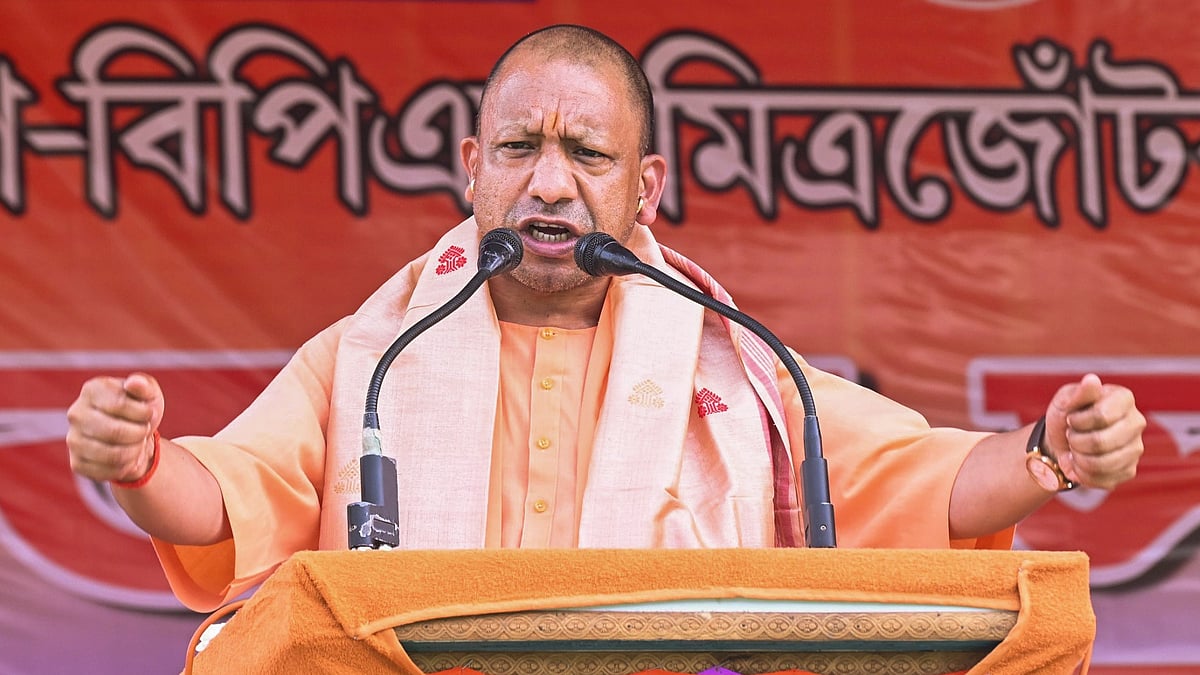
UP Chief Minister Yogi Adityanath | ANI
Lucknow: Chief Minister Yogi Adityanath said, “Theatre is the mirror of society and plays an important role in shaping its direction.” According to him, theatre is the space where emotions turn into words, words become performance, and performance transforms into public awareness that guides society toward a new direction.
He urged the Department of Culture and the Academy to move forward by connecting both the old and new generations, emphasizing that meaningful results will follow from such efforts. He encouraged the creation of plays centered on patriotism, with powerful dialogues, music, scripts, and carefully chosen words and sentence structures that attract audiences, as such cultural programs help unite society.
Chief Minister Yogi inaugurated the Golden Jubilee Theatre Festival at the Bharatendu Natya Academy, scheduled from April 5 to April 12, on Sunday. During the event, he shared several inspiring thoughts while also reflecting on challenges and concerns.
Responding to requests made by the Academy’s chairman, CM Yogi assured government support. He directed the Additional Chief Secretary to construct a hostel and hand it over to the Academy so that it can operate within the institution itself.
The Department of Culture will also move forward with other proposals. CM Yogi also congratulated Dr. Anil Rastogi on receiving the Padma Award. He noted that even in 1976, when the country was going through the Emergency, the Bharatendu Natya Academy continued running its academic programs.
Chief Minister Yogi Adityanath praised the artists who performed a theatrical presentation based on the novel “Anandamath”. He said the song “Vande Mataram” highlights the importance of patriotism and self-rule.
Referring to history, he said, “The British administration had treated the Bengal famine lightly, while people were dying of hunger and suffering from the Spanish Flu. Despite this, the colonial government remained indifferent.”
He pointed out that the 1921 Census data were shocking, as India’s population declined during that decade instead of increasing. In a country with a population of less than 30 crore at the time, more than 3 crore people died due to the Spanish Flu, while the colonial government continued to impose taxes, exploitation, and oppression.
Referring to the COVID-19 pandemic, CM Yogi highlighted the government’s positive and sensitive approach, saying that when a government works with compassion, it can even overcome a disease through collective effort. He said Bankim Chandra Chattopadhyay wrote Anandamath to depict the suffering during the Bengal famine.
CM Yogi said that celebrations are being held across the country to mark 150 years of “Vande Mataram.” He suggested that the Bharatendu Natya Academy should stage its performance in every district, extending it from a 15-minute presentation to a two-hour production so people can understand the cruelty and tragedy of that era.
He said, “Society often hesitates to honor its true heroes. As a result, there was a time when institutions were influenced by people who portrayed professional criminals and mafias as heroes while presenting real heroes of society as villains. This trend eventually influenced social character and values.”
Chief Minister Yogi Adityanath said that when cinema and theatre present positive content, society embraces it. He cited the Ramayana television series as one of the most popular shows in the world, reflecting the emotional and cultural connection people have with it. Indian society, he said, knows how to respect its traditions, culture, and heritage.
He also praised the theatrical production “Samrat Vikramaditya” prepared by the Madhya Pradesh government, which he recently watched in Varanasi. He suggested starting local theatre series inspired by heroes such as Maharaja Suheldev, Rani Lakshmibai, Maharaja Mahendra Pratap Singh, and the heroes of the First War of Independence of 1857, encouraging artists to develop impactful scripts and performances that attract audiences and strengthen social unity.
CM Yogi said, “While epics like the Ramayana and Mahabharata are deeply integrated into India’s cultural life, many other heroes remain neglected.” He encouraged schools and colleges to present stories of Rani Lakshmibai and Maharaja Suheldev through theatre.
Referring to events from around a thousand years ago, he spoke about the valor of Maharaja Suheldev and said that after Suheldev defeated Salar Masud, foreign invaders did not dare attack India for nearly 150 years. However, society later forgot his contribution.
He noted that earlier a fair used to be held in the name of Salar Masud at the site where Suheldev defeated him, while Suheldev himself was rarely remembered. Recalling his time as Member of Parliament from Gorakhpur, he said he attended the Suheldev victory celebration in Bahraich despite attempts to stop him administratively. Today, he said, crowds no longer gather for Salar Masud but instead visit Maharaja Suheldev’s memorial.
Chief Minister narrated stories of several heroes and heroines such as Veerangana Avantibai, Jhalkari Bai, Uda Devi, Maharaj Bijli Pasi, Pandit Ram Prasad Bismil, Thakur Roshan Singh, and Chandrashekhar Azad. He said, “It is the responsibility of theatre academies to create short plays about such personalities.”
He pointed out that society remembers these heroes briefly on special occasions but soon forgets them again. Those who tried to destroy India’s culture, he said, should never be honored.
While Bankim Chandra Chattopadhyay portrayed the Bengal tragedy through Anandamath, no writer emerged to similarly highlight the legacy of Suheldev. He added that although poetry recitations about Rani Lakshmibai exist, theatre could present her story even more powerfully.
CM Yogi said Bharatendu Harishchandra was the pioneer of modern Hindi. The Kashi Nagari Pracharini Sabha played a crucial role in promoting the Hindi language and awakening public consciousness through literature.
He noted that Bharatendu’s play “Andher Nagari” (1881) reflected the insensitivity of British rule, while his earlier play “Bharat Durdasha” (1875) highlighted the suffering of the nation. Plays such as “Skandagupta” (1928) and “Chandragupta” (1931) by Jaishankar Prasad also helped awaken cultural nationalism during colonial times.
Chief Minister Yogi said, “Uttar Pradesh has always been rich in artistic traditions such as singing, instrumental music, theatre, and dance.” He mentioned that the government has built an auditorium for artists in Gorakhpur. He also recalled how a group of artists had been performing plays under a banyan tree near Carmel School since 1975, continuing their weekly performances through all seasons.
Referring to Hariharpur village in Azamgarh, he said that people from children to elders are connected with music there, and the government has established a music school in the village. In Maghar, the Kabir Academy has been established, where programs based on Kabir’s couplets (Sakhi) should be organized.
He also emphasized the importance of research and said the department’s role is not merely administrative but to preserve and expand cultural heritage for future generations.
CM Yogi said he often quotes lines from Ramdhari Singh Dinkar in legislative discussions. Dinkar’s famous line “Singhasan khali karo, janata aati hai” became a powerful voice of public awakening during the Emergency.
He announced that a three-day event based on the works of the national poet Ramdhari Singh Dinkar will be organized in Lucknow starting April 24. He also suggested organizing a theatre program based on the literary works of Atal Bihari Vajpayee, adding that the country possesses a rich cultural legacy and must focus on preparing the younger generation to carry it forward.
CM Yogi Adityanath also highlighted Bharatendu Harishchandra’s emphasis on native language and dialects, noting his invaluable contribution to Hindi and Khari Boli. When inspired spiritually, Tulsidas composed the Ramcharitmanas in Awadhi, which continues to be revered in households across India.
ALSO READ
Sharing an anecdote from his visit to Mauritius, CM Yogi said, “People of Indian origin there preserve Ramcharitmanas as part of their cultural heritage and worship the Ramayana.”
Chief Minister said that along with celebrating Vande Mataram, efforts should be made to remember great personalities who were neglected due to political reasons. He said, “Figures such as Maharaja Suheldev, Bijli Pasi, and Rani Lakshmibai were often overlooked because of vote-bank politics.”
He emphasized the need to honor national heroes and heroines and suggested that schools and colleges should dedicate one day each week to cultural programs and folk arts.
The event began with a welcome address by Ratishankar Tripathi, Chairman of the Bharatendu Natya Academy.
Among those present were former Deputy Chief Minister and Rajya Sabha MP Dr. Dinesh Sharma, Tourism and Culture Minister Jaiveer Singh, Mayor Sushma Kharkwal, MLA Yogesh Shukla, Vice-Chancellor of Bhatkhande Culture University Prof. Mandavi Singh, along with several theatre artists, former students, and cultural personalities.
RECENT STORIES
-
-
-
-
-