Pune Metro Line 3 Explained: 6 Things That Make It Different From Other Metro Projects In India
Pune Metro Line 3 has moved closer to commercial operations after successfully completing end-to-end trial runs across its 23.3-km corridor. The metro will connect Hinjawadi IT Park with Shivajinagar in Pune city and is expected to halve travel time between the two locations

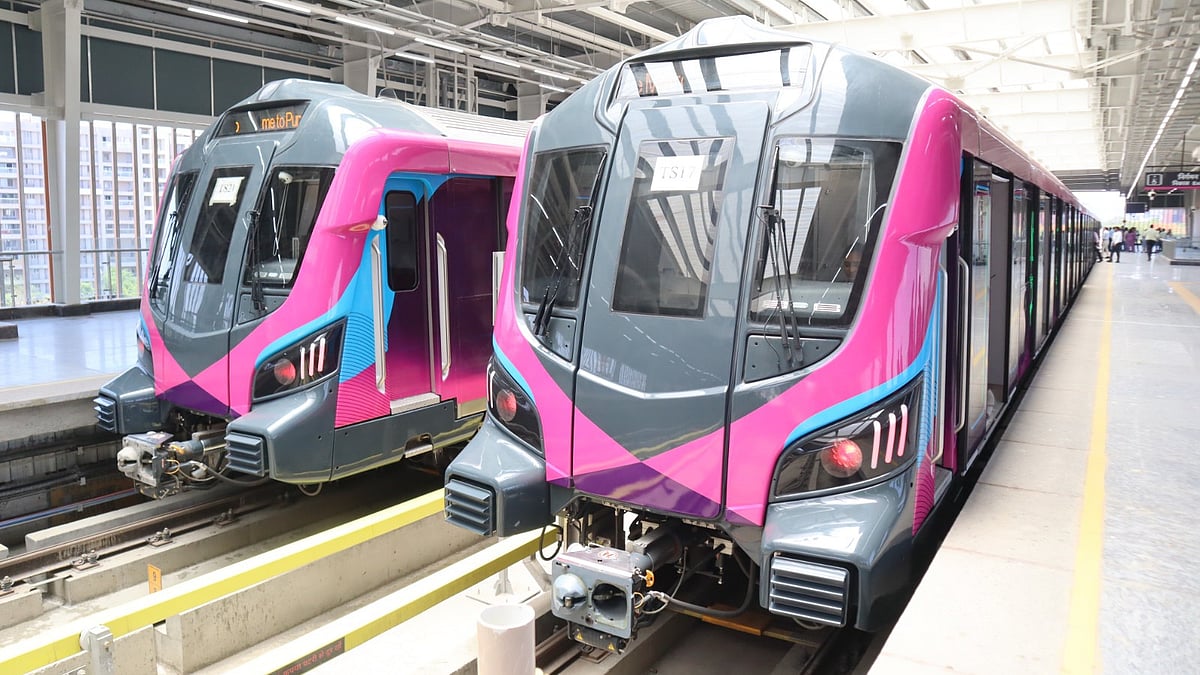
Pune Metro Line 3 (Hinjawadi-Shivajinagar Metro Line) | Anand Chaini
Pune: Pune Metro Line 3 has moved closer to commercial operations after successfully completing end-to-end trial runs across its 23.3-km corridor. The metro will connect Hinjawadi IT Park with Shivajinagar in Pune city and is expected to halve travel time between the two locations.
Beyond the faster commute, the project has several features that set it apart from many other metro systems in the country.
1) India’s First Metro Under the New Metro Rail Policy’s PPP Model: Pune Metro Line 3 is India’s first metro project to be developed under the Central Government’s New Metro Rail Policy of 2017 through the Public-Private Partnership (PPP) model. It is being executed on the Design-Build-Finance-Operate-Transfer (DBFOT) model by Pune IT City Metro Rail Limited (PITCMRL), a joint venture between Tata Group’s TRIL Urban Transport Pvt Ltd and Siemens Project Ventures GmbH.
2) India’s First Metro Built Primarily for an IT Corridor: Unlike most metro corridors that connect city centres with residential areas, Line 3 has been planned mainly to serve the Rajiv Gandhi Infotech Park in Hinjawadi. The corridor is expected to benefit more than one lakh IT professionals who travel daily between Pune city and the IT hub. The corridor is expected to transform daily commuting by providing a fast, reliable alternative to the heavily congested Hinjawadi route. It's speculated to reduce dependence on private vehicles and ease traffic on key roads such as the Mumbai–Bengaluru Highway and Baner Road.
3) Pune’s First Metro to Use Third-Rail Technology: The existing Maha Metro corridors in Pune draw power through overhead electric wires. Line 3 will become the city’s first metro to operate using a 750 V DC third-rail electrification system. It is also equipped with Communications-Based Train Control (CBTC), which allows trains to run more efficiently and safely. The third rail supplies electricity through a conductor placed alongside the tracks, so it eliminates the need for overhead wires. PITCMRL claims that this provides a cleaner visual profile and reduces infrastructure above the tracks. Officials said that this system is widely used in modern metro systems across the world because it is well-suited for high-frequency urban services.
4) An All-Women Train Operations Team: While several metro systems in India employ women as train operators, Pune Metro Line 3 stands out by creating an all-women cadre of train operators for the corridor. Operations and maintenance partner Keolis has recruited nearly 100 women train operators. This makes it one of the country's largest gender inclusion initiatives in urban rail operations. The move aims to promote greater female participation in technical and operational roles, which are traditionally dominated by men. Once services begin, Line 3 is expected to be among the first metro corridors in the country to be operated entirely by women train operators.
5) Direct Integration with Maha Metro
In its second phase, the corridor will extend to District Court station, where passengers can seamlessly interchange with Maha Metro’s Purple and Aqua Lines. This will connect the PMRDA metro network with Pune’s existing metro system without leaving the station. Officials said that once the project is complete, people from various parts of Pune and Pimpri-Chinchwad cities can come and go from Hinjawadi. They will be avoiding traffic congestion on busy routes -- one of the biggest concerns in the area.
6) Sustainability at the Core: The project includes rooftop solar panels, rainwater harvesting systems, EV charging points, solid waste management facilities and plans for better last-mile connectivity. These measures are aimed at reducing the environmental impact of the metro while encouraging commuters to shift from private vehicles to public transport.
What Happens Next?
The 23.3-km elevated corridor has 23 stations. The first phase will cover a 13.3-km stretch between Maan and the RK Laxman Museum with 12 stations. Passenger services are expected to begin after the required statutory approvals. Once the entire corridor opens, travel time between Shivajinagar and Hinjawadi is expected to reduce from around 90 minutes to about 45 minutes.
RECENT STORIES
-
-
-
-
-