Propylene Gas Leak Made Mumbai-Pune Expressway Tanker Operation Highly Hazardous: Expert
Damaged valves, high pressure and continuous leakage of flammable propylene gas made the removal of an overturned tanker on the Mumbai–Pune Expressway extremely hazardous, experts said. Gas concentration reached 20% of the lower explosive limit even 500 metres away, risking ignition. Traffic was hit for over 30 hours due to safety concerns.

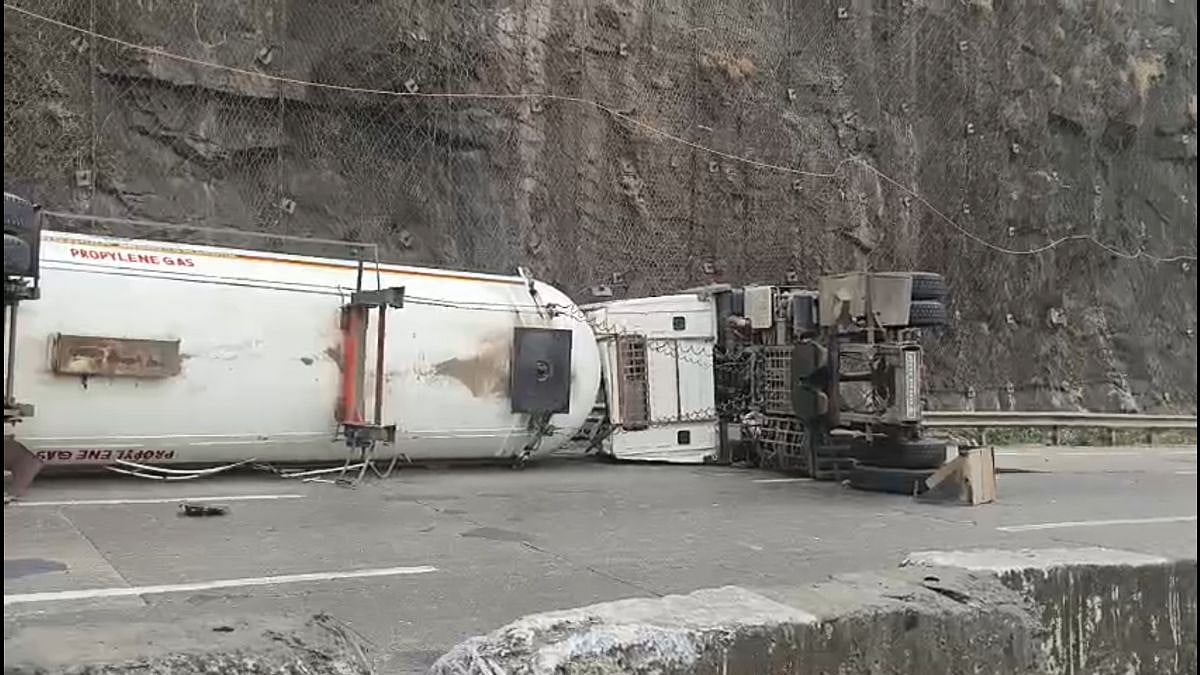
Damaged valves, the high internal pressure of inflammable propylene gas, and its continuous leakage made the removal of the gas from the overturned tanker on the Mumbai-Pune Expressway a very risky operation. | File Pic
Pune: Damaged valves, the high internal pressure of inflammable propylene gas, and its continuous leakage made the removal of the gas from the overturned tanker on the Mumbai-Pune Expressway a very risky operation, an expert said on Thursday.
The tanker accident on the expressway on Tuesday evening crippled the traffic for more than 30 hours.
The removal of the gas, carried out by an expert team of Mec Elec Industrial Services, ended at 1.30 am on Thursday.
"The removal of the overturned propylene gas tanker was a highly critical and hazardous operation, owing to severe valve damage, high internal pressure and the presence of flammable gas concentration in the surrounding area," said Dnyanesh Divekar, executive director of MEC ELEC.
ALSO READ
The accident site was close to the company's compressed gas tanker testing station. "Within an hour, the company's technical team reached the site and found that all three main valves on the tanker -- two liquid valves and one vapour valve -- had been damaged in the crash, resulting in continuous leakage of liquefied propylene gas," Divekar told PTI.
Propylene has a lower explosive limit (LEL) of just 2 per cent, meaning even a small concentration mixed with air can ignite, he said.
"At one point, gas concentration of up to 20 per cent of the LEL was detected even half a kilometre away from the site," Divekar said, adding that any spark from vehicle exhausts, mobile phones or electrical sources could have triggered a major disaster.
The efforts to plug the leaking valves initially met with limited success due to the tanker's high internal pressure, estimated at around 22 bar, nearly 1.5 times higher than LPG tankers.
ALSO READ
The expert team successfully stopped two of the leaks. But the third liquid valve was severely bent, with its handle jammed against the weld cap, rendering it inoperable while it continued to discharge liquid propylene.
"As no specialised rescue vehicle capable of handling propylene was available, the team decided to decant the gas by transferring it into empty propylene tankers, a risky process carried out under constant leakage and unstable valve conditions," said Divekar.
Over several hours, the product was transferred multiple times into different tankers to reduce the pressure inside the damaged tanker.
Once the gas level was sufficiently lowered, a `tandem crane lift' was executed to bring the tanker into an upright position.
Even after the tanker was moved away from the accident site around 1.30 am, traffic could not be immediately restored, Divekar said.
"The nearby tunnel had accumulated gas....Unlike open areas where gas dilutes quickly, a tunnel can retain flammable concentrations for a much longer time," he said.
Rescue agencies waited for gas levels inside the tunnel to fall below safe limits before allowing traffic to resume.
The tanker was later taken to MEC ELEC's testing facility at Khalapur for further pressure handling and investigation.
The company's technical team worked continuously for over 30 hours to complete the operation, said Divekar.
(Except for the headline, this article has not been edited by FPJ's editorial team and auto-generated from an agency feed.)
RECENT STORIES
-
-
-
-
-