96 Pune, 124 Mumbai Schools Among 2,003 Maharashtra Institutions Facing Notices Over Mandatory SQAAF Assessment
A total of 220 schools in Pune and Mumbai are among 2,003 Maharashtra institutions facing show-cause notices for failing to complete the mandatory SQAAF self-evaluation for 2025-26. Authorities are seeking explanations over possible discontinuation of RTE quota admissions and government grants.

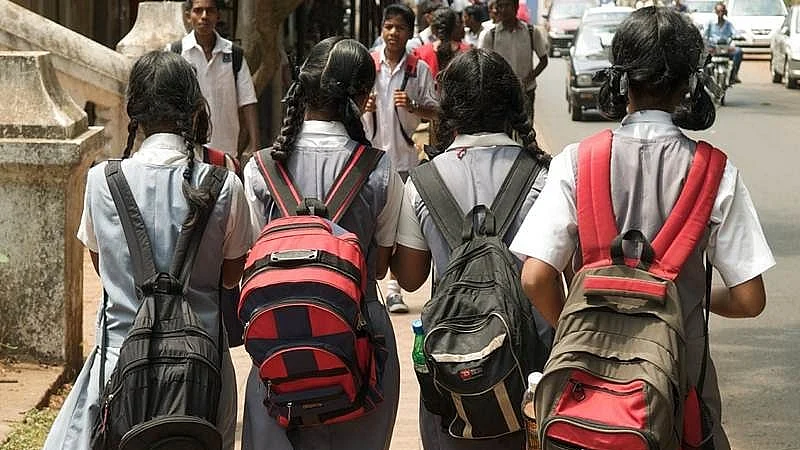
96 Pune, 124 Mumbai Schools Among 2,003 Maharashtra Institutions Facing Notices Over Mandatory SQAAF Assessment | File Pic (Representative image)
Pune: In both the major cities of Maharashtra state, 220 schools in Pune and Mumbai are among the 2,003 educational institutions across Maharashtra facing show-cause notices for failing to complete the mandatory School Quality Assessment and Assurance Framework (SQAAF) self-evaluation for the 2025-26 academic year, despite repeated reminders from the state education authorities.
Also Watch:
According to the district-wise list issued by the State Council of Educational Research and Training (SCERT), Pune has 96 schools on the list, while Mumbai has 124, comprising 20 schools in Mumbai City and 104 in Mumbai Suburban. The proposed action could have significant implications for schools, as the authorities have sought explanations on why their 25% admission quota under the Right to Education (RTE) Act and government grants should not be discontinued.
The assessment exercise was made mandatory for schools across all mediums and management categories in Maharashtra. SCERT had initially directed schools to complete their self-evaluation between March 16 and April 15, 2026. However, only 49,844 of the state’s 1,08,092 schools, or 46.11%, had completed the exercise by the initial deadline.
Following the poor response, the authorities extended the deadline to May 1, by which 96,640 schools (89.41%) had submitted their assessments. A further extension until May 15 resulted in 1,05,996 schools, or 98.15%, completing the process.
Despite these extensions, 2,003 schools failed to submit their self-evaluation data. Another 93 schools were found to be closed, taking the number of schools that had not completed the exercise to 2,096.
In Pune, the 96 schools listed belong to different administrative blocks, including Aundh, Bibwewadi, Haveli, Khed, Maval, Mulshi, Pune City and Yerawada, among others. The list includes both private educational institutions and municipal schools. Several recognised schools and junior colleges in the city also figure in the annexure.
Mumbai’s 124 schools are spread across different administrative units, including Parel, Dadar, Byculla, Borivali, Kandivali, Goregaon, Santacruz, Ghatkopar and Chembur. The list includes municipal schools, private institutions and special educational establishments.
ALSO READ
Explaining the proposed action, Kamaladevi Awate, Joint Director of SCERT, told The Free Press Journal, “ Earlier they were told several times to complete the process. After conducting several review meetings and assessments, now we need to know why so many schools have faltered. Hence, we have written to all education officers, both primary and secondary, to issue notices to schools asking for their explanation. Now the notice is served and when they submit the responses, these will be compiled and sent to us. Based on the replies, the competent authority will proceed with further action.”
The SCERT circular directs primary and secondary education officers to obtain explanations from the defaulting schools and submit reports to the council. The proposed action includes examining whether the schools should continue receiving government grants and admissions under the 25% RTE quota.
The exercise is intended to help schools assess their functioning and quality standards through a structured self-evaluation process. SCERT has also indicated that the portal for the 2026-27 academic year’s assessment will be opened shortly, with an expectation that all schools will participate.
RECENT STORIES
-
-
-
-
-