West Bengal Assembly Election 2026: Why Murshidabad Is The Most Sensitive District This Polling Day
As polling continues in Murshidabad today, the district remains on edge following early morning bombings in Nawda and reports of clashes, with widespread controversy over mass voter deletions and heightened security measures defining this critical first phase of the Bengal elections

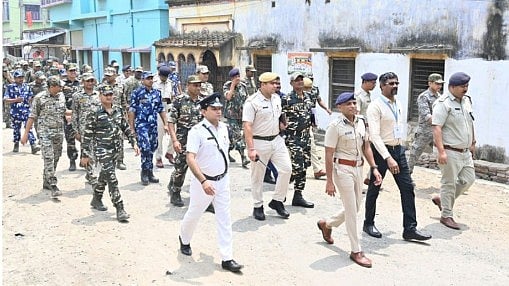
Murshidabad has always remained a polically sensitive area. | @SPMurshidabad
Murshidabad is currently the focal point of the first phase of the 2026 West Bengal Assembly elections, with polling underway today, April 23. The district has been gripped by a series of violent incidents and high-tension standoffs that have necessitated the deployment of massive central security forces. From midnight bombings to large-scale voter disenfranchisement, the region's "sensitive" status is being tested in real-time as millions head to the booths.
Why is Murshidabad making headlines on polling day?
As of the morning of April 23, Murshidabad has already reported multiple security breaches. In the Nawda constituency, a late-night bombing occurred in the Shibnagar area, with crude bombs exploding just 50 metres from a designated polling station at Shibnagar Primary School. Reports from India Today confirm that at least one woman was injured in the blasts, which local leaders claim were intended to intimidate voters before the booths opened.
Simultaneously, the Domkal block has become a flashpoint for political clashes. Fighting between Trinamool Congress (TMC) and CPM supporters late last night left four people injured, one of whom remains in critical condition. In response to these incidents, the Election Commission has activated Quick Reaction Teams (QRTs) and increased patrolling across the district's rural belts to prevent a complete breakdown of law and order during the voting hours.
Understanding Murshidabad electorate
The scale of the electorate in Murshidabad district makes it one of the most significant administrative challenges for the Election Commission. Following the recent Special Intensive Revision (SIR), the district now encompasses 22 assembly constituencies.
***
Also Read:
West Bengal Assembly Polls: EVM Glitches & Violence Disrupt Phase 1 Voting, Amid Heavy Security
West Bengal Assembly Polls Begin With 18.76% Turnout In First Two Hours Amid Tight Security
***
For the specific Murshidabad assembly seat (Constituency No. 64), the number of registered electors stands at approximately 268,221. This reflects a slight growth from the 255,552 voters recorded during the 2019 parliamentary elections, despite the deletion of over 4.5 lakh names across the wider district.
The sheer volume of voters, combined with a history of turnouts exceeding 85 per cent, means that even minor fluctuations in voter lists can dramatically alter the political terrain of the entire state.
While the Election Commission maintains these deletions were across all communities, nearly 34 per cent of the 90 lakh total deletions in West Bengal impacted Muslim voters—a figure higher than their 27 per cent share of the state's total population.
Impact of minority vote
The demographic profile of Murshidabad is a cornerstone of its political sensitivity, characterised by a substantial minority presence. In the district as a whole, Muslim voters constitute approximately 66 per cent of the population, a figure that often rises to over 80 per cent in specific border constituencies. However, this demographic dominance has become the epicentre of the current election controversy.
What is the controversy surrounding the voter lists?
The primary driver of the current tension is the SIR of electoral rolls conducted earlier this year. Murshidabad recorded the highest number of voter deletions in the entire state. In the Shamsherganj constituency alone, nearly 75,000 names were struck off the list out of roughly 108,000 under review.
According to data from the Election Commission, these deletions have sparked widespread protests because they reportedly disproportionately affect Muslim-dominated areas. While the Commission attributes the removals to "logical discrepancies" and the removal of duplicate or deceased entries, many residents view the move as a systematic attempt at disenfranchisement.
How demographics and history influence the risk
Murshidabad is one of the most demographically complex districts in India. Its proximity to the Bangladesh border makes it a frequent target of political rhetoric regarding "infiltrators" and national security. This has created a polarised environment where the BJP argues for "purifying" the voter list, while the TMC and Congress characterise the exercise as a threat to legitimate citizens.
The district is also known for its historically high civic engagement. In the 2019 Parliament election, voter turnout reached a staggering 85.27 per cent. This high level of participation, combined with recent communal tensions following the 2025 Waqf Act protests, has led the Election Commission to designate hundreds of booths as "super-sensitive." The high stakes of these elections mean that even a minor local dispute can quickly escalate into a larger conflict.
What is being done to secure the vote?
To manage the volatility, the Election Commission has deployed over 2,400 companies of Central Armed Police Forces (CAPF) across the 152 constituencies voting today, with a significant concentration in Murshidabad. Drones and webcasting are being used in almost all "critical" booths to monitor for booth capturing or intimidation.
The poll panel has also established a dedicated toll-free complaint line to handle reports of threats, which have already begun surfacing in areas like Domkal, where voters have alleged they were warned against going to the polls. Despite the heavy security presence, the early morning violence in Nawda and Domkal highlights the immense challenge of maintaining peace in a district where political margins are thin and the climate of fear is thick.
Who are the key players in this battle?
The electoral battle in Murshidabad is not just about political ideology but also about economic survival and identity. The district's "beedi belt" features some of the wealthiest candidates in the state, including TMC’s Jakir Hossain, who has assets worth over Rs133 crore, competing for the votes of some of the state's poorest workers
This economic disparity, coupled with the existential fear surrounding the voter deletions, has made the 2026 poll a definitive moment for the region. As the day progresses, the turnout in these "deleted" pockets will be the ultimate indicator of whether the security measures and the "voter purification" exercise have impacted the democratic process.
RECENT STORIES
-
-
-
-
-