Sanskrit Revival Mission: How Samaskaar Bharti Is Making India’s Ancient Language A Daily Conversational Medium
I was introduced to the language through my parents, when they asked me to learn slokas and explained the meaning. This generated a lot of interest in me. Similarly, everyone should be first exposed to the language, and put forth the idea that they can speak the language then it is upto them whether to learn or not.

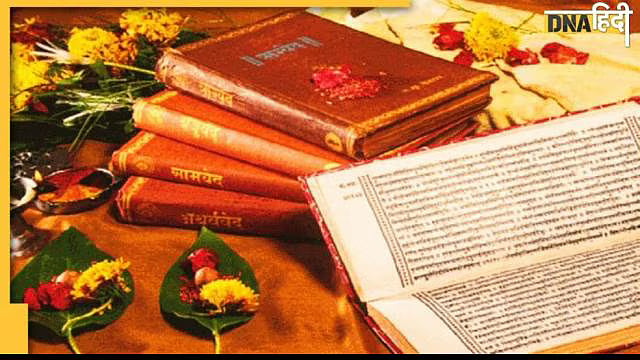
Over the years, the ancient Sanskrit language has been confined to the scriptures in museums and textbooks as the world's first language. | File Pic
Mumbai: Over the years, the ancient Sanskrit language has been confined to the scriptures in museums and textbooks as the world's first language. According to Samaskaar Bharti, a NGO which has been working at making Sanskrit a language of conversation, stated that we have treated the language as merely historic. To change this scenario, it is trying to give Sanskrit a new lease of life by encouraging people to have daily conversations in it.
In a conversation with Shirish Deo, a senior member of Samaskaar Bharati has been at the forefront and taught over lakhs of students tells us about this mission.
How can Sanskrit become a conversational language again?
Sanskrit took a backseat not just due to colonisation but also because of lack of exposure. Similar to how second or third generation Indians who live abroad tend to not learn their mother tongue. It is not because they were not taught the language, it is because they were not exposed to it.
I was introduced to the language through my parents, when they asked me to learn slokas and explained the meaning. This generated a lot of interest in me. Similarly, everyone should be first exposed to the language, and put forth the idea that they can speak the language then it is upto them whether to learn or not.
Once there is exposure, we can develop an ecosystem in religious and academic institutions where everyone can explore the possibility of leaning and imbibing the language into they daily routine,
Why should Sanskrit become a conversational language?
The language that we use today is in its most diluted form, be it our mother tongue or English. Sanskrit being the most ancient language, all the Indian languages are rooted from it. So when one learns Sanskrit, all the other languages will purify. Today, despite knowing an alternative word for several things in our own language, we resort to the English words, this will stop happening.
Once we have many more fluent speakers of Sanskrit, our ancient scriptures will be well explored. People who are inclined towards literature, mathematics or engineering will find their way into the ancient scriptures and find that there are some marvels in it. We will also learn to value our culture and history, which will make us rooted into the country.
Why should the younger generation learn Sanskrit?
Sanskrit is the language which is very mild in nature, there is a word for every emotion, and it helps to express politely. Compare a sentence in today’s language and in Sanskrit, you will notice that Sanskrit has a softer tone to it, which changes the flow of conversation. The language we speak is a reflection of our personality and background.
Furthermore, as an added advantage to the younger generation, who wish to excel in several language, it becomes easy to learn foreign language like French and Spanish if they learn Sanskrit. For example, the one to nine numerics in Sanskrit in French are similar.
What are the hindrances and how to overcome?
I started learning Sanskrit at the age of 52, when I came across Samskar Bharti. I was always interested in the language, but there were no means available for me. Even today, very few students opt to learn Sanskrit in schools, however the grammatically heavy syllabus later discourages them from learning the language.
The irony is that teachers also teach the language in English without being able to properly speak it. Unfortunately, students who get a PhD in Sanskrit, also write their thesis in all other languages except Sanskrit. If this is the reality, then are we giving due diligence to the language?
There should be an opportunity to learn the language for the ones who are interested, and we are changing this system.
How can Sanskrit reach the masses?
In our classes, students from all age groups enrol with us, we start directly from small sentences that can be used in daily conversations and then move to correct the grammar. Just how we learn our mother tongue and other languages.
ALSO READ
We are also working towards creating villages that speak Sanskrit. All over the country we created a few villages where everyone only speaks in Sanskrit, the same attempt is being made in Maharashtra but we are in very initial stages of it.
Deo emphasised that learning Sanskrit is not very difficult. I started learning through Samskaar Bharati and within a month I was able to have a basic conversation. The fluency built overtime with practice, but the beginning gave me the confidence to dig deeper into the language study. Now when I hear people speak in foreign languages or any Indian language I can easily spot the familiarity of words that have branched out of Sanskrit language.
Concluding the conversation, Deo said that speaking in Sanskrit proves that you are a true Bhartiya. Bharat is a Sanskrit word - Bha means light / knowledge and rata means carrier, translating to the carrier of knowledge.
To get details on exclusive and budget-friendly property deals in Mumbai & surrounding regions, do visit: https://budgetproperties.in/
RECENT STORIES
-
-
-
-
-