Rising Demand For Future Delhi Metro Lines To Go Underground After Success Of Mumbai’s Metro 3 Project
Bhide was speaking at the Late BG Deshmukh Memorial Lecture Series organised by the Maharashtra Chapter of the Indian Institute of Public Administration (IIPA). Additional Chief Secretary (Administrative Reforms, Excellence & Good Governance) Rajesh Aggarwal attended as the chief Guest. Former Chief Secretary and IIPA President Swadhin Kshatriya was also present.

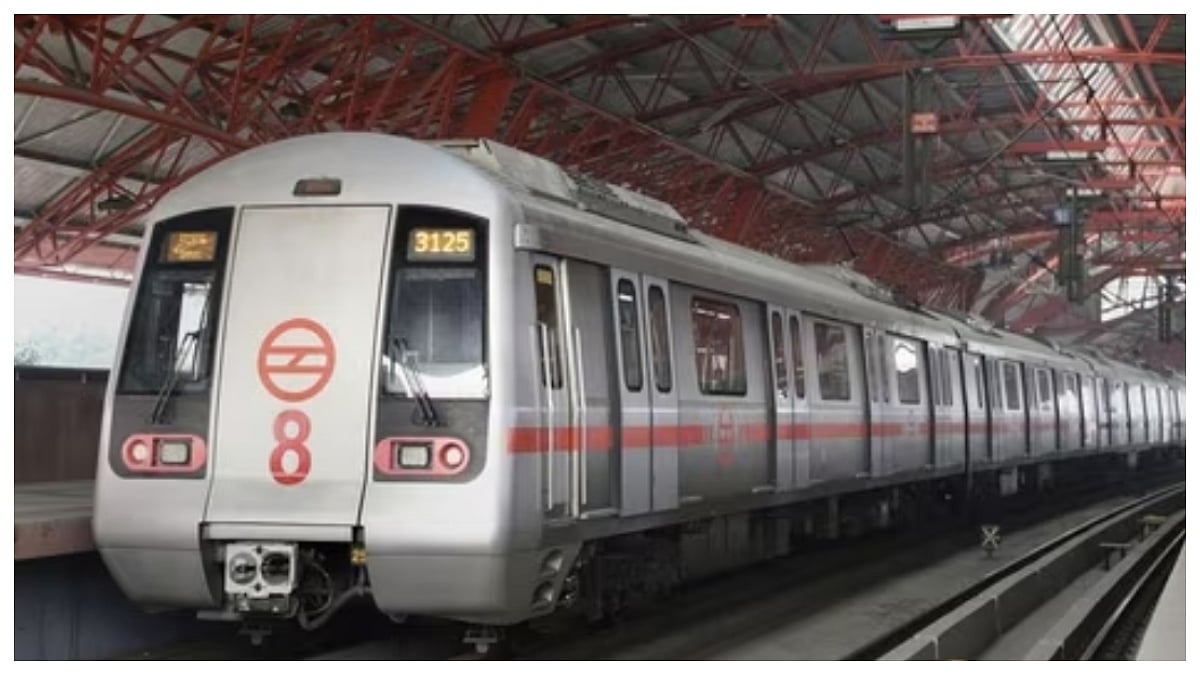
Inspired by the success of the underground Metro 3 project (Aqua Line), there is a growing demand for upcoming Delhi Metro projects to be built underground. | File Image
Mumbai: Inspired by the success of the underground Metro 3 project (Aqua Line), there is a growing demand for upcoming Delhi Metro projects to be built underground. This information was revealed during a detailed presentation on the planning and implementation of India’s first fully underground Metro, which connects Colaba to SEEPZ.
Ashwini Bhide, the Additional Chief Secretary to the CM and MD of the Mumbai Metro Rail Corporation, said mega projects such as the Metro and Coastal Road are crucial to ensure smooth and efficient transportation. “The early hurdles faced during these projects – including legal and environmental approvals, technical complexities, and citizens’ concerns – were addressed through meticulous planning, transparent communication, inter-agency coordination, and active public participation,” she said.
Bhide was speaking at the Late BG Deshmukh Memorial Lecture Series organised by the Maharashtra Chapter of the Indian Institute of Public Administration (IIPA). Additional Chief Secretary (Administrative Reforms, Excellence & Good Governance) Rajesh Aggarwal attended as the chief Guest. Former Chief Secretary and IIPA President Swadhin Kshatriya was also present.
According to Bhide, the Metro 3 is not merely an engineering accomplishment but also a remarkable example of social engineering. “Despite construction taking place for over five years in densely populated residential and commercial zones, public trust was maintained through continuous engagement, extensive communication, and updates via social media,” she said, emphasising that, owing to rigorous safety measures and high-quality execution, not a single untoward incident occurred.
ALSO READ
“Mumbai, as the nation’s financial capital and a major employment hub, continues to experience increasing population pressure. Its narrow, peninsula-like geography has put strain on urban infrastructure, especially the transportation network. Modern, integrated solutions such as the underground metro and coastal road are essential to easing this burden,” she added.
She said several major projects – Atal Setu, the Marine Drive-Bandra Worli Sea Link Coastal Road, and the Navi Mumbai Airport – have already been completed. She added that the ongoing projects include the BandraVersova stretch, VersovaDahisar-Bhayandar-UttanVirar Coastal Road, Western Express Highway-Samruddhi Mahamarg Link, BorivaliThane Tunnel, GoregaonMulund Link Road, and Orange Gate-Marine Drive Tunnel Road. Future developments involve the VirarAlibaug Multi-Modal Corridor and the Vadhavan Port. Aggarwal remarked that constructing an underground metro in Mumbai is an extraordinary challenge, yet Maharashtra has achieved it. Such projects, he said, enhance service quality for citizens.
To get details on exclusive and budget-friendly property deals in Mumbai & surrounding regions, do visit: https://budgetproperties.in/
RECENT STORIES
-
-
-
-
-