Mumbai: Man Walks Again After Rare Spine Surgery Ends 30 Years Of Pain And Disability
A 60-year-old man in Mumbai regained the ability to walk independently after undergoing a complex spine surgery at KIMS Hospitals in Thane. Doctors diagnosed him with atlantoaxial dislocation with basilar invagination, a rare congenital condition compressing the brainstem and spinal cord. After delaying treatment for nearly 30 years, he showed recovery within 24 hours and was discharged in 4 days.

Mumbai: Man Walks Again After Rare Spine Surgery Ends 30 Years Of Pain And Disability |
Mumbai: A 60-year-old man who had been living with worsening pain and mobility problems for nearly 30 years has regained the ability to walk independently after undergoing a complex spine surgery in Thane.
At KIMS Hospitals, doctors diagnosed the patient with a rare congenital spine condition that had gradually worsened over the years, severely affecting his quality of life. What began as mild discomfort slowly progressed into stiffness in the hands and legs, poor balance, weak grip strength, and difficulty performing routine daily activities.
Despite repeated medical advice, the patient delayed treatment for years due to fear of surgery and uncertainty about the outcome. Instead, he adapted to the pain and neurological symptoms, which continued to progress.
In the last six months, his condition deteriorated significantly. He developed persistent vomiting and dizziness, making it difficult to eat solid food. Over time, he became dependent on liquids, leading to severe weakness and further decline in his overall health.
Following a detailed evaluation, Dr. Ujwal Yeole diagnosed him with atlantoaxial dislocation with basilar invagination — a rare and complex condition in which instability at the junction of the skull and upper spine compresses the brainstem and spinal cord.
Considering the severity of symptoms and the risk of permanent neurological damage, the medical team advised urgent surgery.
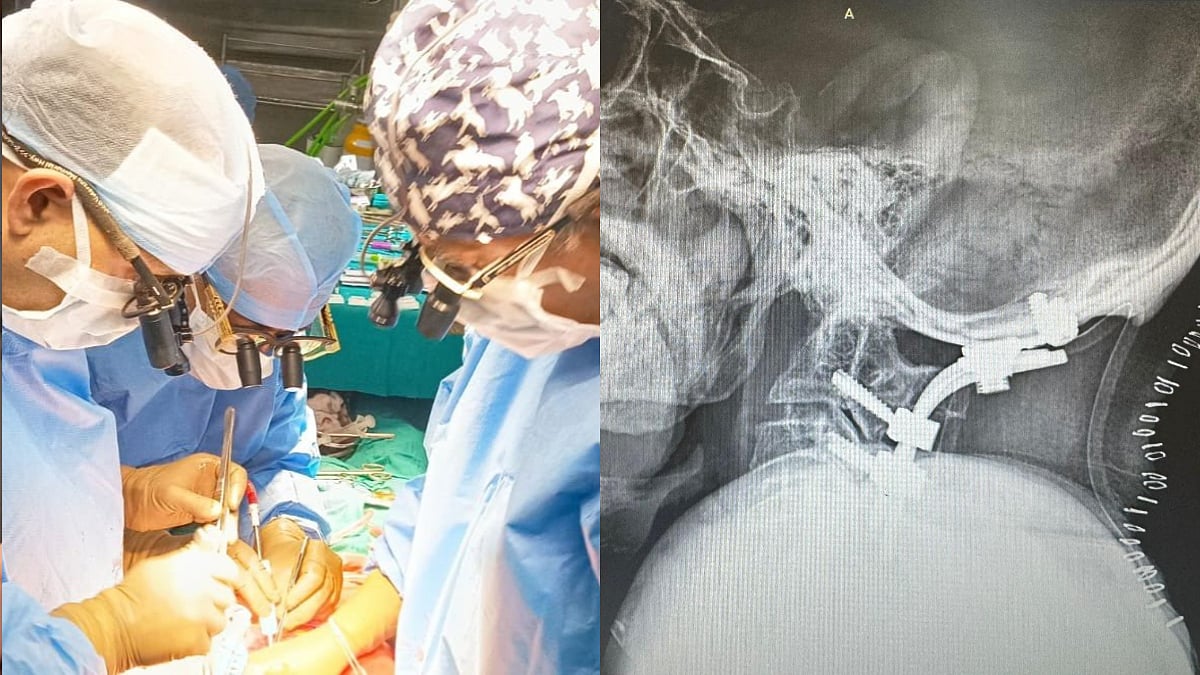
The patient underwent a highly complex occipitocervical fusion procedure, during which the skull and upper cervical vertebrae were stabilised using screws and rods. Due to the involvement of critical neural structures and the long-standing nature of the condition, the surgery required exceptional precision and careful planning.
ALSO READ
Also Watch:
“Patients often learn to live with chronic pain or neurological symptoms, assuming it is part of ageing, and delay timely treatment,” said Dr. Yeole. “In reality, such symptoms can indicate serious underlying conditions. Even in advanced cases like this, appropriate surgical intervention can significantly reverse disability and improve quality of life.”
The patient began showing signs of recovery within 24 hours of surgery. He regained grip strength, his stiffness reduced, and he gradually started walking without support. He was also able to eat solid food again after several months and was discharged within four days with significant improvement in mobility and overall health.
To get details on exclusive and budget-friendly property deals in Mumbai & surrounding regions, do visit: https://budgetproperties.in/
RECENT STORIES
-
-
-
-
-