Maharashtra Unveils Devasthan Inams Abolition Act, 2026 To Unlock Temple Lands For Redevelopment, Invites Public Suggestions
The Maharashtra government has proposed the Maharashtra Devasthan Inams Abolition Act, 2026, aimed at abolishing temple inam lands and resolving long-pending ownership disputes. The move could unlock nearly one lakh hectares of land for redevelopment and commercial use while enabling occupants to gain ownership rights and generating revenue for temple trusts.

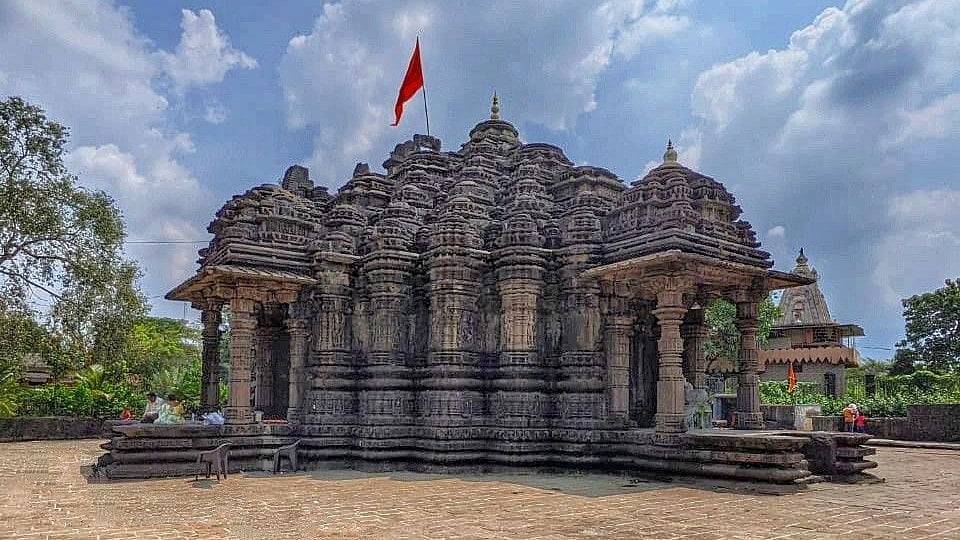
Maharashtra Unveils Devasthan Inams Abolition Act, 2026 To Unlock Temple Lands For Redevelopment, Invites Public Suggestions | file pic
Mumbai: A decision by the state government to abolish inam lands vested with temples across Maharashtra is likely to unlock vast land parcels for redevelopment and commercial use. It is estimated that nearly one lakh hectares of land are currently classified as Devasthan Inam land, a majority of which is under private possession.
The BJP-led Mahayuti government has issued a draft legislation — the Maharashtra Devasthan Inams Abolition Act, 2026 — and invited suggestions and objections from the public. Citizens can submit their views within a month, by June 5.
If enacted in its present form, the proposed law will apply across Maharashtra, except in areas governed by three existing legislations — the Hyderabad Abolition of Inams and Cash Grants Act, 1954; the Hyderabad Atiyat Inquiries Act, 1952; and the Wakf Act, 1995. The first two laws are applicable to the Marathwada region, which formed part of the erstwhile Hyderabad State before 1956.
According to the state government, a substantial portion of temple-owned land is currently occupied by private individuals who use it for cultivation or other purposes. However, temples derive little or no income from these properties. At the same time, the occupants — including priests and other holders — are unable to redevelop or monetise the land because they do not possess ownership titles. The temples continue to remain the legal owners, resulting in a long-standing deadlock, sources said.
ALSO READ
In several cases, the land is also under illegal occupation. The issue is further complicated by the classification of such land under Class II occupancy, which restricts full ownership rights and limits transfer or redevelopment possibilities.
To address the impasse, the government is considering allowing existing occupants to convert their holdings into Class I occupancy by paying a premium to the respective temple trusts. The money generated through this process could then be utilised by temple trusts for religious, administrative, charitable, or public welfare activities.
Under the proposed framework, the land that would be permanently transferred to occupants will remain subject to the landholding ceilings prescribed under the Maharashtra Tenancy and Agricultural Lands Act, 1948. Any excess land beyond the permissible ceiling would revert to the respective temple trusts.
Officials estimate that nearly 50,000 acres of such land fall under the jurisdiction of the Western Maharashtra Devasthan Committee alone, which manages around 3,000 temples, including the prominent Mahalaxmi Temple and Jotiba Temple in Kolhapur district.
ALSO READ
Historically, large tracts of land were donated by rulers, kings, and wealthy patrons to temples for the welfare of priests, devotees, and religious activities. Over time, however, many of these lands passed into private hands without clear ownership rights being transferred, creating legal and administrative complications that have persisted for decades.
Government sources said the proposed legislation is aimed at resolving these disputes, regularising land ownership, and enabling redevelopment, while simultaneously creating a revenue stream for temple trusts that currently possess land assets but derive minimal financial benefit from them.
To get details on exclusive and budget-friendly property deals in Mumbai & surrounding regions, do visit: https://budgetproperties.in/
RECENT STORIES
-
-
-
-
-