Maharashtra Drought: Nashik Faces Looming Fodder, Water Crisis For 18 Lakh Livestock As Kharif Crops Suffer
Nashik district is facing a looming fodder and water shortage for around 18 lakh livestock as drought affects Kharif crops and green fodder availability. The administration has around 893,000 metric tonnes of fodder, enough for slightly over four months, and is preparing tankers, fodder camps and alternative water sources if scarcity worsens.

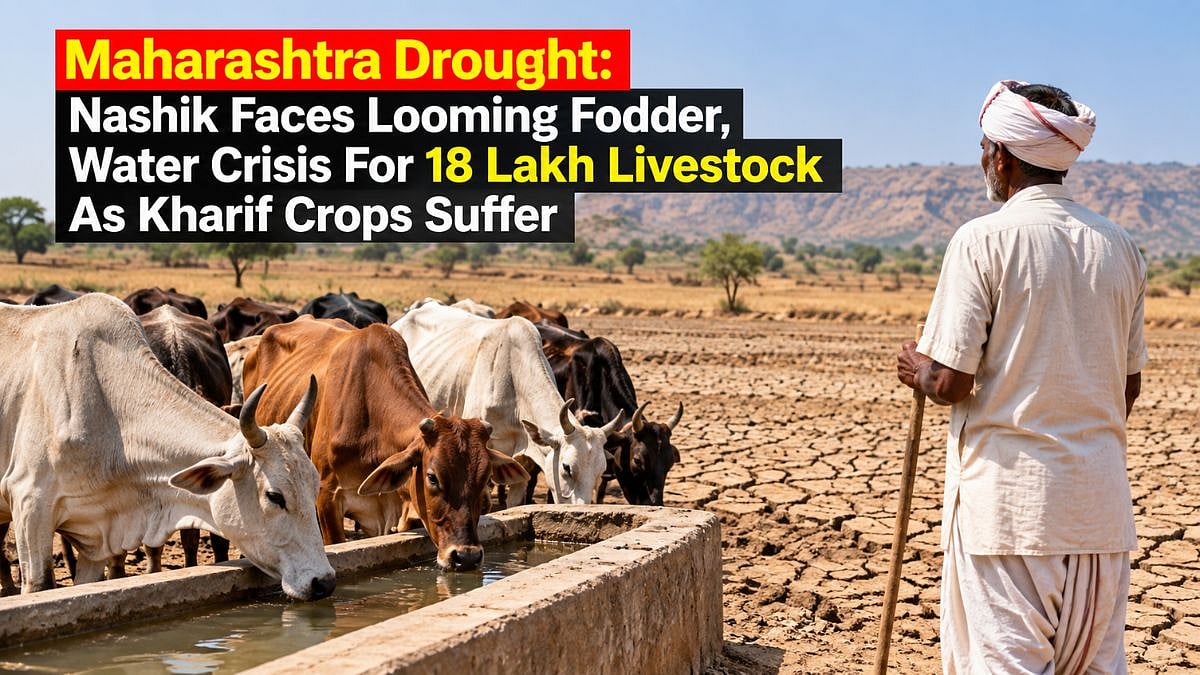
Drought-hit Nashik faces growing concerns over fodder and water availability for livestock as crop damage worsens | AI Generated Representational Image
Lasalgaon, October 3, 2026: The drought has already hit Kharif crop production, and with the monsoon set to withdraw, the looming threat of water scarcity is raising concerns over a shortage of fodder for livestock. As agricultural crops wither under the heat, farmers face another challenge in keeping their cattle fed.
Livestock Numbers And Requirements
According to administration statistics, Nashik district has about 18 lakh livestock, including 728,087 cows, 111,551 calves, 156,450 buffaloes, 517,569 goats and 247,178 sheep. The animals require around 6,406 metric tons of fodder daily, or 207,393 metric tons monthly.
Livestock also require about 368,804,000 litres of water daily. If water scarcity continues for a prolonged period, the administration expects shortages of water and fodder to become severe.
Across the district’s 15 talukas, around 893,000 metric tons of fodder is available for livestock, enough to last slightly over four months. However, prolonged water scarcity and reduced availability of green fodder could put additional pressure on existing stocks.
Plans For Water Supply
Along with fodder, the administration is planning to supply water through tankers for livestock in water-scarce villages. The number of tankers will be determined as needed by inspecting the availability of government as well as private water sources.
However, if the number of scarcity-hit villages increases, the administration will face the challenge of establishing an independent water supply system for livestock.
Also Watch:
ALSO READ
Need For Fodder Planning
Livestock owners depend heavily on crop residues and the fodder available in fields. However, if the break in rainfall and crop damage persist, the availability of fodder is likely to decrease further in the coming period.
Therefore, the need to pre-plan fodder camps, fodder depots, water tankers, and alternative water sources before the severity of the drought increases is being strongly emphasised.
To get details on exclusive and budget-friendly property deals in Mumbai & surrounding regions, do visit: https://budgetproperties.in/
RECENT STORIES
-
-
-
-
-