From Juhu Beach To Mumbai's Waterfronts, How Chhath Puja Evolved From A Lesser-Known Festival Into A Grand Celebration
Mumbai's Chhath Puja celebrations have grown from gatherings of five or six devotees at Juhu beach in the 1950s to massive waterfront congregations. Migration from Bihar and eastern Uttar Pradesh fuelled this transformation, while political involvement expanded.

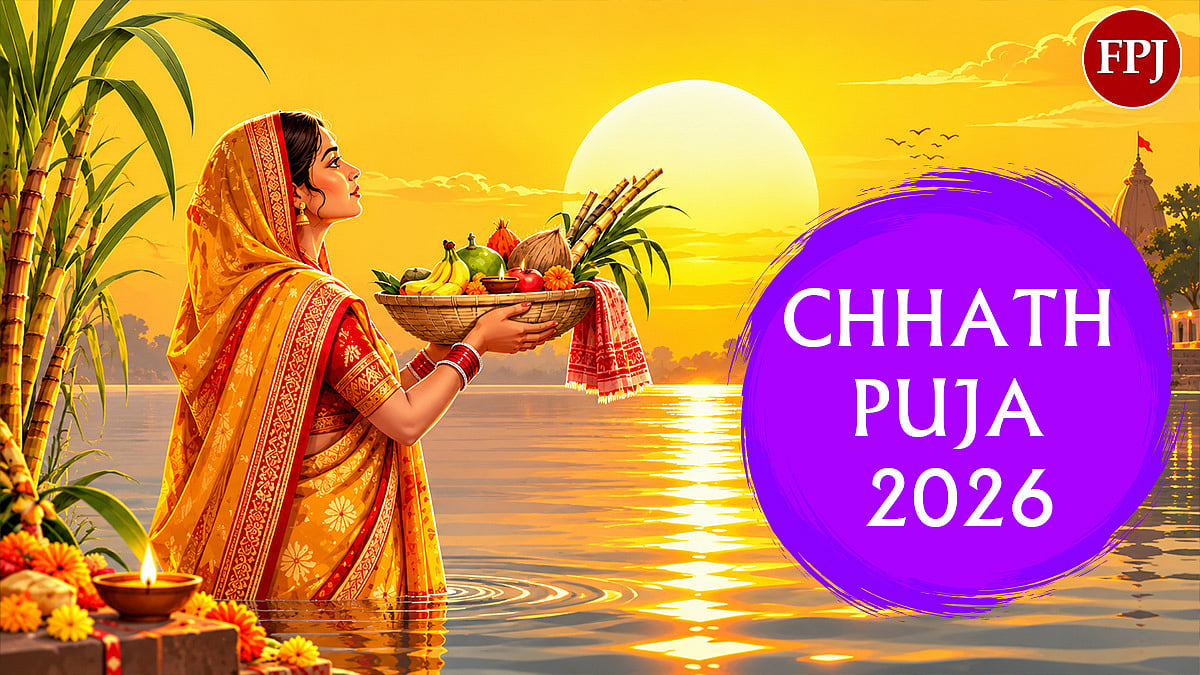
From Juhu Beach To Mumbai's Waterfronts, How Chhath Puja Evolved From A Lesser-Known Festival Into A Grand Celebration | FPJ
Mumbai: From small gatherings of five or six people on Juhu beach to lakhs of devotees assembling along the city's waterfronts, Chhath Puja has come a long way in Mumbai.
Once a relatively unfamiliar festival outside the migrant communities from Bihar and eastern Uttar Pradesh, it has, over the past three decades, evolved into one of the city's largest community celebrations, with political parties increasingly becoming part of its public presence.
Chhath Puja's Humble Beginnings In Mumbai
U K Singh, secretary of the Bihar Association, traces the festival's modest beginnings in Mumbai to the 1950s. His father-in-law, U B Singh, who established the Bihar Association in 1952, moved to Mumbai around 1946-47. At the time, only a handful of families gathered at Juhu beach to offer prayers to the Sun God.
"He told me that there could be groups of five or six people. When I came to Mumbai around 50 years ago, it was still a small celebration," said Singh.
For decades, Chhath remained largely a family affair, with devotees gathering in small groups to observe the rituals. Its transformation into a large public celebration began in the 1990s, as migration from Bihar and eastern Uttar Pradesh expanded the festival's following in the city.
Community Organisations Expand Public Celebrations
In 1993, Mohan Mishra, then a BJP ward president, established the Chhath Utsav Mahasangh to facilitate the celebrations. His son, Diwakar Mishra, who is now the organisation's general secretary, maintains that the initiative was driven by the practical difficulties faced by devotees rather than political considerations.
"My father observed that devotees at Juhu beach faced difficulties in performing the rituals. He arranged tents, petromax lamps and other facilities. The motive was not political, but he also knew that such facilities cannot be provided without political support," said Mishra.
In 1998, former Congress MP Sanjay Nirupam, who is now with the Shiv Sena, began organising the festival through his Bihar Front. "Chhath Puja is a thousands-of-years-old celebration. I only tried to organise it," said Nirupam.
Celebrations Spread Across Mumbai's Waterfronts
By the early 2000s, Juhu had emerged as the principal gathering point for devotees, with cultural programmes and community participation giving the festival a larger public profile. Over the years, celebrations spread to Dadar Chowpatty, Banganga, suburban lakes and other water bodies across Mumbai and the Mumbai Metropolitan Region (MMR).
"Old people and daily-wage labourers cannot afford to travel to their hometowns for the festival. What do they do? We are just helping them," said Nirupam, explaining the need for community-level arrangements.
Four-Day Festival Honours Sun God
Chhath Puja, which honours the Sun God and Chhathi Maiya, is observed through fasting, offerings and prayers to the setting and rising sun. This year's four-day festival is being celebrated from November 13 to 16. It began with Nahay Khay on Friday, followed by Kharna on Saturday. Sandhya Arghya, the offering to the setting sun, will be performed on Sunday, while Usha Arghya, the final offering to the rising sun, followed by Parana, will mark the conclusion on Monday.
Beyond its religious significance, devotees see Chhath as a festival that transcends social divisions. Singh said the celebrations in Bihar's villages cut across caste lines, with members of different communities participating in the festivities.
"In the villages, Muslims share the prasad of thekua, a sweet. It is a festival that thanks nature," he said.
Growing Political Involvement Sparks Concerns
However, Singh is saddened by what he sees as the increasing political overtones surrounding the festival. "In the early days, no political parties were involved. Now political parties are involved," he said.
The debate has become particularly visible this year following the denial of permission to hold Chhath Puja at Girgaum Chowpatty. Manoj Singh Rajput, spokesperson of Bihar Foundation Mumbai, an organisation established by the Bihar government, objected to what he described as attempts to politicise the issue.
"The denial of permission to hold Chhath Puja celebrations at Girgaum Chowpatty has left some organisers disappointed. However, certain people are using the issue to gain political mileage and create an unnecessary controversy," said Rajput.
Organisers Highlight Government Support For Celebrations
He pointed out that the Mira-Bhayandar, Navi Mumbai, Thane, Kalyan-Dombivli and Vasai-Virar municipal corporations, along with local political representatives, were extending support to the celebrations.
"We are receiving wholehearted support from the Maharashtra government and the Brihanmumbai Municipal Corporation (BMC). People should stop doing politics in the name of Chhath Puja," he said.
The political dimension of the celebrations is also evident in the participation of senior leaders. Mishra said Chief Minister Devendra Fadnavis is expected to offer prayers at Juhu beach on Sunday evening. "There is a political motive in both supporting and opposing the event," he said.
Nirupam Rejects Cultural Invasion Criticism
Nirupam, meanwhile, rejected objections that the growing public celebration of Chhath amounted to a cultural invasion, referring to criticism over Bhojpuri festival songs being played through the railway's public announcement system.
"The Ganesh festival has travelled to places like Hyderabad, Chennai and North India. Will you describe that as cultural invasion?" he asked.
Also Watch:
Environmental Impact Of Rituals Draws Attention
Concerns have also been raised over the impact of large gatherings and ritual offerings on the city's water bodies. Rajput described Chhath as one of the world's oldest festivals and an environment-friendly celebration.
Nirupam argued that the ritual offerings were biodegradable and did not involve materials such as Plaster of Paris. "Arghya, the water presented in cupped hands to the Sun God, is the central ritual in the puja. Every offering, including milk and fruits, is biodegradable. There is no Plaster of Paris or such material that is used," he said.
To get details on exclusive and budget-friendly property deals in Mumbai & surrounding regions, do visit: https://budgetproperties.in/
RECENT STORIES
-
-
-
-
-