CM Devendra Fadnavis To Head Maharashtra State River Rejuvenation Authority For Cleaning 54 Most Polluted River Stretches
Maharashtra has set up the State River Rejuvenation Authority led by CM Devendra Fadnavis to tackle pollution in 54 river stretches. Backed by a ₹2,000 crore corpus, the body will focus on sewage, industrial waste and solid waste management, with funding from CSR, state and central sources.

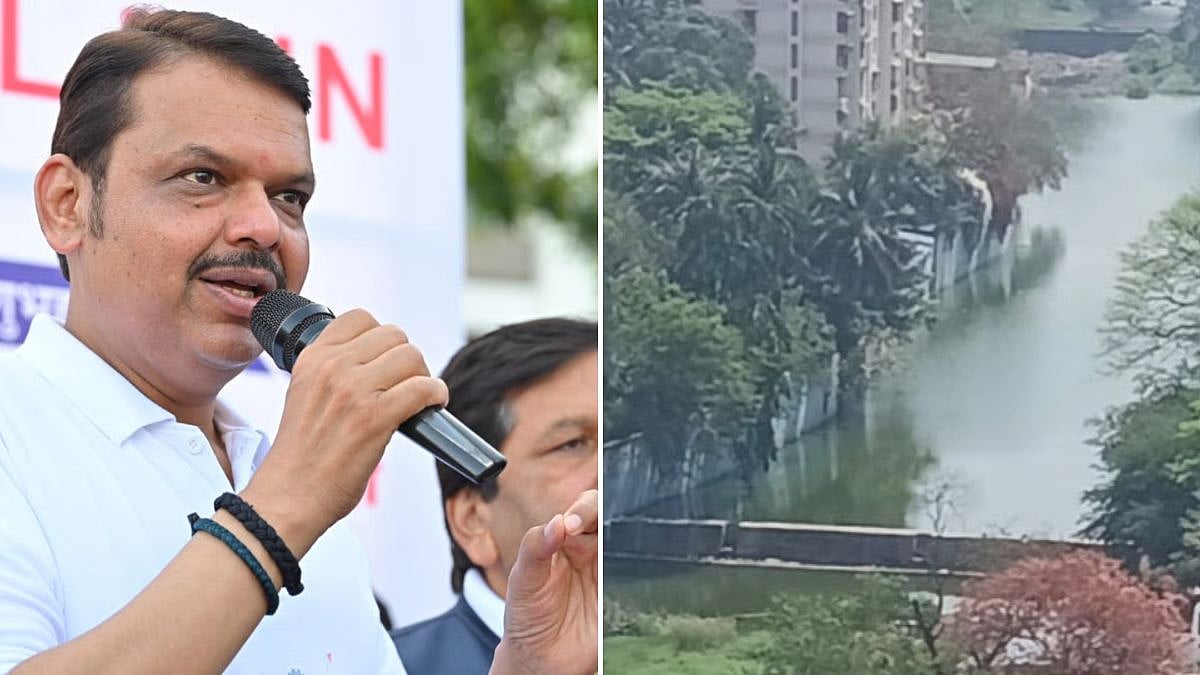
CM Devendra Fadnavis To Head Maharashtra State River Rejuvenation Authority For Cleaning 54 Most Polluted River Stretches | File Pic
Mumbai: Chief Minister Devendra Fadnavis will head the Maharashtra State River Rejuvenation Authority (MSRRA), which is being set up on the lines of the National River Conservation Authority. The authority will take policy decisions on 54 of the most polluted river stretches in the state.
Authority composition
The nine-member MSRRA will serve as the apex body, supported by a 12-member state executive committee and an 11-member secretariat. Environment Minister Pankaja Munde will be the vice-chairperson, while Deputy Chief Ministers Eknath Shinde and Sunetra Pawar will be members, along with ministers from the Finance, Water Resources, Industries, and Rural Development departments. The principal secretary of the Environment and Climate Change Department will serve as the member-secretary.
The MSRRA will act as the nodal agency to promote and implement river rejuvenation schemes. It will define clear objectives for each river stretch and take key decisions on issues such as sewage treatment, industrial pollution and solid waste management, according to a Government Resolution (GR) issued on Monday.
Funding mechanism
Funding for the initiative will come from private participation, CSR contributions, state budgetary support and assistance from the Central government. To begin with, a ₹2,000 crore corpus fund will be created with contributions from the Maharashtra Pollution Control Board (MPCB), while the state will allocate ₹100 crore from its annual budget. Additionally, 10% of the annual revenue generated from sand mining and minor minerals will be directed to the fund.
ALSO READ
The authority will meet at least twice a year, or more frequently if required.
Executive committee structure
The state executive committee will be headed by the Environment Minister, with the principal secretary of the department as vice-chairperson. Its members will include the CEO of Maharashtra Institution for Transformation (MITRA); secretaries from the Finance, Forest, Urban Development, Water Resources, Industries and Rural Development departments; and five experts in river conservation, hydroscience, environmental engineering, biodiversity, and public health. The member-secretary of the MPCB will also serve as its member-secretary. The committee will directly supervise river rejuvenation programmes and schemes.
A dedicated secretariat will be established to handle day-to-day operations. Headed by the member-secretary of the MPCB, it will include representatives from institutions such as the Council of Scientific and Industrial Research (CSIR), Indian Institutes of Technology (IIT), The Energy and Resources Institute (TERI), Maharashtra Remote Sensing Applications Centre (MRSAC) and the Bombay Natural History Society, along with representatives from local bodies, Maharashtra State Road Development Corporation (MSRDC), Maharashtra Industrial Development Corporation (MIDC), a legal advisor, and the joint secretary of the Environment Department.
To get details on exclusive and budget-friendly property deals in Mumbai & surrounding regions, do visit: https://budgetproperties.in/
RECENT STORIES
-
-
-
-
-