Beyond The Congestion Charge: The Case For Real Mobility Reform
Colaba corporator Makarand Narwekar has proposed a ₹50–₹100 congestion charge on single-occupant private vehicles entering South Mumbai’s commercial hubs during peak hours. Modelled on London and Singapore, the plan aims to reduce traffic and fund public transport upgrades. Experts say the levy must be paired with stronger metro, bus, and last-mile connectivity to avoid burdening commuters.

Beyond The Congestion Charge: The Case For Real Mobility Reform |
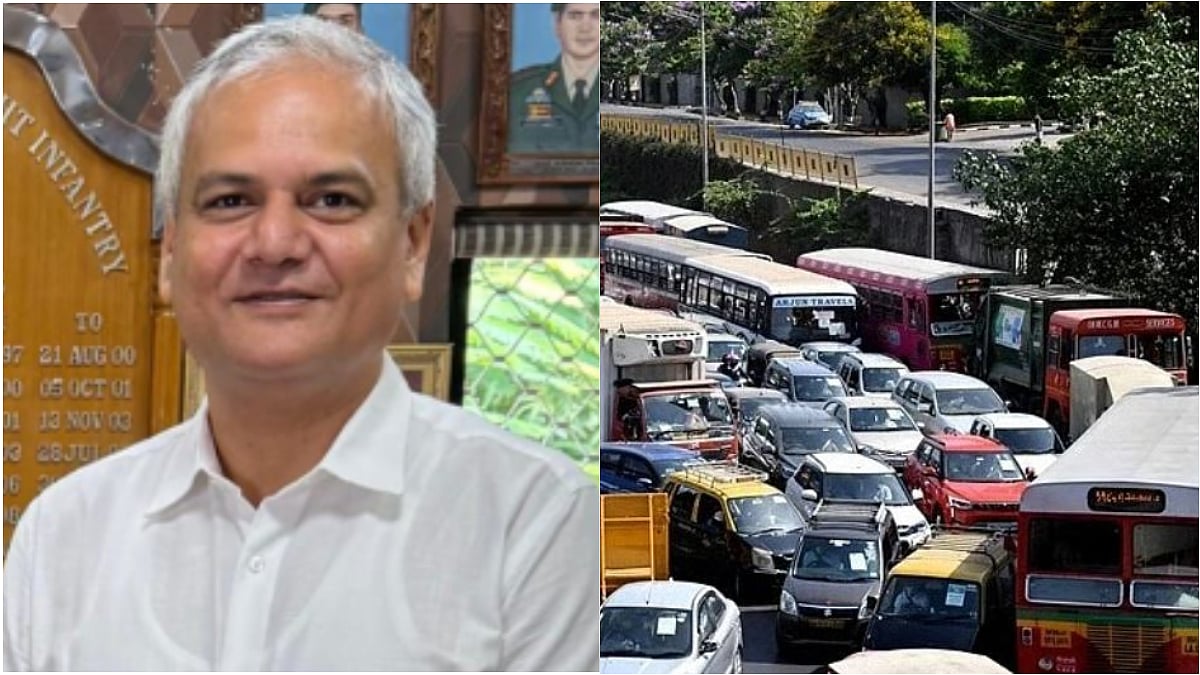
Mumbai’s daily traffic gridlock has become so routine that it is often treated as inevitable, a background condition of life in India’s financial capital. It is in this context that Colaba corporator Makarand Narwekar’s proposal to introduce a congestion charge in South Mumbai deserves serious consideration. The plan, which proposes a ₹50–₹100 levy on single-occupant private vehicles entering high-density commercial zones such as Nariman Point during peak hours (8–11 am and 5–8 pm), is modelled on systems in London and Singapore. This initiative is not just timely; it’s long overdue. But congestion pricing cannot succeed in isolation. Without parallel investment in public transport and last-mile infrastructure, it risks becoming yet another commuter burden rather than a genuine urban reform.
The scale of Mumbai’s congestion problem is well-documented. In 2025, the city ranked 18th globally in the TomTom Traffic Index, taking approximately 29 minutes to cover 10 kilometres, which is slower than in New York, where the same distance typically takes 20–25 minutes. Nariman Point, the heart of India’s financial system, concentrates corporate offices, government buildings, and daily commuters within a compact geography that was never designed for today’s volume of private vehicles. The unchecked growth of car ownership, coupled with limited road capacity and delayed transit expansion, has translated into lost productivity, rising pollution, and increasing commuter fatigue.
International experience shows that congestion charges work, but only when embedded within a broader mobility strategy. London’s Congestion Charge Zone, introduced in 2003, reduced congestion delays by 30% and traffic volumes by 18–20% within its first year. More importantly, it generated funds that were reinvested into buses and the Underground, contributing over £2.6 billion toward transport improvements over time. Singapore’s Electronic Road Pricing system, operational since 1998, has achieved around 24% peak-hour cuts overall, while funding sustained expansion of its Mass Rapid Transit network, which today enjoys a user satisfaction rate exceeding 90%.
The common thread is not the charge itself, but what followed it: reliable, affordable alternatives to private driving.
Mumbai has the opportunity to apply the same logic. A congestion charge in South Mumbai could generate hundreds of crores annually, resources that could meaningfully accelerate stalled metro projects, strengthen feeder bus services, improve pedestrian infrastructure, and support cycling and electric mobility within the charged zones. Metro lines have already demonstrated the decongestion potential of mass transit when delivered at scale. But the network remains fragmented, and last-mile connectivity remains inconsistent. Without addressing these gaps, congestion pricing risks becoming regressive, disproportionately affecting middle-income commuters.
Criticism has already surfaced, with opponents branding the proposal another attempt to “loot” Mumbaikars. Such arguments resonate because they draw on a deeper, long-standing frustration: Mumbai’s persistent infrastructure underperformance despite its status as an Alpha-level global city and one of the world’s top 20 centres of private wealth. The contrast is stark. While Mumbai struggles to move its workforce efficiently, cities like Tokyo operate a punctual, high-capacity rail system serving nearly 40 million daily riders, and New York relies on buses and subways for over 56% of all commutes.
ALSO READ
Also Watch:
It is also worth acknowledging the city’s political history. For approximately 37 years (since 1985), the Brihanmumbai Municipal Corporation, India’s richest civic body, with a budget exceeding ₹50,000 crore, was dominated by the undivided Shiv Sena. Alliances shifted, but sustained investment in transport systems did not. The 2026 BMC elections saw the BJP emerge as the single-largest party alongside Eknath Shinde’s Shiv Sena, marking a potential break from that pattern. Whether this translates into better urban governance remains to be seen.
Congestion pricing should be judged not as a tax, but as a policy instrument. Its success depends entirely on intent and execution. Used strategically, with transparent ring-fencing of funds and visible improvements on the ground, it could help Mumbai move toward a more rational, people-centric mobility system.
Ankieta Kothari is the founder of The Bombay Blueprint, a public platform chronicling Mumbai’s architecture, heritage, and evolving urban landscape.
RECENT STORIES
-
-
-
-
-