Amid IT Parks And High-Rises, Mahape's Last Paddy Fields Preserve Navi Mumbai's Agrarian Heritage
A 1.5-acre paddy field in Mahape continues to preserve Navi Mumbai’s agrarian past amid rapid urbanisation. The Mahare family has cultivated rice on the land for four generations since the British era. Using traditional methods and modern equipment, the family produces up to one tonne of paddy annually while maintaining farming practices beside the city’s IT and industrial hubs.

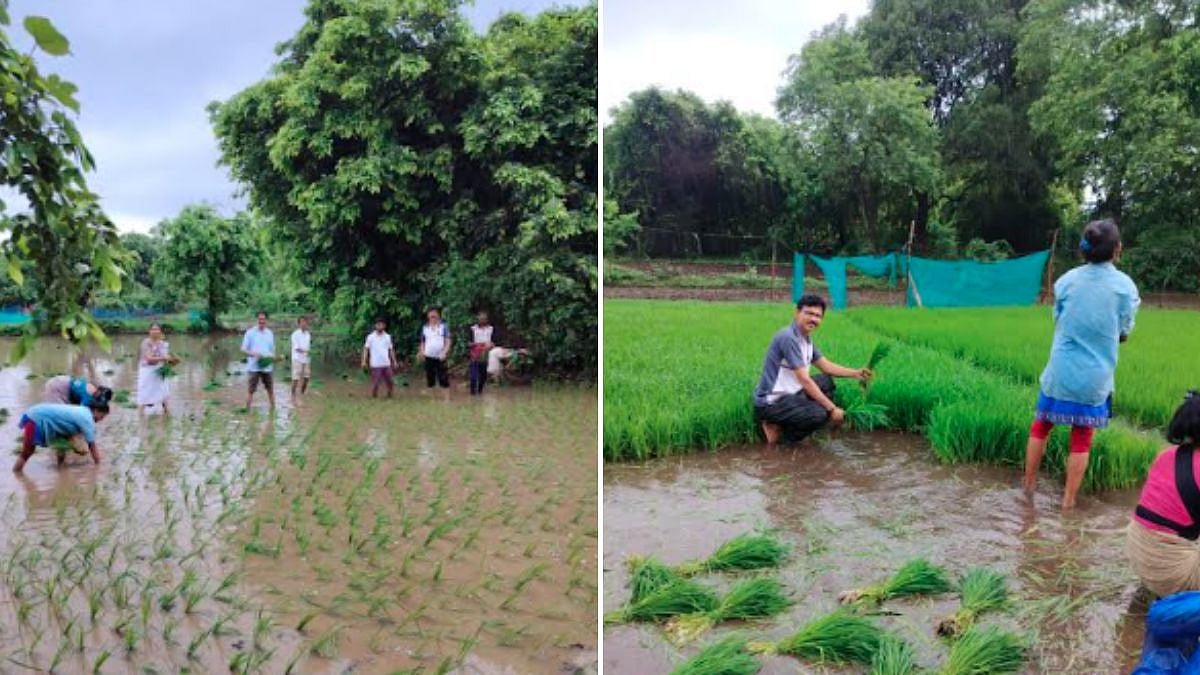
Amid IT Parks And High-Rises, Mahape's Last Paddy Fields Preserve Navi Mumbai's Agrarian Heritage |
Surrounded by towering IT parks, industrial estates and high-rise buildings, a small patch of lush paddy fields in Mahape continues to preserve a slice of Navi Mumbai's agrarian past.
Mahare Family Has Cultivated Ancestral 1.5-Acre Farm for Four Generations
Located along the Mahape–Shilphata Road, close to the Maharashtra Industrial Development Corporation (MIDC), TTC Industrial Area and major IT parks, the paddy field stands in sharp contrast to the city's image as a technology and business hub.
For four generations, the Mahare family has cultivated paddy on their ancestral 1.5-acre farm, continuing a tradition that dates back to the British era. Family members, including Hemant Mahare and Jagdish Mahare, now use a combination of traditional knowledge and modern farming techniques to grow rice, producing around 800 kg to one tonne of paddy annually, enough to meet the family's yearly consumption.
Farm Lies Close to Bullet Train Alignment, Symbolising Coexistence of Progress and Past
The farm lies close to the alignment of the Mumbai-Ahmedabad Bullet Train project, making it one of the last surviving agricultural pockets amid rapid urbanisation. The sight of green paddy fields flanked by IT parks and biotechnology companies highlights the coexistence of Navi Mumbai's technological progress and its agricultural heritage.
Although the monsoon arrived late this year, adequate rainfall in July has helped retain sufficient water in the fields, allowing transplantation of paddy saplings to gather pace. The verdant landscape has once again become a visual attraction in the heart of the city.
Few Agricultural Plots Remain in Navi Mumbai's Original 29 Villages
Residents point out that among Navi Mumbai's original 29 villages, only a handful of agricultural plots remain, largely concentrated around Mahape and the Airoli-Bonkode belt. As urban development continues to shrink farmland, the Mahare family's determination to preserve its farming legacy has drawn appreciation.
To adapt to changing times, the family has replaced traditional bullock-driven ploughing with mechanised equipment such as rotavators, combining modern technology with age-old farming practices.
The surviving paddy fields are seen not only as a source of food but also as a symbol of Navi Mumbai's rural roots, reflecting the city's enduring connection with nature despite its transformation into one of Maharashtra's leading urban and technology centres.
To get details on exclusive and budget-friendly property deals in Mumbai & surrounding regions, do visit: https://budgetproperties.in/
RECENT STORIES
-
-
-
-
-