'We’re Finally Giving Fans Their Own Festival': C.O.R.E. Co-founder Bhavik Vora On India’s First Large-Scale Pop-Culture Mega-Festival
The event debuts in Mumbai on June 20–21, bringing global IPs, Indian icons, and immersive fandom experiences under one roof

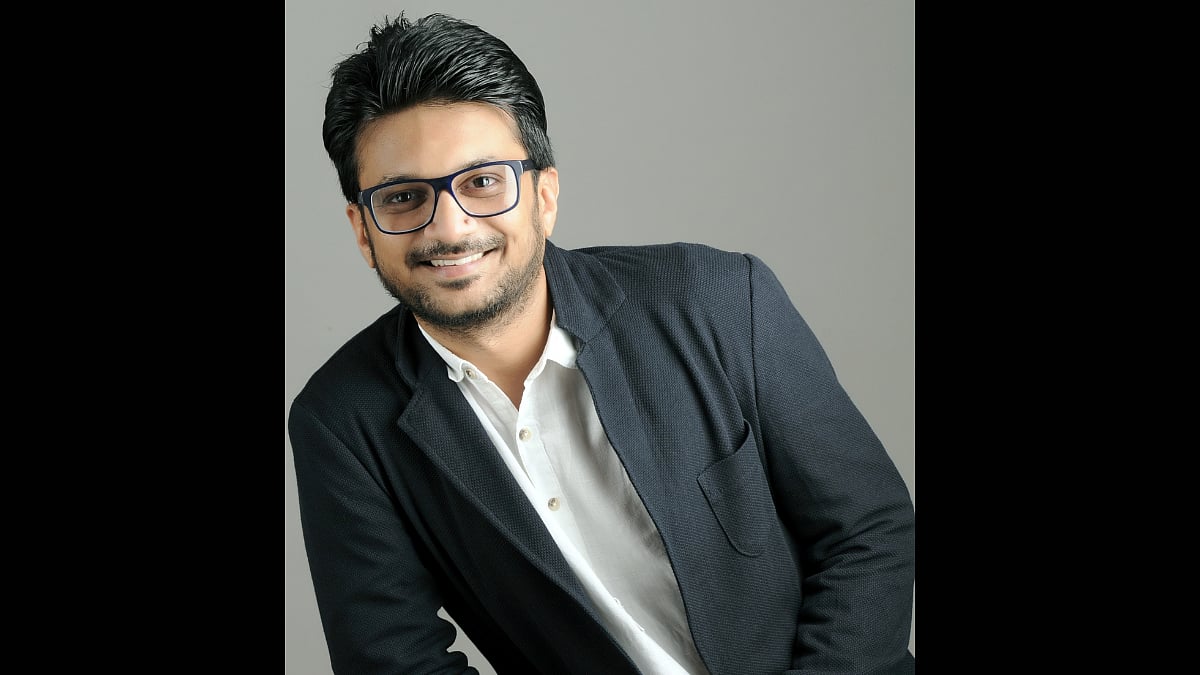
For decades, India's pop-culture fans have consumed global franchises, celebrated cinematic universes, embraced anime and gaming communities, and built thriving online fandoms. Yet, according to Bhavik Vora, co-founder of C.O.R.E. (Culture of Real Experiences) and Fanthology Studios, the country has lacked a truly immersive, official platform that brings these passions together under one roof. Set to debut at Mumbai's Jio World Convention Centre on June 20-21, C.O.R.E. aims to change that by transforming fandom from a spectator activity into a lived experience. In this conversation, Vora discusses the rise of India's fandom economy, the future of experiential entertainment, and why he believes pop culture festivals could soon rival — and even surpass — music festivals in cultural significance.
Excerpts from the interview:
What prompted you to come up with a pop culture festival? Was there a particular incident that led to this?
The founding team at Fanthology Studios & BWO have been in the licensing business for the last 20 years. We've been custodians of some of the biggest global and Indian IPs across entertainment, sports, and lifestyle. And the nature of that business means we've spent two decades walking through every major expo and convention in the world. Comic Cons, Licensing Expos, Anime Japan, you name it. And every time we came back to India, we'd look at our own conventions and feel something was missing. The fans deserved better. The brands deserved better. C.O.R.E. was born out from inspiration, YES but It was also born from frustration. We finally said, enough waiting. Let's build the thing we've been wishing existed.
Most subculture gatherings in India have historically felt like trade shows with retail booths. C.O.R.E promises ‘real experiences’. What does a fan feel or do differently at C.O.R.E compared to a traditional convention?
Here's what's been broken for years. You walk into most Indian conventions and what you find is rows of stalls, most of them selling unofficial merchandise of brands they have no relationship with. The fan knows it. The brand knows it. We've spent 20 years on the other side of that table, working directly with the IP owners, and we wanted to build something that was finally legit. C.O.R.E. is a platform for the official ecosystem. Real brands, real IPs, real experiences. A fan walks into C.O.R.E. and what they're touching, eating, wearing, photographing, is the real thing. That's the shift. The acronym stands for Culture Of Real Experience. We meant every word of it.
The festival line-up is beautifully chaotic, pairing global icons like Demon Slayer and Godzilla with ISRO, Baahubali, and Kalki. How does this mix reflect the actual psychological and cultural makeup of the modern Indian youth?
That's how the modern Indian fan actually consumes. He's watching Demon Slayer in the morning, listening to a Baahubali score in the afternoon, following ISRO on Instagram, and rewatching Kalki at night. He doesn't separate Japanese animation from Telugu cinema from Indian space tech. It's all one cultural diet. The mix at C.O.R.E. isn't curated chaos. It's a mirror. What looks chaotic to an older generation is just the honest reality of how a 22 year old in this country lives now.
Can you walk us through the specific sensory details, the lighting, the soundscapes, the textures, that will make a fan feel like they've genuinely stepped into an anime world in the middle of Mumbai?
The second you walk in, Mumbai goes quiet. It's like stepping through a portal into an alternate reality. The moment you cross that threshold, you'll see five completely different worlds laid out in front of you, each with its own unique look, feel, scale, and energy. One moment you're inside one universe, and just as you settle in, you turn a corner and discover the next one. The lighting shifts. The soundscape shifts. The textures shift. Every entrance arch is its own gateway, every activation is its own world. We've designed it so that you don't just walk through C.O.R.E., you travel through it. And if we've done our job right, somewhere between those five worlds, something will hit you in a way you didn't expect. A vibe, a memory, a feeling. Something that touches your C.O.R.E.
Mumbai has successfully become a hub for massive lifestyle and music festivals (like Lollapalooza and India's evolving concert culture). Do you see a future where a pop-culture mega-convention holds the exact same cultural prestige and mainstream weight in India as a major music festival?
Honestly, I think it should carry more weight. A music festival celebrates one art form. A pop culture festival celebrates every art form a generation cares about. Film, animation, gaming, comics, fashion, food, design. Lollapalooza took a few years to feel inevitable. C.O.R.E. will take less time. The audience already exists. They've been spending on other people's festivals their entire lives. We're just finally giving them their own.
You're bringing together hugely diverse universes, from Warner Bros. and Universal Pictures to Doraemon, Baahubali and Kalki 2898 AD. How challenging was it to create one cohesive cultural space for such different fan communities?
This is where the 20 years actually helped. Because we've worked directly with most of these IP owners for years, we weren't cold calling them. We were having conversations with people who already knew what we stand for. The real challenge wasn't getting them in. It was convincing every brand that they belonged in the same room. Every studio's first question was, who else is in. Nobody wanted to be the first to commit. Once the first few said yes, everyone else followed. And we never tried to homogenize them. A Doraemon fan and a Baahubali fan don't need to share taste. They just need to respect that the other person's obsession is as real as theirs. C.O.R.E. is built on that respect.
Many discover identity and community through online fandoms. Are Indian audiences finally embracing fandom as an identity rather than just a hobby? Will this lead to a boom in the fandom economy in India?
It's already happening. Look at any 19 year old's Instagram bio. It isn't their college anymore. It's their fandoms. Marvel, BTS, One Piece, F1, Bollywood. The identity is the fandom. And once identity attaches to something, the economy follows fast. Merchandise, experiences, content, community. India is at the same inflection point Japan hit in the 80s and Korea hit in the 2000s. The fandom economy here is going to be one of the largest cultural exports this country produces in the next decade.
India's entertainment economy is increasingly becoming experience-driven, immersive dining, themed events, fan parks, live IP activations. Is this the beginning of a much larger experiential entertainment boom?
It's not the beginning. It's the catch up. Indians have been craving experience for years. That's why we travel, why we spend on weddings, why we queue up for new restaurants. We're a culture wired for participation, not passive consumption. The entertainment industry just took its time to catch up to the audience. C.O.R.E., immersive dining, fan parks, IP activations, none of these are trends. They're the inevitable shape of entertainment in a country that wants to do, not just watch.
Food courts at conventions are usually an afterthought. For C.O.R.E, you're curating "official pop-culture food courts." Will the food be interactive or themed to the IPs (like a Demon Slayer ramen bar or Kalki-inspired futuristic bites)? How is food being used to deepen the immersion?
Food is the most underrated storytelling tool in entertainment. You can describe a world to a fan, or you can let them eat a bowl of ramen from it. The second one wins every time. At C.O.R.E., the food court is part of the canon. There are dishes pulled directly from IPs, dishes inspired by their worlds, and dishes built in partnership with chefs who are fans themselves. You'll taste your fandom, not just see it. That's not a gimmick. That's how a convention becomes a memory.
With titles like Demon Slayer and Godzilla participating, how are you balancing nostalgia for older fans with discovery for younger audiences who are entering these universes for the first time?
By respecting both. Most curators design for one or the other, either pure nostalgia or pure novelty. We didn't pick. Godzilla, for a 40 year old, is childhood. For a 14 year old, it's brand new. Same IP, two completely different emotional experiences, both valid. Our job is to give the older fan the goosebumps of recognition and the younger fan the rush of first discovery, in the same booth, on the same day. If we do that right, the older fan becomes the storyteller and the younger fan becomes the next generation of the fandom. That's how culture passes itself down.
If someone walks into C.O.R.E not knowing anime, gaming or cosplay culture at all, what do you hope they walk away feeling?
That they missed something special. And that they want to know more. The best thing C.O.R.E. can do for a non fan can do is make them curious. Not convert them, not lecture them, just make them turn to their kid and ask, show me that show you keep talking about. If a parent walks out asking their teenager to explain anime to them, we've won. Fandom doesn't need new soldiers. It just needs witnesses who stop dismissing it.
On a personal note, are you a part of a particular fandom? If yes, when did you first engage with the fandom, and how has it helped you in your personal and professional spheres?
As a kid, I was obsessed. He-Man, G.I. Joe, and then WWE. I collected every toy, every trading card I could get my hands on. It became my thing. And honestly, I never grew out of it. I just made it my career.
Life pulled me into the world of licensing pretty early on. My first real chapter was working with Cartoon Network and Pogo, then moving into Nickelodeon. And I'll tell you something. From day one at Cartoon Network till today, running my own company, work has never felt like work to me. Not once.
In fact, the name of our company, Black White Orange, is a quiet tribute to the two brands that taught me and my co-founders, Mitali and Diksha, everything we know. Cartoon Network gave us the black and white. Nickelodeon gave us the orange. The whole company is built on that foundation.
So am I part of a fandom? I've been in one my entire life. I just got lucky enough to turn it into a job.
RECENT STORIES
-
-
-
-
-