The Headlines Don't Tell The Whole Story: What I Took Away From Mumbai LitFest 2026 Session On 'Fearless Journalism'
Journalists Harinder Baweja, Kavita Bundelkhandi and Faye D’Souza discussed fearless reporting and newsroom pressures at Mumbai LitFest 2026 on October 25. Following the launch of The Good Reporter, the journalists reflected on conflict coverage and grassroots reporting, highlighting the importance of truth, accountability and stories often overlooked by mainstream newsrooms.

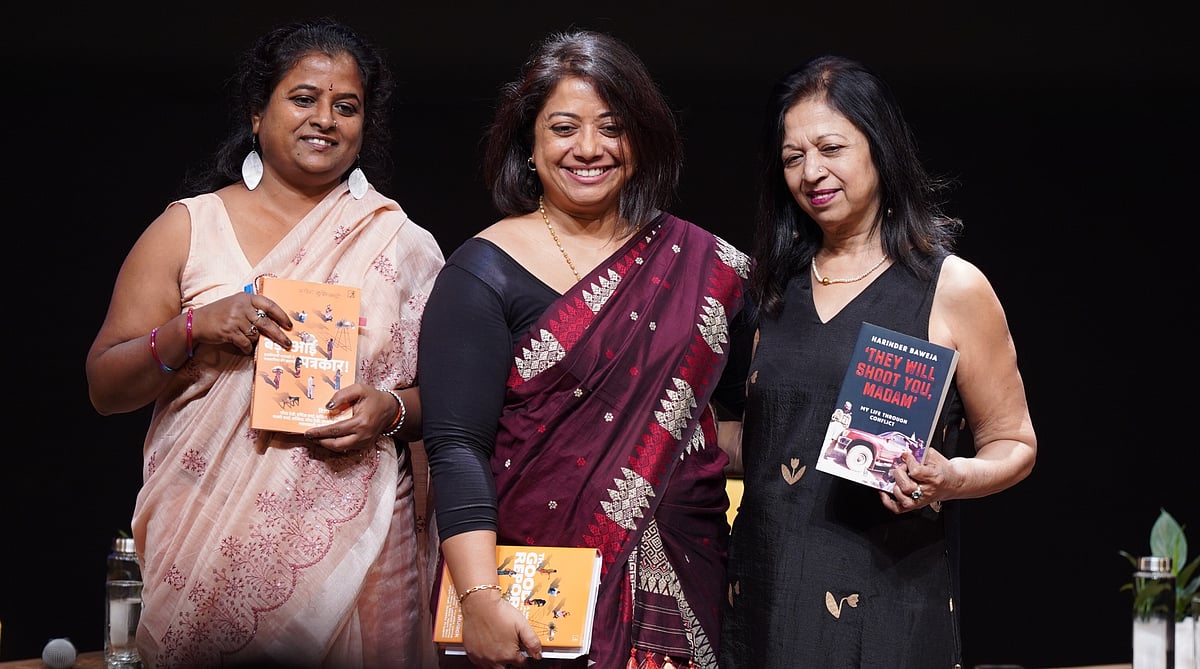
Kavita Bundelkhandi, Faye D'Souza and Harinder Baweja at The Godrej Literature Live! Mumbai LitFest 2026 |
I began my journalism career at 18, spending my first two years covering politics and city news. Those years exposed me to injustices, mistreatment and the realities that often unfold away from the camera, far from the headlines and stories that make it to mainstream media. Although I moved to lifestyle journalism three years ago, I have always believed that, at its heart, this profession is about people, truth and the courage to question what is wrong. Attending the Shashi Baliga Memorial Session at Godrej Literature Live! The Mumbai LitFest 2026 on October 25 was a reminder of that belief, leaving me feeling emotional, empowered and proud to be part of this profession.
Held on the festival’s final day at the NCPA, the session, titled Celebrating Women: The Shashi Baliga Memorial Session — WE DARE, brought together three remarkable journalists, Harinder Baweja, Kavita Bundelkhandi, and Faye D’Souza, who chaired the discussion. The programme opened with the launch of The Good Reporter: A Memoir of Journalism in the 21st Century, before moving into a conversation about reporting from conflict zones, telling stories from the margins and navigating journalism in an increasingly challenging environment.
'I just want to be called a journalist'
Asked whether women journalists have made progress over the decades, Baweja, whose career has taken her through conflict zones including Punjab and Kashmir, offered a candid response. “I don't want to be called a woman journalist. I just want to be called a journalist.”
Reflecting on her early years, she spoke about having the backing of editors and media owners, which allowed reporters to work without constantly second-guessing themselves. She contrasted that experience with the pressures facing newsrooms today, saying, “I'm not fearless. There was a time when journalism was fearless.”
Her account of covering the 1984 Operation Blue Star in Punjab highlighted why conflict reporting must go beyond casualty figures. Recalling the damage at the Golden Temple and the grief of those who witnessed it, Baweja explained that her work has always involved understanding the emotional and psychological wounds violence leaves behind in communities.
She also spoke about the toll such reporting can take, acknowledging that she experiences post-traumatic stress disorder after years of covering conflict. Recounting her coverage of the Kargil War, she described returning to Delhi with nightmares and questions about what soldiers had endured. For her, the pursuit of answers became part of the process of understanding the conflict and its human cost.
Taking village stories to mainstream
Bundelkhandi spoke about the origins of Khabar Lahariya, which began in 2002 in Chitrakoot, Uttar Pradesh, to address the lack of village-level stories in mainstream media. Working with women reporters and publishing in local languages, the initiative sought to challenge the idea that journalism belonged primarily to educated, urban and privileged voices.
She also discussed the emotional burden of reporting violence against women, including rape, domestic abuse and dowry deaths. Reporters may continue doing their jobs, she explained, but that does not mean they are unaffected by what they witness. Their collective book gave space to experiences and pain that had often remained unspoken, even among colleagues.
ALSO READ
Can journalism win back public trust?
The conversation also turned to the growing distrust surrounding news and the influence of narratives over facts. D’Souza argued that readers and viewers must learn to distinguish credible reporting from misleading headlines, clickbait and one-sided coverage.
“The burden now lies on you as readers and viewers to be able to tell that this is good and this is bad,” she said, urging audiences to stop rewarding journalism they believe is dishonest by giving it their attention.
Baweja, meanwhile, pointed towards smaller, independent news organisations as an important part of journalism’s future. Rather than relying entirely on large newsrooms, she suggested that specialised outlets could cover neglected subjects and collaborate to offer a fuller picture of the country.
The session was a reminder that fearless journalism is not simply about having the courage to enter difficult terrain. It is also about asking uncomfortable questions, acknowledging the human cost of reporting and refusing to let stories disappear because they are inconvenient. For a young journalist, the conversation offered both a sobering look at the profession’s challenges and a powerful reason to keep telling the truth.
RECENT STORIES
-
-
-
-
-