Tamil Nadu Witnesses Annual Butterfly Migration As Blue Tigers Move Towards Western Ghats
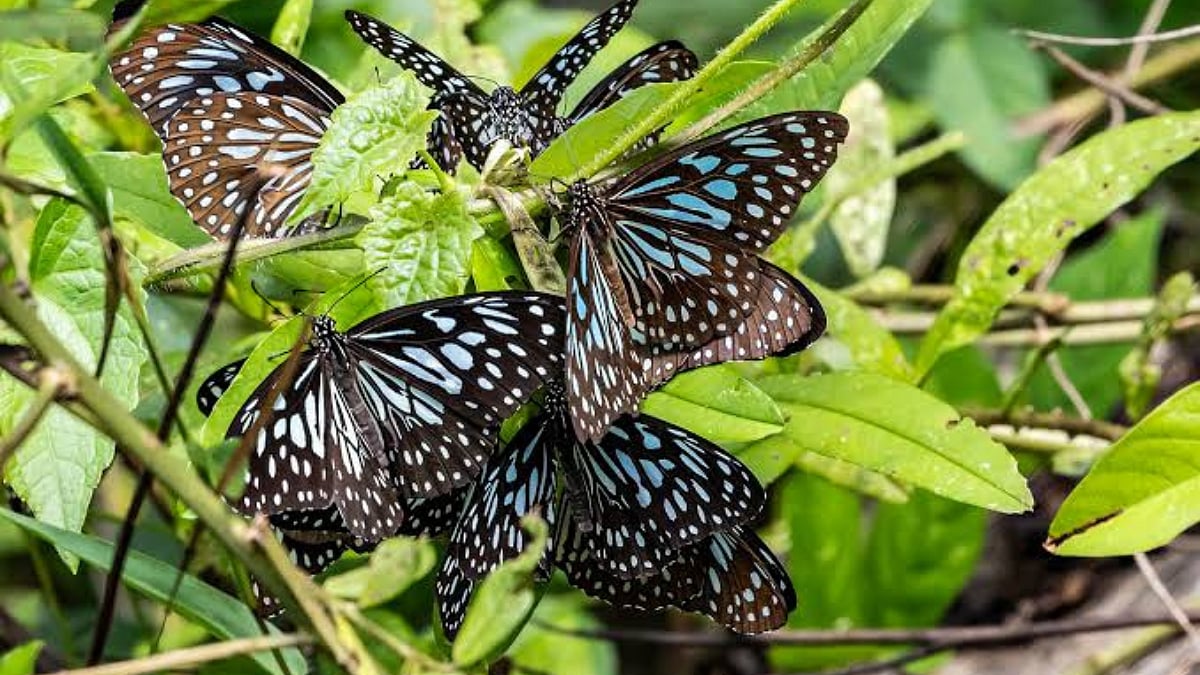
A spectacular natural phenomenon is underway in Tamil Nadu as thousands of blue tiger and dark blue tiger butterflies take to the skies during their annual seasonal migration. Coinciding with the onset of the Northeast Monsoon, the movement sees these delicate insects travel from the Eastern Ghats and central plains towards the Western Ghats.

Tamil Nadu Witnesses Annual Butterfly Migration As Blue Tigers Move Towards Western Ghats |
A spectacular natural phenomenon is underway in Tamil Nadu as thousands of blue tiger and dark blue tiger butterflies take to the skies during their annual seasonal migration. Coinciding with the onset of the Northeast Monsoon, the movement sees these delicate insects travel from the Eastern Ghats and central plains towards the Western Ghats.
The annual migration is a remarkable example of how wildlife responds to changing weather patterns. The movement primarily involves milkweed butterflies and takes place in two directions at different times of the year.
ALSO READ
Why Are Butterflies Migrating?
The migration typically begins around mid-October, with waves continuing through November and December as the Northeast Monsoon sets in. As rainfall intensifies across the eastern parts of Tamil Nadu, butterflies move towards the foothills and shola landscapes of the Western Ghats. The movement covers several districts, including Salem, Namakkal, Erode, Tiruppur, Coimbatore and the Nilgiris.
The journey is not a one-way movement. Around April and May, before the Southwest Monsoon, the butterflies begin their reverse migration towards the eastern plains. This seasonal pattern is an important part of their life cycle and highlights the connection between insect behaviour, rainfall and regional ecosystems.
ALSO READ
Which Butterfly Species Take Part?
The blue tiger (Tirumala limniace) and dark blue tiger (Tirumala septentrionis) are among the principal species involved in the migration. Other commonly associated species include the common crow (Euploea core) and double-branded crow (Euploea sylvester).
A Natural Spectacle Worth Protecting
Beyond its visual appeal, the annual migration highlights the importance of conserving butterfly habitats across the Eastern and Western Ghats. These ecosystems provide essential resources for butterflies and support wider biodiversity.
RECENT STORIES
-
-
-
-
-