Revealed! How Easy It Is For Gen Z To Get Drugs Into Concerts
A fatal Mumbai concert spotlights how Gen Z is sourcing MDMA through digital networks and bypassing security at large-scale events

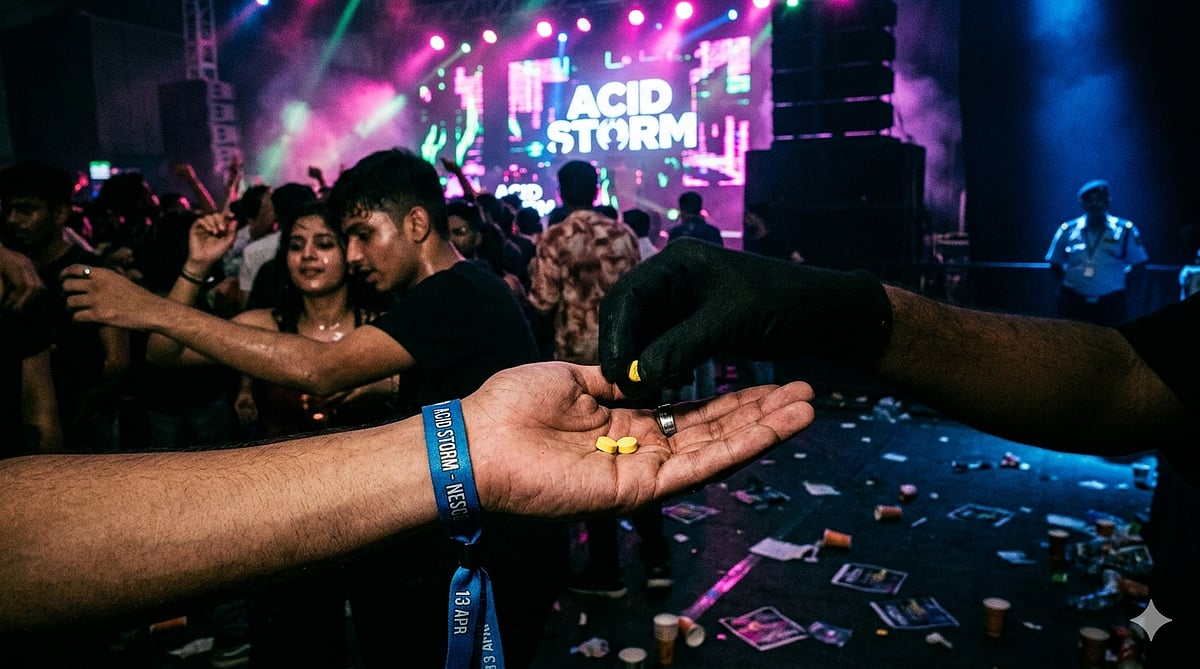
The invitation arrived on WhatsApp like thousands of others that weekend. A rave, warehouse party, the hard techno Duo 9x9’s “Acid Storm” India tour at Mumbai’s NESCO Exhibition Centre.
However, what began as another April party in Mumbai’s booming night life scene ended in tragedy when two students allegedly consumed yellow MDMA pills and collapsed inside the venue. Their deaths have since triggered a far wider investigation. One that the police say has uncovered a network stretching from college hostels and social circles to suppliers, payment apps and compromised venue security. The case has shaken the city. Drugs are no longer confined to hidden corners or street-level dealing. Instead, investigators believe they are moving through this chain of digital systems, social networks and premium venues used daily by urban youth.
Night that turned fatal
When the two students collapsed, panic replaced music. Emergency responses followed, but not in time to save everyone. The incident has raised urgent questions about how narcotics entered a large, organised venue hosting thousand, whether the system meant to ensure safety which failed at multiple levels. According to police, the drugs were procured in advance through a chain of student contacts and outside suppliers.
Security gaps
Investigators alleged that some bribed security personnel at the venue allowed individuals to bypass checks and enter without valid access. If proven, it points to a wider structural vulnerability in large-scale events where temporary staff, low wages and peer pressure creates opportunities for compromise. "Event Organisers must ensure that drugs and liquor are not admissible inside the venue," says a police officer involved in investigation, who prefers not to be named.
ALSO READ
In response, NESCO said it is cooperating with the authorities while distancing its staff from direct involvement. “We are cooperating fully with the investigating authorities and will continue to engage proactively with organisers, security agencies, and all relevant stakeholders to ensure our premises remain secure and compliant,” a NESCO team statement said.
“We are, however, deeply concerned that two of our officials continue to remain in judicial custody despite confirmation of no employee involvement in this matter.”
Network
Police say the case reveals a distribution system built on familiarity and convenience rather than secrecy. Orders were allegedly placed through messaging platforms such as WhatsApp and Snapchat. Payment moved through UPI and bank transfers, blending into routine financial activity. Deliveries were handled through couriers, personal contacts and hand to hand exchanges. This structure allows suppliers to remain distant while relying on trusted social networks. Each link in the chain operates with limited knowledge, making the network difficult to dismantle entirely.
Students’ crisis
A key concern is emerging from the investigation is the alleged involvement of students and professors as intermediaries. These are not stereotypical criminals, but people embedded in everyday student life, attending classes, living in hotels and moving within similar circles. That proximity, which lowers the risk of ensnared. When access comes through a known acquaintance, experimentation can feel normal rather than dangerous.
“Some don't know how to react in these cases. They want to get out of it. They are aware that they have done something wrong and they want to, you know, get help, but they don't know how to. And with this stress of not knowing what to do, they spiral more down into the drug abuse,” explains Soubhit Mondal, an advertising student.
His observations reflect a quieter dimension of the crisis — confusion, hesitation and fear that often prevent timely help.
Change in landscape
Mumbai’s nightlife has changed rapidly in recent years, with large scale music concerts and curated party experiences drawing youth. But this shift mirrors global trends by bringing new challenges. Drugs such as MDMA have become more common in party circuits, according to agencies. These substances are often sold in pill form, making them easy to transport and distribute, but their composition is unpredictable, increasing the risk of overdose.
Question remains
The danger does not always appear distant or unfamiliar. It can arrive through a message, a payment request or a familiar face in the crowd.
Rajat Choudhary, 22, concludes sadly, “The saddest part is that the authorities know the network. But nexus is so strong and economically beneficial that they don’t want to crack it.”
RECENT STORIES
-
-
-
-
-