Nilgiri Todas To Exhibit Traditional Art In Mumbai
A long-standing collaboration rooted in trust and fieldwork sees photojournalist Ramya Reddy and community artisans present the intricate Toda craft at 47-A Art Gallery, Khotachiwadi, Mumbai, on display from June 13 to 28.

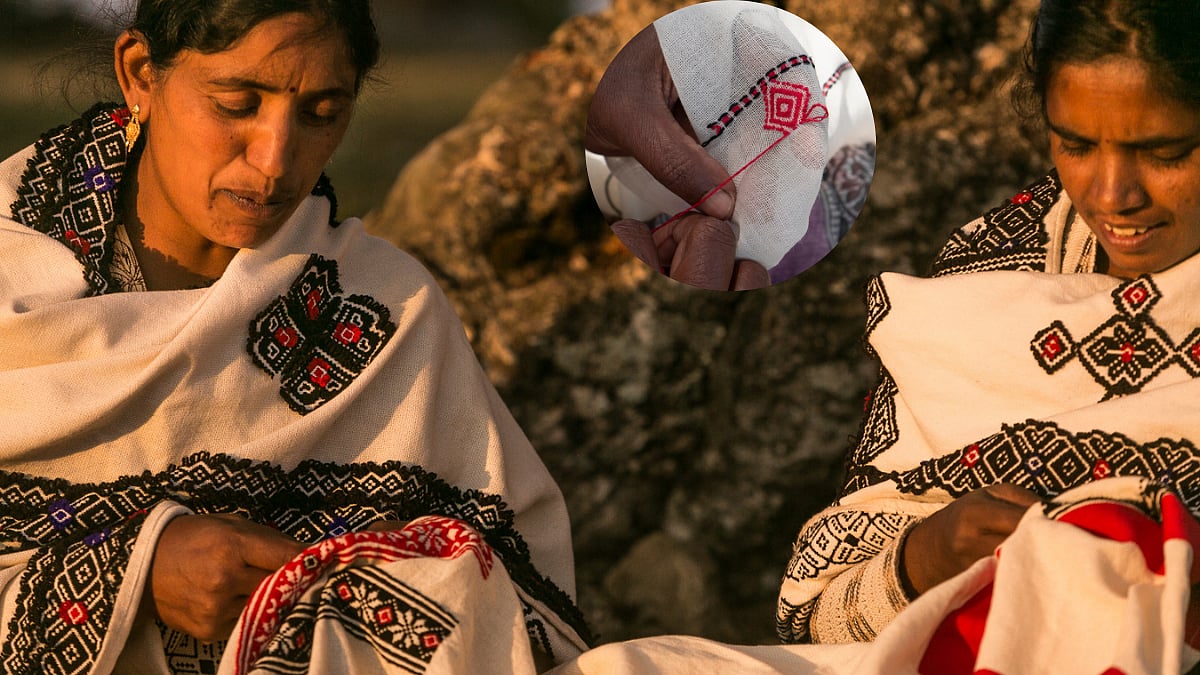
Todas are a shy community staying in the buffer areas and interiors of the Nilgiri forests. Years ago, Ramya Reddy, a photojournalist, was intrigued by Nilgiri jungles. And she struck a chord with Todas while working on her book Soul Of Nilgiri. This bond grew stronger. Today, with the help of Prabhu Vishwanathan, she is exhibiting the exquisite embroidery work of Todas at 47-A Art Gallery, Khotachiwadi, in Mumbai. During a chat with The Free Press Journal, Ramya, Prabhu and Seetha (representative of Toda) shared the process.
Excerpts from the interview:
Ramya, when and what triggered the desire to explore the Nilgiris?
The Nilgiris have been part of my life for many years. What began as a photographer’s curiosity gradually became a much deeper engagement with the landscape, its people, and its stories. Over time I found myself increasingly drawn to the indigenous communities of the hills, particularly the Todas, whose relationship with land, buffalo, ecology, and craft offered a very different way of understanding the mountains. Passive, passionate observation eventually became a dynamic, long-term commitment to documenting, learning, and working alongside the community. That journey culminated in my book Soul of the Nilgiris, and it continues to shape much of my work today.
Ramya, The Toda community is often described as private and reserved. How did you build trust?
Trust was built slowly over many years, and it is an ongoing, "earned" process. There was no "single" moment when a door opened.
I spent time listening, returning, participating in daily life where appropriate, and showing up consistently. Relationships developed through friendship, shared experiences, and mutual respect. The book project itself involved years of conversations, visits, and collaboration.
I think trust comes when people recognise that you are genuinely interested in understanding rather than extracting, and that you are willing to invest time without expecting immediate outcomes. The biggest learning has been that with communities such as this, you must wait for their outreach; they will approach you when they feel ready and reciprocate your trust. It's an organic, patient and instinctive relationship.
What materials were traditionally used in Toda embroidery, and what is used today?
Traditionally, Toda embroidery was worked on the distinctive white cloaks worn by the community, using hand-spun cotton and later commercially available cotton, and acrylic threads. The embroidery itself is remarkable because it is executed entirely by counting threads in the fabric rather than drawing patterns onto the cloth, using only a single needle and their hands. Today, while the embroidery technique remains unchanged, artisans work on a wider range of fabrics and products. At Coonoor & Co, we work with weavers and the artisans in carefully experimenting with materials such as organic cotton, linen, wool blends, khadi, Tencel and other textiles, while ensuring the embroidery remains faithful to tradition.
Are the works being displayed original Toda designs or contemporary adaptations?
The Mumbai exhibition at 47-A includes both traditional motifs and contemporary interpretations developed through ongoing collaboration with Toda artisans. The foundation remains the Toda visual language itself. Many motifs draw inspiration from longstanding patterns, cultural symbols, the landscape, flora, and lived traditions of the community. At the same time, we continue to explore new compositions, scales, and applications that allow the embroidery to remain relevant in contemporary contexts. The process is collaborative rather than prescriptive. New work emerges through dialogue, experimentation, and mutual exchange, while remaining rooted in the integrity of the craft.
Prabhu, what exactly is your involvement and how and why did you get involved?
I met Ramya during an event in Chennai where she presented her book, "Soul of the Nilgiris." Her limitless passion for the indigenous communities in the Nilgiris ecosystem struck me, especially since I have a personal connection to this region. I love Indian art and textiles, and her vision for the Toda and their embroidery was very compelling. Somehow, seamlessly, we began to work together almost from the very outset. Today, I am a director at the company that oversees Brand Coonoor & Co; more importantly Ramya is like family now, and we collaborate on non-profit projects in the Nilgiris biosphere.
Seetha, was it challenging to adapt to the needs of the exhibition?
To be honest, it wasn't challenging because we stayed true to our tradition and our art. The embroidery we create is as it always has been. Whether we work from home or showcase our work in big cities like Mumbai, we embroider as we have done for generations. So there has been no difficulty planning for this exhibition, because our lives are not based on any specific event. We are immersed in our work. Yes, it is a long way to travel, but as a group, it's fun.
ALSO READ
Seetha, did you work on creating new designs keeping the city crowd and urban demographics in mind?
Our fundamental artistic and visual language has, is, and will continue to be faithful and authentic to our legacy. Nothing changes. However, we have long wished to enrich our art form and make it more relevant to a contemporary audience, which is why we reached out to Ramya. Our collaboration with Coonoor and Co and their willing weaver partners exposes us to new fabrics and design layouts, thus expanding our visual language and creating new motifs. Our minds are more aware, and responding to these new ways of seeing our work.
Seetha, what was the one thing that convinced you to trust Ramya and exhibit your work?
Our wish has always been for people outside the Nilgiris, across India and then around the world—to know and love our work. Outsiders had never much understood or appreciated Toda embroidery before this. But Coonoor&Co, Ramya and Prabhu showed us a new world. All this while, everything we were taught and everything we created, we offered to the market and the public as a craft. But now we are being challenged to work in new ways, to transform a craft into an art form, to embrace new-age materials and to be open to changing generational approaches for our own betterment.
RECENT STORIES
-
-
-
-
-