Gangaur Festival Lights Up Rajasthan’s Cities; Here’s How People Celebrated
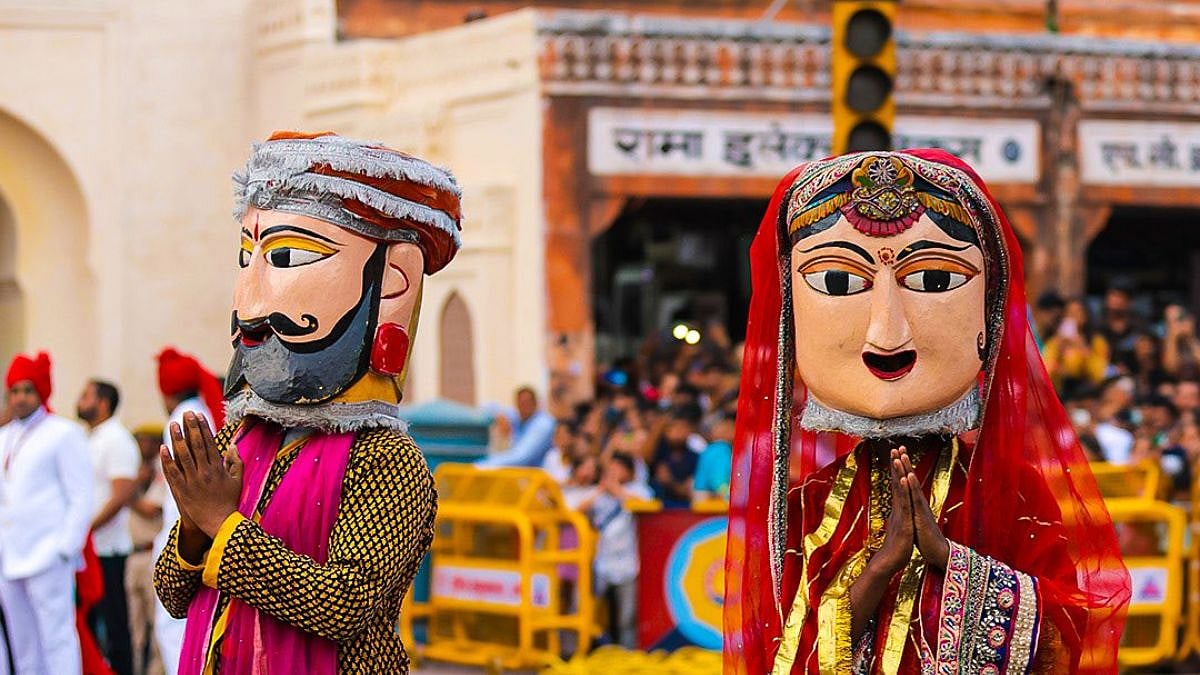
Rajasthan's capital city and Udaipur came alive during the celebration of Gangaur with colorful processions, traditional rituals, folk music, dance, and cultural celebrations, which also included royal elephants. While Gangaur Mata's royal procession was also taken out, artists involved in many cultural programs of Rajasthan's cultural art were also present.

Gangaur Festival |
Gangagur is a vibrant festival which begins a day after Holi and continues for about 16 to 18 days, culminating in grand processions and rituals. The festival was celebrated in many parts of Rajasthan on Saturday, March 21, 2026. The vibrant festival of Gangaur brings a wave of colour, devotion, and celebration across Rajasthan, lighting up cities like Jaipur, Udaipur, Jodhpur, and Bikaner.
It is dedicated to Goddess Gauri, an incarnation of Parvati. The goddess is considered the symbol of marital bliss and prosperity. The festival, which is celebrated with great enthusiasm, especially by women, is also observed in other parts of India, including parts of MP, Haryana, and Gujarat.
Celebrations of Gangaur in Jaipur and Udaipur
Rajasthan's capital city and Udaipur came alive during the celebration of Gangaur with colorful processions, traditional rituals, folk music, dance, and cultural celebrations, which also included royal elephants. While Gangaur Mata's royal procession was also taken out, artists involved in many cultural programs of Rajasthan's cultural art were also present. The procession departed from the city Palace and passed from Tripolia Gate, Chhoti Chaupar, and Gangauri Bazaar to Talkatora/Pondrik Park, with a royal aarti at Tripolia Gate.
Goodess Gauri worshipped Lord Shiva in Jaisalmer
Gangaur is not just a festival, but it's a living history. In the historic city of Jaisalmer, a unique tradition comes alive every year during the month of Chaitra. The Gangaur festival, dedicated to Lord Shiva and Goddess Parvati, is celebrated here with a distinctive local twist. Here, people worship Goddess Parvati without Lord Shiva. According to folklore, the idol of Lord Shiva, known in Jaisalmer as Eshar, was forcibly taken by residents of Bikaner around 400 years ago, and since then, people of the city have only offered prayers to Goddess Gauri with the hope that the idol of Eshar will return to its rightful place.
ALSO READ
Women were seen in Rajasthani attire
One of the key highlights of the festival was that the idols of Lord Shiva (Isar) and Goddess Gauri (Gangaur) were beautifully decorated. Women dressed in traditional attire wore vibrant lehengas and heavy jewellery, and carried the idols on their heads while singing folk songs. The rituals also included offering water, flowers, sweets, and mehendi to the goddess.
RECENT STORIES
-
-
-
-
-