Indore High Court Treats WhatsApp Messages As Dying Declaration In Suicide Case
The accused denied involvement and argued that they had been falsely implicated because of prior enmity. Their counsel also questioned the prosecution case on several grounds, including the absence of a mobile-related CAF form in the charge sheet, the lack of documentary evidence regarding the alleged land dispute.

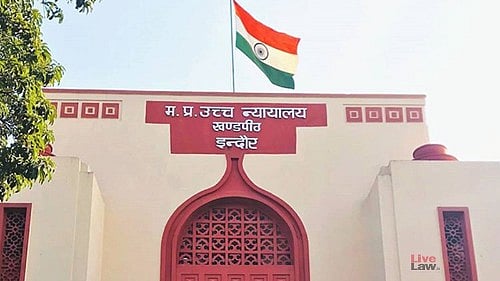
Officers' 'Lethargy And Cavalier Attitude' Costing State Dearly: Indore High Court | Representative Image
Indore (Madhya Pradesh): The Indore bench of Madhya Pradesh High Court has rejected the bail plea of three men accused in connection with the alleged suicide of a 25-year-old Bhil man in Dhar district, holding that WhatsApp messages sent by the deceased shortly before his death constituted a “crucial prima facie dying declaration” naming the accused.
Justice Jai Kumar Pillai passed the order in a case registered under Section 108 of the Bharatiya Nyaya Sanhita (BNS) and Section 3(2)(v) of the Scheduled Castes and Scheduled Tribes (Prevention of Atrocities) Act.
According to the prosecution case, the deceased, Santosh alias Lakhan, son of Bhuralal Ausari, was a resident of village Jharipada in Dhar district. During the investigation, his father and brother allegedly told police that Karan, Dharmendra and Umesh -- sons of Chunnilal Jat, Babulal Jat and Mahesh Jat respectively -- had threatened, abused and harassed Santosh over an old agricultural land dispute.
The case took a significant turn after investigators examined the deceased’s mobile phone. A panchnama recorded that on May 7 shortly before his death, Santosh sent three WhatsApp messages to his father’s mobile number.
The messages named Karan, Umesh and Dharmendra. The High Court noted that this electronic evidence was a key piece of the prosecution case and described it as a prima facie dying declaration explicitly naming the appellants.
The accused denied involvement and argued that they had been falsely implicated because of prior enmity. Their counsel also questioned the prosecution case on several grounds, including the absence of a mobile-related CAF form in the charge sheet, the lack of documentary evidence regarding the alleged land dispute and the fact that the mobile-phone panchnama indicated friendly relations between Umesh and the deceased.
The State opposed the bail plea, relying on the material collected during the investigation and the nature of the allegations.
After examining the case diary, post-mortem report, witness statements and WhatsApp messages, the High Court said the prosecution material, at the bail stage, disclosed a strong prima facie case. The court also noted that statements of the deceased’s father and brother supported the allegation of continuing threats, abuse and harassment over the agricultural land dispute.
The court declined to examine the defence claims in detail, observing that a bail court is not required to conduct a mini-trial or meticulously weigh evidence. It said the issues raised by the accused were matters for trial and would have to be tested through evidence.
“Looking into the case as a whole,” the High Court found that the contemporaneous WhatsApp messages naming the accused, coupled with statements from the deceased’s immediate family, established a strong prima facie case.
The court consequently upheld the June 30, 2026 order of the Special Judge, SC/ST (POA) Act, Dhar, which had rejected bail. The criminal appeal was dismissed and the bail plea of the three accused was rejected.
ALSO READ
RECENT STORIES
-
-
-
-
-