IIT Indore scientists find new therapeutic strategies against bacterial meningitis
Meningitis is a severe infection that affects the meninges, a protecting membrane layer of the brain and spinal cord.

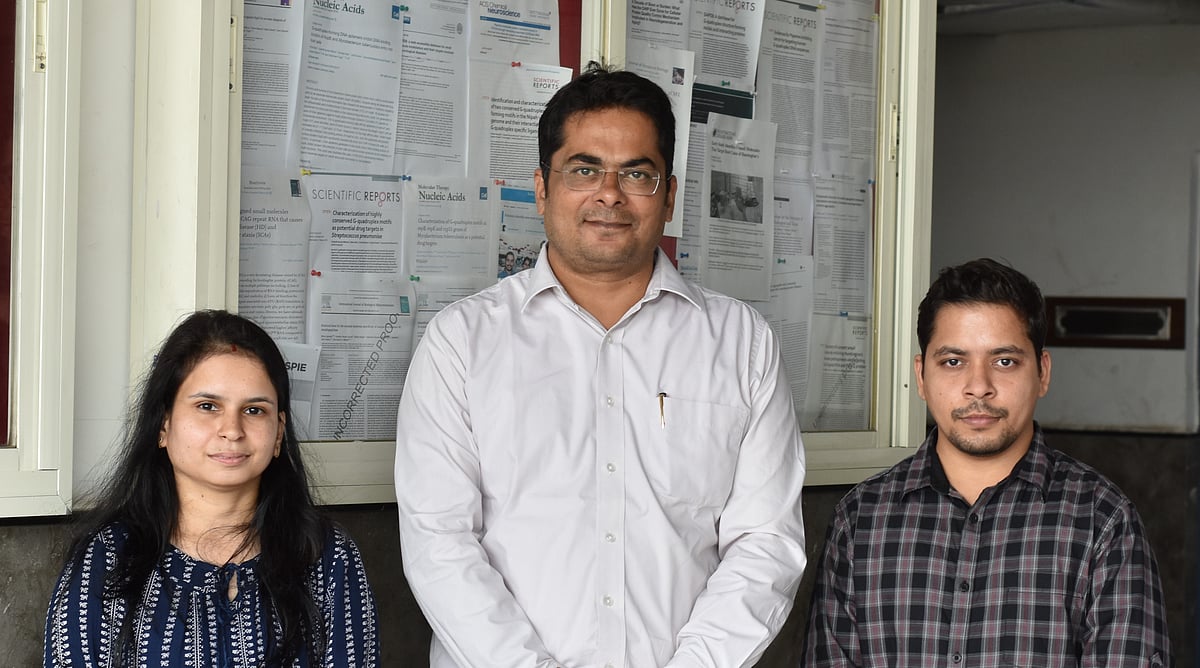
The researchers group |
Indore (Madhya Pradesh): A group of Indian researchers at Indian Institute of Technology Indore have observed various evolutionary conserved regions in the genome of meningitis, causing Neisseria meningitidis bacteria. These regions can be used as therapeutic targets against the bacterium.
Meningitis is a severe infection that affects the meninges, a protecting membrane layer of the brain and spinal cord. Meningitis has remained a major public health challenge for the past few decades.
Bacteria, viruses, or fungi can cause this disease, but bacterial infection is the primary cause.
To explore this exception of regulatory components, the research group of IIT Indore has identified various evolutionary conserved sites in the genomes of meningitis-causing bacterium that form a unique secondary structure.
“In the new study, the group thoroughly analyzed the Neisseria meningitidis genome and observed these G-quadruplex motifs in various essential genes that are required for host cell attachment, infection, genome repair, and recombination,” a press release issued by IIT Indore said.
“Various computational and lab-based experiments were performed that showed that targeting these secondary structures decreases the growth of the bacterium. The group is now screening novel molecules that can target these structures and can be used as anti-meningococcal therapeutics,” the release added.
Prof Amit Kumar, head of the BioSciences and Biomedical Engineering department at IIT Indore, who is the principal investigator of the current work said, “The results of this study are promising and upholds the usage of the evolutionary conserved genomic regions of the meningococcus to develop new therapeutic strategies against the deadly bacteria. Neisseria bacterium family comprises various members and out of which only two are pathogenic. Our group has identified various genomic regions that are only present in pathogenic Neisseria species and can be used as a selective target against these disease-causing agents.”
The current work is now published in a reputed American Chemical Society Journal - ACS infectious disease. The team led by Kumar included Neha Jain and Uma Shankar.
ALSO READ
RECENT STORIES
-
-
-
-
-