Why India's New Envoy To China Is Visiting Tibet — And What It Means For New Delhi
India's Ambassador to China, Vikram Doraiswami, visited Lhasa to review preparations for the 2026 Kailash Manasarovar Yatra, marking his first major trip outside Beijing. The visit highlights efforts to facilitate Indian pilgrims, strengthen people-to-people ties, and signal improving India-China relations. It also underscores Tibet's strategic importance in bilateral diplomacy and border affairs.

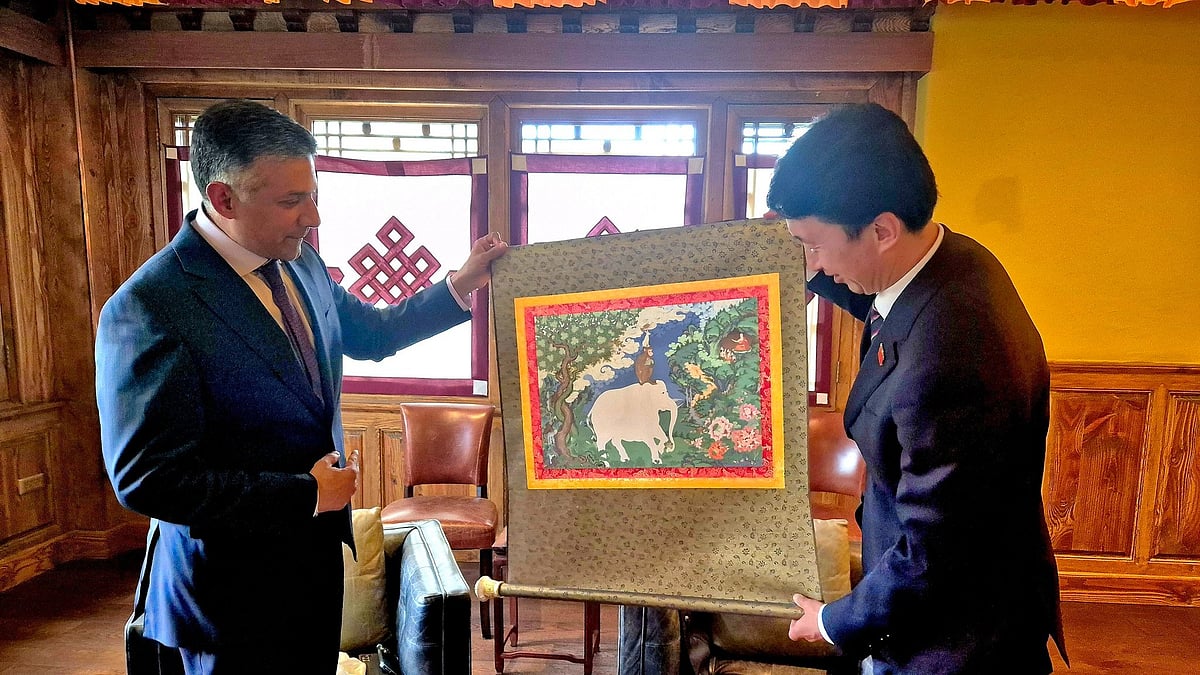
India's newly appointed Ambassador to China, Vikram Doraiswami, has made a significant visit to Lhasa in the Tibet Autonomous Region (TAR), marking his first major trip outside Beijing since assuming office in May 2026. During the visit, he met senior Tibetan officials, including TAR Vice Chairman Zhao Peng, to review preparations for the resumption of the Kailash Manasarovar Yatra, one of the most revered pilgrimages for Indian devotees.
The visit is being viewed as more than a routine diplomatic engagement. It reflects India's efforts to facilitate a long-awaited religious pilgrimage while simultaneously testing the waters for broader normalisation in relations with China after years of tensions.
Reviewing Preparations for the Kailash Manasarovar Yatra
A key objective of Doraiswami's visit was to assess logistical and infrastructural arrangements for the 2026 Kailash Manasarovar Yatra, which is set to resume after a prolonged hiatus caused by the COVID-19 pandemic and the deterioration in India-China relations following the 2020 Galwan Valley clash.
The pilgrimage will be conducted between June and August 2026, with approximately 1,000 Indian pilgrims travelling in 20 batches of 50 each through the Lipulekh Pass in Uttarakhand and Nathu La in Sikkim. Indian and Chinese authorities have been coordinating closely to ensure smooth movement, accommodation, medical assistance, and security for the pilgrims.
Why the Yatra Matters to India
Mount Kailash and Lake Manasarovar hold immense spiritual significance for Hindus, Buddhists, Jains, and followers of Bon traditions. For Hindus, Mount Kailash is regarded as the abode of Lord Shiva, making the pilgrimage one of the most sacred journeys in the faith.
For India, ensuring access to the pilgrimage is not merely a religious issue but also a matter of cultural diplomacy and people-to-people engagement. The resumption of the Yatra fulfills a longstanding demand from devotees and signals a return to normalcy after years of disruption.
A Symbol of Improving India-China Relations
Doraiswami's visit comes amid cautious efforts by both countries to stabilize bilateral relations. Since the military standoff along the Line of Actual Control (LAC) in eastern Ladakh, diplomatic ties have remained strained despite multiple rounds of military and diplomatic negotiations.
The restoration of the Kailash Manasarovar Yatra is widely viewed as a confidence-building measure between New Delhi and Beijing. By facilitating a religious pilgrimage with deep cultural roots, both sides are demonstrating a willingness to cooperate in areas that directly affect citizens, even as larger strategic disputes remain unresolved.
Diplomatic observers often view the status of the Yatra as a barometer of the broader India-China relationship.
The Strategic Importance of Tibet
Beyond the pilgrimage, Tibet occupies a central place in India's strategic calculations. The region shares a long border with India and is crucial to issues involving border security, infrastructure development, and transboundary rivers that originate on the Tibetan Plateau.
Doraiswami's engagement with Tibetan authorities provides India an opportunity to better understand developments in a region that remains strategically sensitive. The visit also underscores India's enduring civilizational links with Tibet while carefully navigating the political sensitivities surrounding the Tibetan issue.
India's Calibrated Approach
The visit reflects India's broader strategy of engaging China where cooperation is possible while maintaining firmness on issues related to national security and territorial integrity. New Delhi continues to strengthen border infrastructure and strategic partnerships while simultaneously pursuing diplomatic engagement on matters such as trade, connectivity, and cultural exchanges.
By prioritizing the Kailash Manasarovar Yatra, India is pursuing a practical and people-centric initiative that benefits pilgrims while helping rebuild diplomatic trust.
ALSO READ
More Than a Pilgrimage
While the immediate purpose of the visit is to ensure a smooth pilgrimage season, its significance extends far beyond logistics. Doraiswami's trip to Tibet signals a cautious thaw in India-China relations, reinforces India's civilizational ties with Tibet, and demonstrates New Delhi's commitment to maintaining dialogue in one of its most complex bilateral relationships.
In a relationship often dominated by border disputes and strategic rivalry, cooperation over the Kailash Manasarovar Yatra offers a rare opportunity for both sides to build goodwill and restore a measure of confidence.
RECENT STORIES
-
-
-
-
-