Uttar Pradesh Govt Puts On Hold Mandatory Expiry Date Labelling On Eggs Over Supply Fears, Price Concerns
The Uttar Pradesh government has put on hold mandatory expiry date labelling on eggs, citing risks of supply disruption and price rise. With daily demand at 3.35 crore eggs and a major supply gap, officials said strict enforcement could trigger shortages, prompting consultations with supplier states before a final decision is taken.

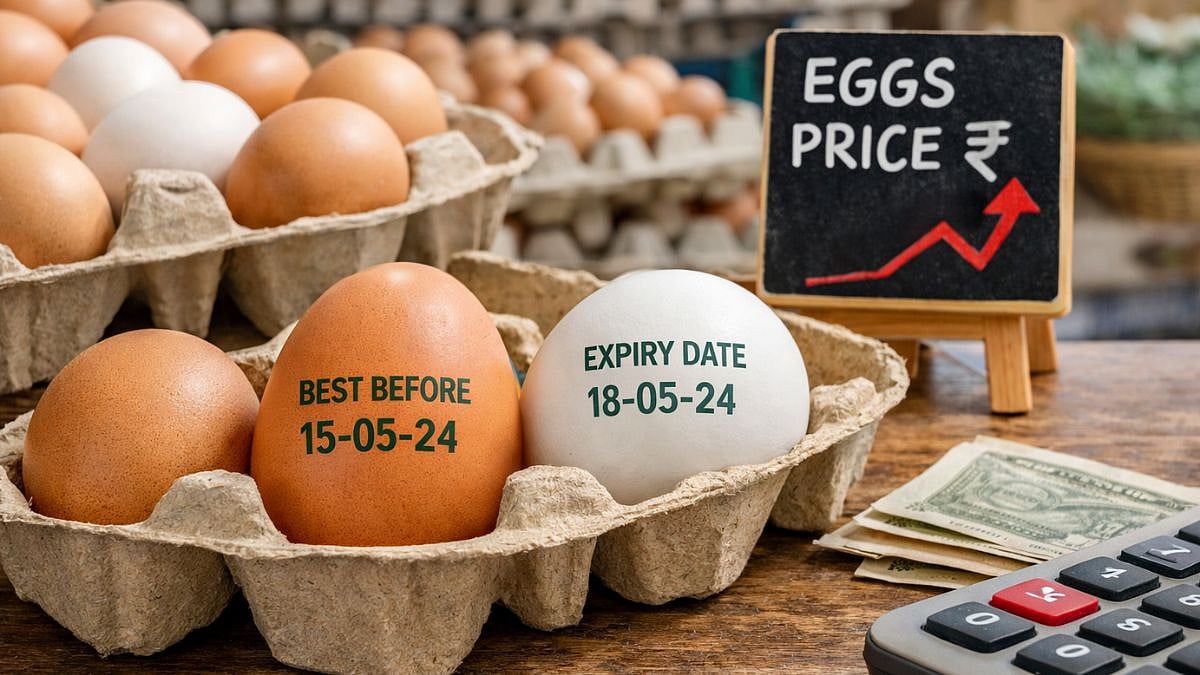
Uttar Pradesh pauses egg expiry labelling rule amid concerns over supply shortages and rising prices | AI Generated Representational Image
Lucknow, March 31: The Uttar Pradesh government has put on hold the implementation of mandatory expiry date labelling on eggs, citing concerns over a potential supply disruption and a sharp rise in prices.
Officials in the Food Safety and Drug Administration said enforcing the rule at this stage could lead to an immediate shortage, as a significant portion of eggs consumed in the state comes from outside and is not stamped with production or expiry dates.
Dependence on external supply raises concerns
Uttar Pradesh consumes around 3.35 crore eggs daily, while local production stands at about 1.80 crore. The remaining 1.55 crore eggs are sourced from states such as Haryana, Punjab, Telangana, Andhra Pradesh, and Tamil Nadu. Eggs supplied from these states are typically stamped only for export, not for domestic trade.
Authorities said that if the rule is enforced strictly, unstamped eggs from these states would not be allowed to be sold in Uttar Pradesh markets, which could severely disrupt supply and push up prices.
Logistical hurdles in implementation
Officials also flagged logistical challenges in implementing the rule. Eggs would need to be stamped with production and expiry dates immediately after being laid, making it difficult to manage sorting, storage, and distribution. Variations in storage conditions further complicate the process, as eggs have a longer shelf life under refrigeration compared to room temperature.
The government is now planning to consult major supplier states before taking a final call on the issue.
Industry raises concerns over delay
The decision has, however, drawn criticism from industry representatives. VP Singh, president of the Uttar Pradesh Poultry Development Committee, alleged that the delay is due to pressure from large traders and said the state should have coordinated with supplier states to ensure compliance with the rule introduced by the Centre in February 2023.
Also Watch:
ALSO READ
FSDA Commissioner Roshan Jacob said the matter involves multiple factors, including the demand-supply gap, the interests of small poultry farmers, and the feasibility of implementation. She said a final decision will be taken after consultations with senior officials from the agriculture production and animal husbandry departments.
RECENT STORIES
-
-
-
-
-