India’s Choice Of Dinesh Trivedi As Envoy To Dhaka Greeted With Cautious Optimism In Bangladesh
India has appointed former Union minister Dinesh Trivedi as its next envoy to Bangladesh, a rare political posting signalling emphasis on bilateral ties. Diplomats see it as a strategic move to reset relations amid tensions, trade imbalance, water treaty renegotiation, and regional political shifts, with expectations of higher-level engagement and improved cooperation.

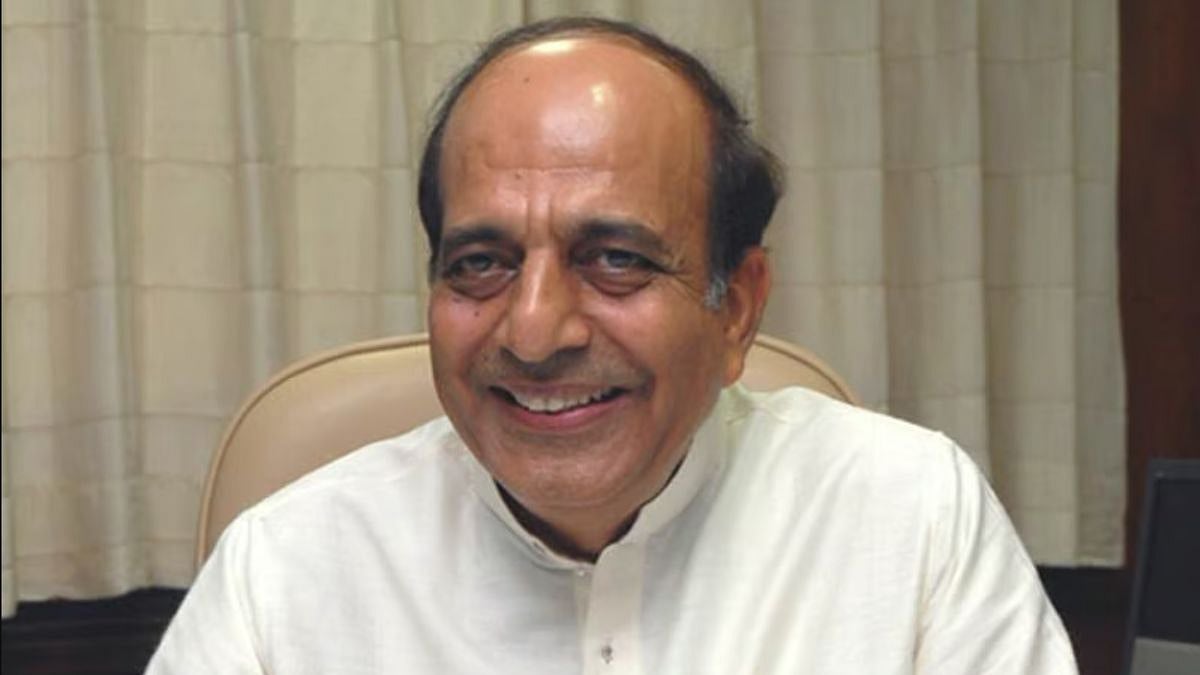
India’s Choice Of Dinesh Trivedi As Envoy To Dhaka Greeted With Cautious Optimism In Bangladesh | file pic
New Delhi: Bangladesh watchers have reacted with “cautious optimism” to the appointment of former Union Minister and BJP leader Dinesh Trivedi as the next envoy to Dhaka.
Trivedi, who takes over the reins from Pranay Verma, who is now set to be posted to Brussels as India’s envoy to the EU, is a rare political appointment by the Modi government. Diplomats have welcomed the move, stating that it shows the importance India is attaching to recalibrating the relationship with Dhaka.
Also Watch:
One senior diplomat points out that the significance of Trivedi’s appointment could be seen in the fact that this is the first non-career diplomat to be appointed to a neighbouring country by this administration.
Trivedi, 75, has been Union Minister for Railways and Minister of State for Health and Family Welfare in the government led by Manmohan Singh. He has also represented West Bengal in both the Rajya Sabha and the Lok Sabha.
He was elected to the Lok Sabha from the Barrackpore constituency from 2009 to 2019 and earlier served many terms in the Rajya Sabha. He joined the Bharatiya Janata Party in 2021 after resigning from the All India Trinamool Congress “The government of India has the discretion to appoint five or six non-cadre officers to various postings,” says a senior diplomat, adding that this is something the Modi government has largely avoided during its time in office.
“It is most likely that since Trivedi is a political functionary and not a diplomat; he may even be given a Cabinet-rank ensuring that he would have direct access to the prime minister. This is a very important signal that we are conveying to Bangladesh.”
India has used non-IFS functionaries before to convey symbolic messages to the host country. Lt Gen. (Retd) S.K. Sinha, who was the Vice Chief of Army Staff, was appointed to be India’s envoy to Nepal in 1990 just as the country was transitioning to become a multi-party democracy.
Jurist and constitutional scholar L.M. Singhvi was made India’s High Commissioner to the UK in 1991 at a time when India’s relations with Britain were especially sensitive. Singhvi, who became a Member of Parliament in the Rajya Sabha, held Cabinet rank through his tenure in the UK. That Modi government has chosen to appoint a politician over a traditional diplomat conveys many messages.
ALSO READ
Some analysts believe Trivedi’s appointment is a bid to smooth over the hurt the present administration may be feeling over New Delhi’s refusal to extradite former Bangladesh Prime Minister Sheikh Hasina and look to reset the relationship. Bangladesh expert, Dr Smruti Pattanaik, who is a Research Fellow at the Manohar Parrikar Institute for Defence Studies and Analysis (IDSA), believes that Trivedi’s appointment comes at the right time.
“It is a crucial time for India and Bangladesh to mend their ways. In the past 18 months, when the interim regime was in power, the relationship touched rock-bottom. It was the worst period of the bilateral relations,” she said. “So when you have a politician with the kind of experience that he has, it is an asset.
ALSO READ
He is familiar with Bengali politics and a fluent speaker of Bangla. So his appointment will help further the bilateral relationship, which has already seen signs of improvement.” India certainly has new challenges to navigate in the political environment in Bangladesh. The Awami League has been banned, and there is a new opposition party, the Jamaat-e-Islami, which New Delhi has not formally been in touch with before.
It is here analysts believe that Trivedi’s role will be crucial. Being a politician, his remit will be larger than that of a career diplomat, and he will be able to promise and act upon issues. The Ganges Water Sharing Treaty of 1996 expires in 2026 and has to be renegotiated.
Bangladesh has a huge trade deficit with India, which needs to be managed. Dr Pattanaik believes that the encouraging signs for New Delhi are that Bangladesh’s new Prime Minister Tarique Rahman has not indulged in the same anti-India rhetoric that the interim government had followed prior to the elections.
“Trivedi is crucial in this area, as he has the blessing of the prime minister. If a prime ministerial visit materializes it would create positive political optics and show that the relationship with the interim government is one of the past and this is a new beginning. It will also show Bangladesh the importance we attach to this relationship.”
RECENT STORIES
-
-
-
-
-