Dense Fog and Toxic Smog Trigger Massive Flight Disruptions Across North India, Over 400 Services Hit At Delhi Airport
The senior officials from the Ministry of Civil Aviation (MoCA) visited the airport operations control centre at IGI and reviewed real-time operations. The ministry directed the airports to maintain close coordination with stakeholders, ensure timely dissemination of information, and facilitate passenger convenience.

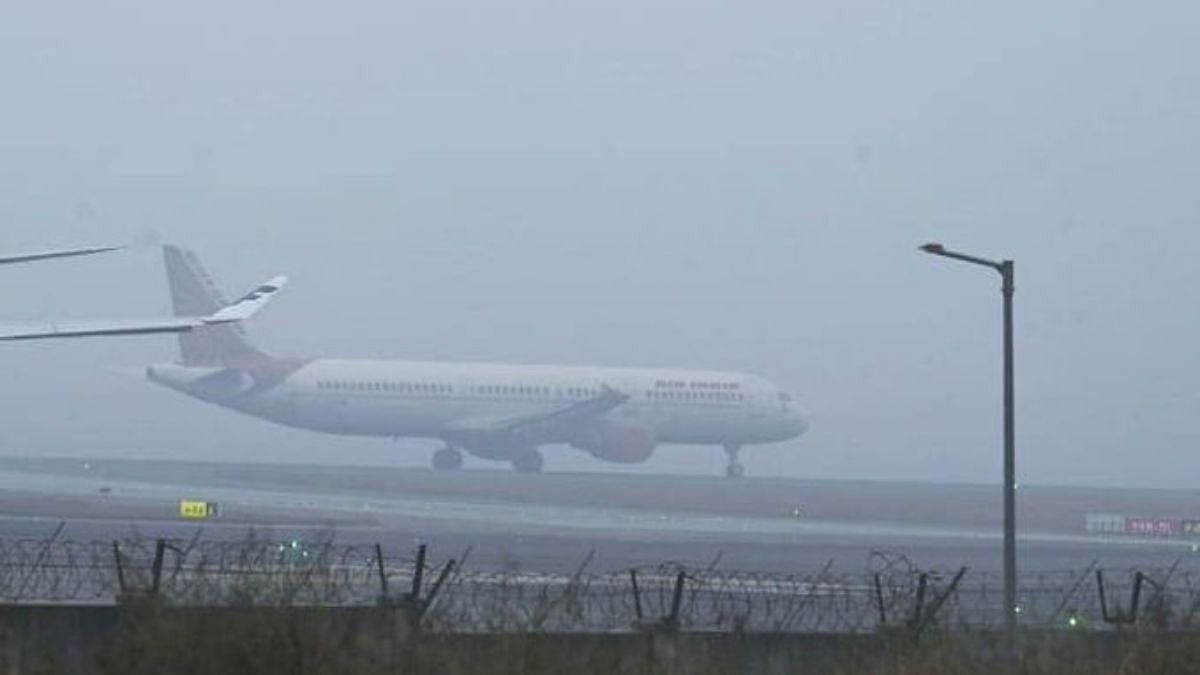
The onset of the winter season brought immediate and severe travel chaos across North India on Monday, as a combination of dense fog and hazardous air pollution choked the skies, leading to hundreds of flight disruptions. | X @BuzzAlertsLive
Mumbai: The onset of the winter season brought immediate and severe travel chaos across North India on Monday, as a combination of dense fog and hazardous air pollution choked the skies, leading to hundreds of flight disruptions. Delhi's Indira Gandhi International (IGI) Airport, the country's busiest hub, bore the brunt of the crisis, reporting over 200 cancellations and more than 300 delays.
Near-Zero Visibility Grounds Operations at IGI
The thick, persistent layer of smog-fog, which has plagued the National Capital Region (NCR), was cited as the primary cause for the grounding of services. While the IGI airport has been implementing low visibility procedures for the last two days, the situation aggravated in the early hours of Monday as the visibility plummeted to near-zero levels. While the CAT-III compliant flights, aircraft and crew equipped with precision landing using advance instrument system, continued to land and take-off before sunrise, the weather condition effectively halted departures for around six hours from sunrise.
The senior officials from the Ministry of Civil Aviation (MoCA) visited the airport operations control centre at IGI and reviewed real-time operations. The ministry directed the airports to maintain close coordination with stakeholders, ensure timely dissemination of information, and facilitate passenger convenience.
The unprecedented operational turmoil made the airlines scramble to manage the fallout, issuing urgent advisories to passengers. The Runway Visual Range (RVR) at the IGI airport dipped as low as 50 meters during peak morning hours, well below the minimum visibility required for takeoffs, which is typically 125 meters for even basic instrument-assisted operations. This forced the airlines to delay or cancel takeoffs until approximately 10am.
Airlines Cancel Hundreds of Flights Nationwide
IndiGo, the country's largest carrier, proactively cancelled over 145 flights across its network to minimise extended waiting and prioritise safety. It also announced cancellations of several flights on Tuesday due to the effects of Monday's disruptions. Air India similarly cancelled nearly 37 flights, with SpiceJet, Akasa Air, and others also reporting significant disruptions.
“Low visibility (below minima), due to dense fog, has severely impacted operations at Delhi and other airports across northern India, which is unfortunately beyond our control. Our teams are closely monitoring the situation and coordinating with Delhi airport, in line with established safety protocols,” said an IndiGo spokesperson in a statement.
While the runway visibility started improving at around 11am, stabilisation of operations continued till late evening. An advisory issued by Delhi Airport's operator GMR Airports Ltd. 6.10pm, informed the passengers that the flights operations were steadily returning to normal. “A few departures and arrivals may still be affected. Our on-ground officials are available across terminals to assist passengers and provide support,” read the advisory.
ALSO READ
Disruptions Ripple Across National Aviation Network
The severe conditions in Delhi rapidly created a cascading effect across the Indian air network. Airports in states across North India, including those in Punjab, Haryana, and Uttar Pradesh, also faced low visibility issues. The disruption's ripple effect was felt at other airports nationwide as flights originating from major southern and eastern hubs that were bound for Delhi were either cancelled or diverted.
The country's second busiest airport, Chhatrapati Shivaji Maharaj International Airport (CSMIA) in Mumbai, also saw a significant effect throughout the day with delayed flights. According to digital flight tracker app Flightradar24, the disruption index at CSMIA peaked at 4.5, signifying major problems, while the average departure delay increased to over an hour. “Due to heavy fog across parts of northern India, some flight operations may be impacted,” said an advisory from CSMIA.
Airline officials confirmed that passengers affected by cancellations were offered options for complimentary rebooking or full refunds. These refunds are mandated under the established ‘Fog Care’ initiatives, a protocol strengthened after the Directorate General of Civil Aviation (DGCA) declared the official fog window for the season to be from December 10 to February 10, 2026.
Follwing the disruptions, the Director General of Civil Aviation (DGCA) reviewed the preparations for fog conditions and instructed all regional and sub-regional offices to remain vigilant over the forecast, along with maintaining continuous oversight and thorough checking of airlines.
It also directed officers to monitor passenger inconvenience and ensure that airlines facilitate operations and discharge their responsibilities strictly as per their respective SOPs and civil aviation requirements.
To get details on exclusive and budget-friendly property deals in Mumbai & surrounding regions, do visit: https://budgetproperties.in/
RECENT STORIES
-
-
-
-
-