Chief Justice Of India Surya Kant Calls For Formal Framework To Engage Retired Judges As A ‘National Resource’
Chief Justice of India Surya Kant urged creation of a structured system to engage retired judges, calling their experience a “national resource”. Speaking in Jaipur, he proposed roles such as mediators, legal educators, pre-litigation counsellors and mentors, stressing that relying on ad hoc arrangements wastes valuable judicial expertise and public trust.

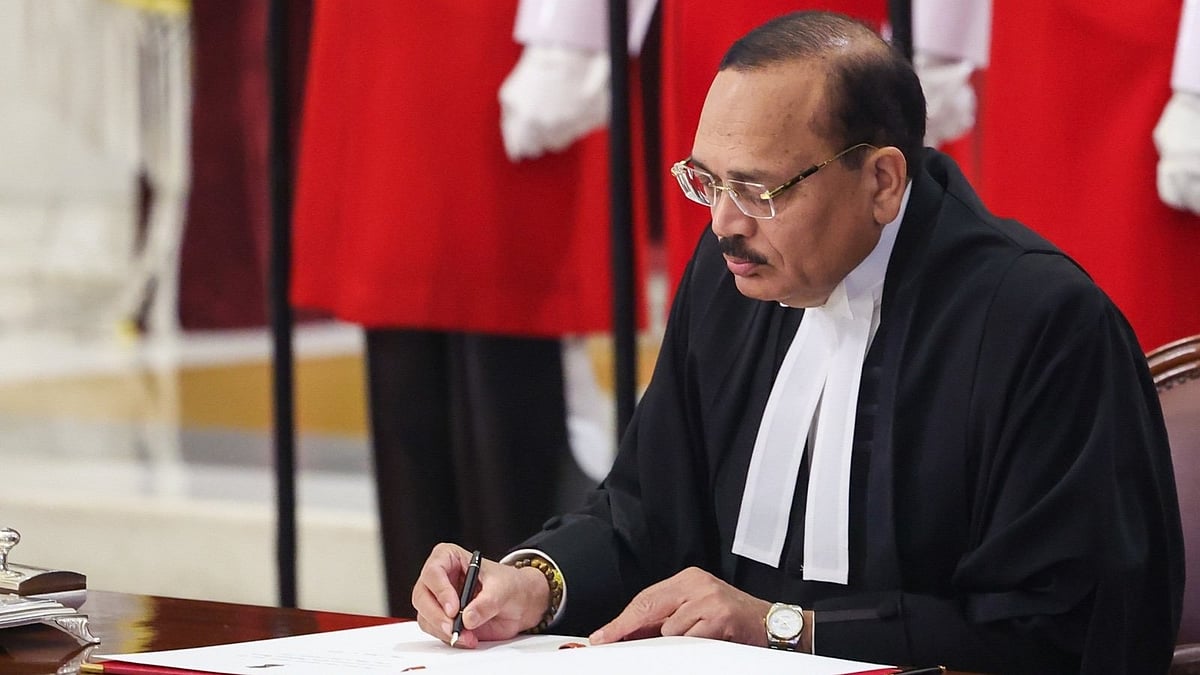
Chief Justice of India Surya Kant | X
Jaipur: Chief Justice of India Surya Kant has called for a formal framework to engage retired judges with dignity and accountability instead of ad hoc arrangements. Asserting that the trust earned by judges over decades is a “national resource” and leaving it underutilized amounts to a public loss.
‘Once a judge, always a judge’
Addressing a national conference titled ‘The Bench Beyond Retirement’ organized by the Association of Retired Chief Justices and Judges of India, ICOST India, and the Rajasthan State Legal Services Authority in Jaipur on Saturday, the Chief Justice of India said, “ A judge never truly retires. Once a judge, always a judge. Merely bidding them farewell with honor is not sufficient. Their experience, knowledge, and judicial acumen should be actively utilized."
Suggesting a more structured role for former judges, the CJI outlined four key areas where they could contribute significantly: as mediators and arbitrators, legal educators, pre-litigation counselors, and institution builders mentoring the next generation of legal professionals.
Mediators, educators, counselors, mentors
“Let me suggest four key roles where former judges can transform our justice system: first, as mediators and arbitrators, where their stature and impartiality can resolve disputes efficiently. Second, as legal educators, reaching schools, colleges, and even gram panchayats—explaining rights in simple language to those who may not even know they possess them. Third, as pre-litigation counselors, helping resolve conflicts before they turn into long, exhausting legal battles. And fourth, as institution builders—mentoring young mediators, training legal aid lawyers, and preserving institutional memory for future generations.”
Likening the former judges to Rajasthan’s traditional “bawris” (stepwells) that serve as vital reservoirs during times of drought, the CJI said former judges act as a dependable resource during institutional stress, much like stepwells that sustain communities in arid regions.
Experience carries people’s knowledge
“Our former judges are like those bawris. Their wisdom and experience are often sought in courts, Lok Adalats, mediation, and arbitration during crises."Underscoring that their experience cannot be replicated through committees or training programs, the CJI said, “The experience a judge carries cannot be replicated by any committee, nor compressed into any training program. They do not carry merely the knowledge of law—they carry the knowledge of people. They have seen the struggles of a rural farmer whose life savings are at stake, the anxieties of a first-generation entrepreneur, and the silent battles of families and individuals at their most vulnerable moments.”The Chief Justice stated that the people repose extraordinary faith in the judiciary and its associated institutions. The common citizen regards even a single word from the court as a symbol of order and justice. He added that it is the responsibility of the judiciary to uphold this trust and further strengthen it.
He concluded his address by saying, “Jisko toofanon se uljhne ki aadat ho, Aisi kashti ko samandar bhi dua deta hai.”
RECENT STORIES
-
-
-
-
-