BRICS New Delhi Declaration 2026 Calls For Gaza Ceasefire, Palestine Statehood & Global Economic Cooperation
BRICS nations adopted the New Delhi Declaration 2026, calling for an end to forced displacement of Palestinians, humanitarian access in Gaza and support for Palestine’s UN membership. The declaration also raised concerns over nuclear risks, global military spending, unilateral sanctions and trade restrictions while stressing dialogue and cooperation among nations.

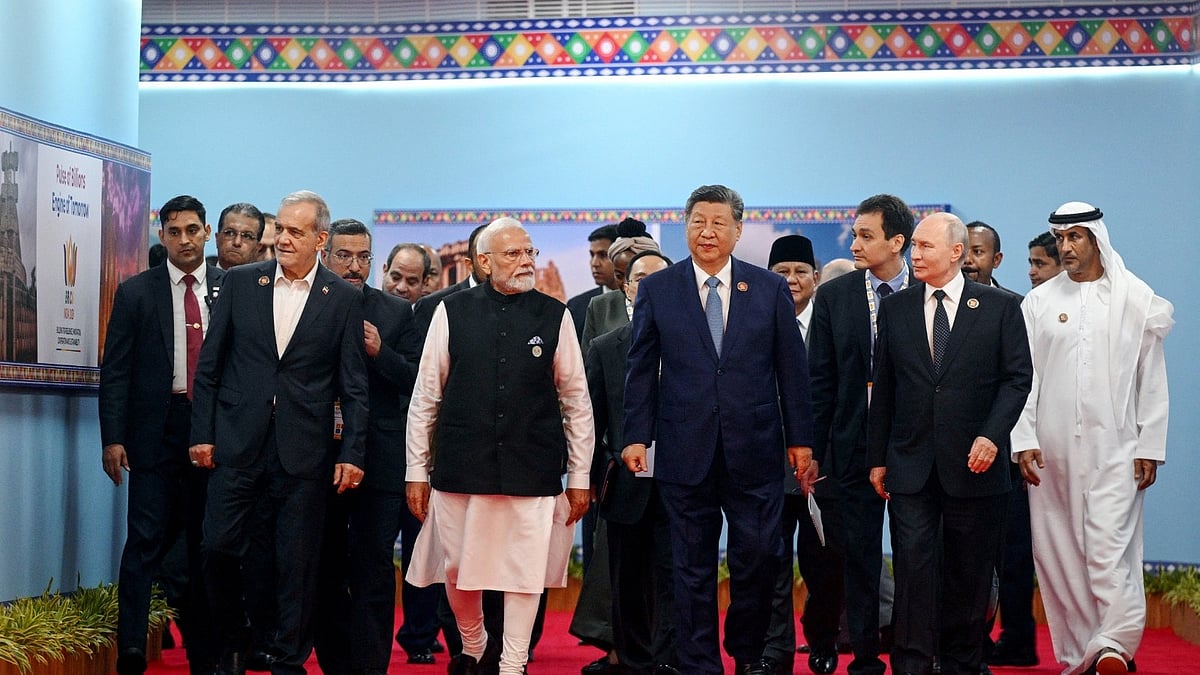
BRICS New Delhi Declaration 2026 Calls For Gaza Ceasefire, Palestine Statehood & Global Economic Cooperation | X -
New Delhi: The BRICS summit on Saturday issued a joint declaration where the focus remained on the Israel-Palestine issue. The member nations expressed their “firm opposition to the forced displacement, temporary or permanent, under any pretext, of any of the Palestinian population from the Occupied Palestinian Territory, as well as any geographic or demographic changes to the territory of the Gaza Strip.” Citing international law and international judicial bodies, the Declaration called for “the end of the illegal occupation and the immediate cessation of all practices that undermine legal norms and obstruct a just and lasting peace.”
BRICS declaration on Gaza
The Declaration also called for the adoption of UNSC Resolution 2803, which recognizes the Gaza Peace Plan and the Board of Peace and moves toward the creation of a Palestinian government in Gaza. It urged all parties “to ensure the maintenance of ceasefire and full and unhindered humanitarian access in the Gaza Strip.”
Recalling South Africa’s case against Israel in the ICJ, the declaration added that Israel had a “legal obligation to ensure the provision of humanitarian aid in Gaza.”
ALSO READ
Support for Palestinian statehood
The Declaration also stated its support for Palestine’s full membership in the UN and called for “the establishment of a sovereign, independent, and viable State of Palestine within the internationally recognized 1967 borders, which included the Gaza Strip and the West Bank, with East Jerusalem as its capital, in order to achieve the vision of two States living side by side, in peace and security.”
The Declaration called for “maximum restraint” in West Asia. Without naming any nation, it voiced its support for “increasing efforts, through dialogue and diplomacy, towards a long-term understanding that will contribute to lasting peace, security and stability in the region.”
Concerns over nuclear risks
BRICS member nations also expressed their concern in regard to nuclear weapons. Voicing alarm at the “critical increase in global military spending” and the “growing risks of nuclear danger and conflict,” the Declaration stressed the importance of establishing a zone free of nuclear weapons and other weapons of mass destruction in West Asia and called upon all parties to “engage with this effort constructively.”
Economic concerns and trade measures
On the economic front, the Declaration condemned what it called “the imposition of unilateral coercive measures that are contrary to international law.” Without naming the US, it said that these measures, which took the form of “unilateral economic sanctions and secondary sanctions," had “far-reaching negative implications for human rights, including the rights to development, health and food security, of the general population of targeted states, disproportionately affecting the poor and people in vulnerable situations, deepening the digital divide, and exacerbating environmental challenges.”
The Declaration also voiced concerns about the “rise of unilateral tariff and non-tariff measures, which distort trade and are inconsistent with WTO rules.” It stressed the need for member nations to “work together to enhance the WTO’s responsiveness to trade disruptions and the needs and priorities of emerging markets and developing economies (EMDEs), as well as advance discussions on outstanding issues, and support balanced, inclusive, and concrete outcomes that strengthen the multilateral trading system and enable it to better address evolving global challenges.”
Also Watch:
Modi announces adoption
Prime Minister Modi shook hands with fellow leaders from BRICS member nations after he announced the adoption of the BRICS Joint Declaration. In his closing remarks, the prime minister said, “We have a draft of the BRICS New Delhi Declaration 2026. It contains a summary of our discussions on key global and regional issues. If no member has any objection, I propose to adopt the Declaration.”
After a pause, he added, “No objection has been raised by any member. The New Delhi Declaration 2026 is unanimously adopted.”
RECENT STORIES
-
-
-
-
-