BJP Loses In Modi’s Kashi & RSS Bastion Nagpur, Does It Weaken Rahul Gandhi’s Vote Theft Narrative?
BJP's defeats in Modi's Kashi and RSS stronghold Nagpur add a new dimension to Rahul Gandhi's vote theft allegations and the debate over electoral transparency.

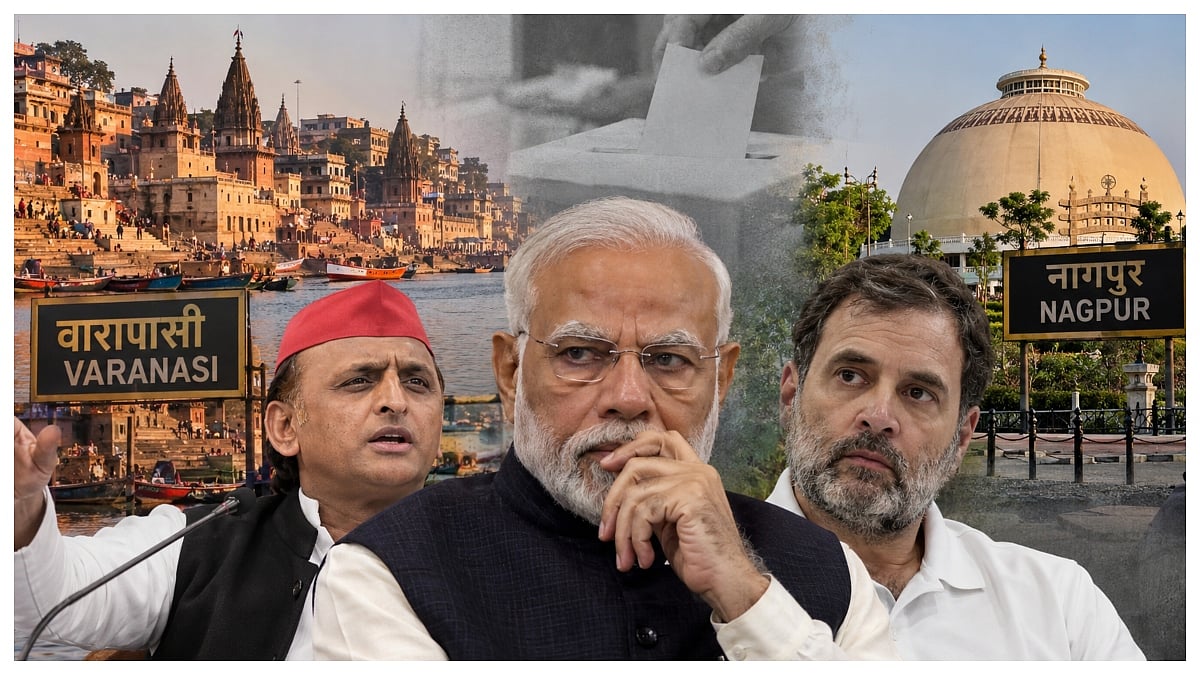
BJP's defeats in Modi's Kashi and RSS stronghold Nagpur add a new dimension to Rahul Gandhi's vote theft allegations. |
Mumbai: The Bharatiya Janata Party’s (BJP) electoral defeats in Prime Minister Narendra Modi’s parliamentary constituency of Varanasi and the Rashtriya Swayamsevak Sangh (RSS) stronghold of Nagpur have added a new dimension to the debate over electoral transparency.
The results have gained political significance amid Congress leader Rahul Gandhi’s allegations of vote theft and the INDIA bloc’s continuing criticism of the Election Commission.
The Legislative Council elections across 28 constituencies in Uttar Pradesh, Maharashtra, Bihar and Karnataka saw the BJP-led National Democratic Alliance (NDA) secure 16 seats. However, opposition victories in politically important constituencies have attracted attention.
BJP Loses In Modi’s Kashi
In Uttar Pradesh, the BJP secured six of the 11 Legislative Council seats, while Akhilesh Yadav’s Samajwadi Party (SP) won five, improving its tally from three in 2020.
Significantly, the SP retained both the Teachers’ and Graduates’ constituencies in Varanasi, popularly known as Kashi, which Prime Minister Modi has represented in the Lok Sabha since 2014.
Meanwhile, the BJP narrowly retained the Gorakhpur-Faizabad Teachers’ constituency, where its candidate Dhruv Tripathi defeated Independent candidate Rajeev Yadav by just 307 votes.
Congress Wins In Nagpur
In Maharashtra, Congress candidate Abhijit Wanjari retained the Nagpur Graduates’ constituency, defeating BJP candidate Sudhakar Kohale.
The result assumes political significance because Nagpur houses the RSS headquarters and is closely associated with senior BJP leaders, including Union Minister Nitin Gadkari and Maharashtra Chief Minister Devendra Fadnavis.
ALSO READ
The opposition victories in Kashi and Nagpur demonstrate that the BJP remains vulnerable to electoral defeats even in constituencies associated with its senior leadership and ideological base.
Vote Theft Debate
These results have also brought renewed attention to Rahul Gandhi’s allegations of electoral manipulation and the INDIA bloc’s Vote Chor, Gaddi Chhor campaign.
Opposition leaders have questioned electoral transparency and criticised Chief Election Commissioner Gyanesh Kumar, demanding greater accountability from the Election Commission.
The BJP’s defeats in Varanasi and Nagpur provide examples of opposition candidates winning in prominent ruling-party strongholds. Such outcomes offer a counterpoint to broad claims that electoral results invariably favour the BJP.
However, individual election results cannot establish or disprove allegations concerning voter rolls, voting procedures or electoral administration. These questions require independent examination of evidence.
Akhilesh On EVMs
Samajwadi Party president Akhilesh Yadav has consistently expressed reservations about electronic voting machines (EVMs).
Yadav has stated that his party would continue opposing EVMs even if it secured a majority and formed a government. His position indicates that the SP's objections extend beyond the outcome of any particular election.
His remarks are particularly relevant following the Samajwadi Party's victories in Varanasi, as the debate over voting methods remains central to the Opposition's electoral concerns.
Electoral Background
Unlike Lok Sabha and Assembly elections, Teachers’ and Graduates’ Legislative Council constituencies have restricted electorates comprising eligible registered voters.
These elections were conducted through ballot papers rather than EVMs, making their voting process different from that followed in general elections.
Prime Minister Modi has questioned the Congress's performance in ballot-paper elections, while Congress leader Jairam Ramesh has highlighted the BJP's defeats in Varanasi and Nagpur.
The results therefore present two distinct political realities. The BJP has suffered setbacks in constituencies carrying considerable symbolic importance, while the NDA has maintained an overall advantage in the elections.
For the BJP, the opposition victories demonstrate the competitive nature of electoral contests. For the INDIA bloc, the results provide political encouragement while its campaign over electoral transparency continues.
RECENT STORIES
-
-
-
-
-