RPF Likely To Replace CISF For Mumbai-Ahmedabad Bullet Train Security With Leaner 550-Personnel Tech-Driven Plan
The Railway Protection Force is likely to secure the Mumbai-Ahmedabad Bullet Train corridor under a proposed technology-driven security model, officials said. Authorities are reportedly favouring the RPF over the CISF due to lower operational costs and railway security experience.

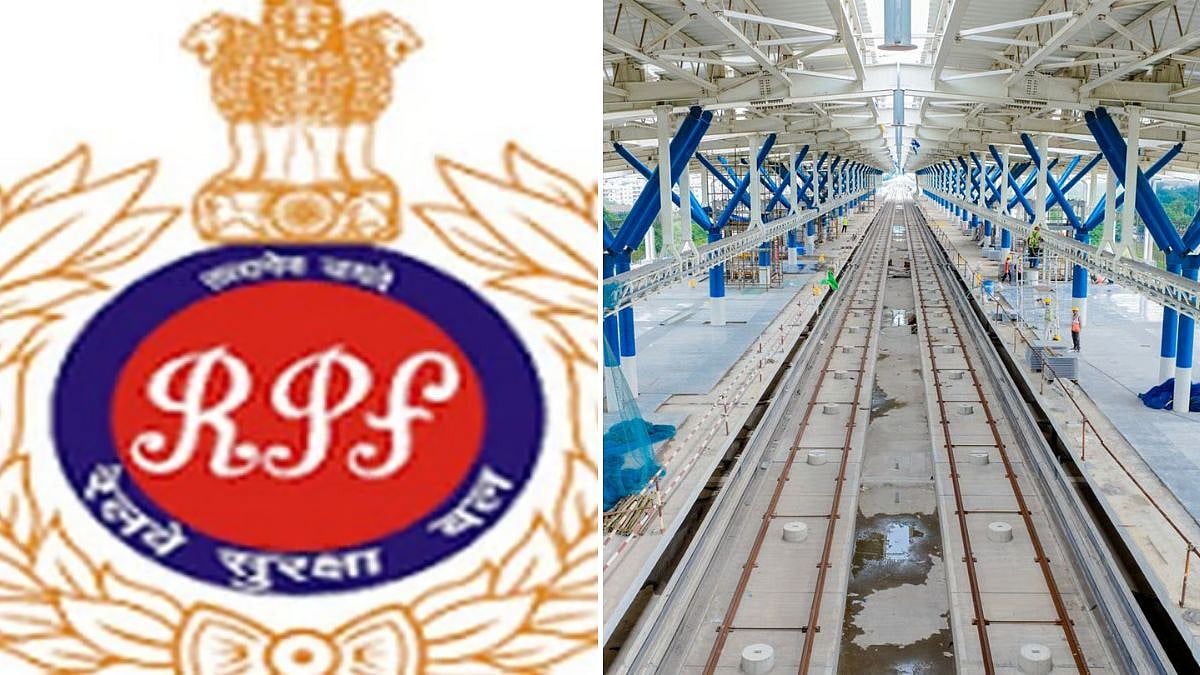
RPF Likely To Replace CISF For Mumbai-Ahmedabad Bullet Train Security With Leaner 550-Personnel Tech-Driven Plan | File Pic
Mumbai: The Railway Protection Force (RPF) is likely to be given the responsibility of securing the Mumbai–Ahmedabad Bullet Train corridor, sources familiar with the development said. The proposal is currently under discussion, and officials indicated that the final framework is being prepared after evaluating deployment requirements, operational efficiency and security costs.
CISF had estimated 2,200-2,300 personnel for full deployment
Earlier, the deployment of the Central Industrial Security Force (CISF) for the 508-km high-speed rail corridor was under consideration. Sources said the CISF had conducted a detailed survey of the entire route and estimated that nearly 2,200 to 2,300 personnel would be required for full-scale security deployment.
However, according to officials, authorities are now considering a leaner and technology-driven security structure with around 550 personnel. Sources said the proposal favours the RPF due to its existing railway security experience and comparatively lower operational costs.
Official says focus on smart surveillance, not large manpower
“The focus is on smart surveillance and intelligence-based monitoring rather than large manpower deployment,” a senior official said.
As part of the proposed plan, three major RPF police stations may be established along the Mumbai–Ahmedabad Bullet Train corridor. Two are likely to come up in Gujarat at Ahmedabad and Surat, while one is proposed in Mumbai’s Bandra region. These security hubs will coordinate protection and surveillance arrangements across all 12 stations on the corridor.
Dynamic deployment based on passenger flow & intelligence inputs
Officials said the deployment pattern will remain dynamic and may change depending on passenger movement, station sensitivity and intelligence inputs. The corridor is expected to be monitored through integrated control rooms, smart cameras, sensors and real-time surveillance systems.
Sources added that the bullet train security strategy is being designed around advanced technology integration to minimise dependence on physical deployment. “Modern monitoring systems will play a crucial role in securing the corridor,” an official said.
508-km corridor using Japanese Shinkansen tech; 320 kmph speed
The Mumbai–Ahmedabad Bullet Train project is India’s first high-speed rail corridor being developed using Japanese Shinkansen technology. The 508-km route will connect Maharashtra and Gujarat, with trains expected to operate at a maximum speed of 320 kmph, reducing travel time between Mumbai and Ahmedabad to nearly two hours.
Construction work on the ambitious infrastructure project is progressing at a fast pace. As of May 4, 2026, around 349 km of viaduct work and 443 km of pier work has been completed. Seventeen river bridges, five PSC bridges and 13 steel bridges are also ready.
Officials said work has started on all elevated stations in Maharashtra, while slab casting work at the underground Mumbai station is currently underway. Once operational, the corridor is expected to boost connectivity, trade and economic activity between Maharashtra and Gujarat.
To get details on exclusive and budget-friendly property deals in Mumbai & surrounding regions, do visit: https://budgetproperties.in/
RECENT STORIES
-
-
-
-
-