'It's Funny & At The Same Time, Chillingly Frightening—Just Like The Reality Of Our Times': Joyeeta Dutta On The Great Shamsuddin Family (Exclusive)
Actress Joyeeta Dutta opens up about The Great Shamsuddin Family, working with Anusha Rizvi, theatre roots, physical training, and empathy-driven storytelling

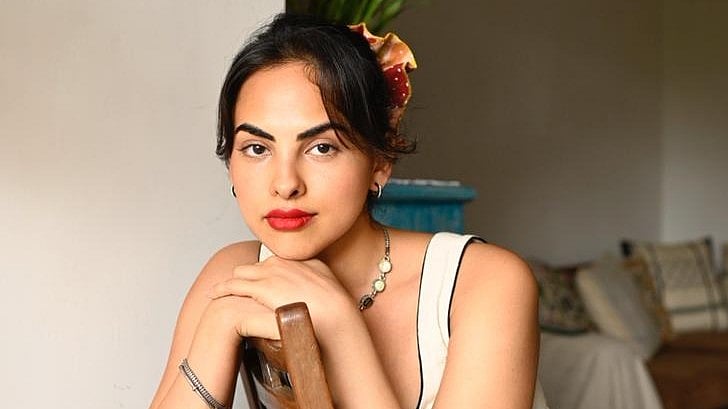
Joyeeta Dutta | Instagram_@joyeeta_dutta
In an exclusive interview with The Free Press Journal, actress Joyeeta Dutta opens up about The Great Shamsuddin Family, her latest release directed by Anusha Rizvi, and the creative world that drew her to the family comedy. She reflects on portraying stories that balance humour with deeper, unsettling truths, and working alongside a largely female ensemble of celebrated actors. Joyeeta also speaks about her journey from her screen debut in Mira Nair’s A Suitable Boy to years of rigorous theatre training across India and Europe. From physical theatre in Italy to stage work in Mumbai, she discusses vulnerability, discipline, and why empathy-driven storytelling continues to shape her choices as an actor. Excerpts:
The Great Shamsuddin Family marks your first collaboration with Anusha Rizvi. What drew you to this family comedy, and what excited you most about the world of the film?
What stood out for me was how adeptly Anusha Rizvi uses a comedic lens to mask something so deep. It’s funny and, at the same time, chillingly frightening—just like the reality of our times. I am in awe of how she masters these shifting balances of pain and joy in her film using comedy. I was elated to work in a mostly female ensemble and breathe the same air as some of our country’s finest actors like Farida Ji and Sheeba Chaddha. I am really inspired by their joy and fun for acting.
You began your screen journey with A Suitable Boy under Mira Nair. Looking back, how did that debut shape the actor you are today?
It’s made me realise that nothing comes easy. A lot of the people on that set—cast and crew—are masters of their craft, which has been built on the back of a lot of work. Looking back, I know there is no substitute for the work that needs to be put in. At the same time, being cast by Mira Nair for my debut was also a matter of luck, so I know that both hard work and luck have their parts to play. Mira takes care of people, and everything is thought out and planned for with love and care. It’s not work; it’s personal for her. And that is very meaningful and inspiring for me. How can I make it personal? That’s something I think of often. I have learnt that the relationship between director and actor is crucial and can provide a sense of fortitude to an actor who most often is very vulnerable because of the nature of our job. That energy exchange can be very powerful and magnetic. That’s how it was for me on that set with masters like Mira and Tabu.
Theatre has clearly been central to your growth, from Act One in Delhi to Prithvi Theatre in Mumbai. What does the stage continue to teach you that the camera cannot?
The stage strips off not all, but quite a few hierarchies and structural inequalities that we are conditioned with. It is an equalising space where your work takes focus, so it is grounding for me. It teaches me to challenge my tendencies of perfectionism and explore. Rehearsal periods provide that safe space for failure, which is unaffordable on a film set.
You recently trained in mask and movement theatre in Italy. How has physical theatre and non-verbal storytelling influenced your performances on screen?
It taught me how to feel and breathe and let the body lead in action, as opposed to hiding behind words, which can be an escape sometimes for me because I can tend to intellectualise. For me, exploring sentiment was a big takeaway. It’s something that cannot be intellectualised; it just exists. And the play of this sentiment in a space, and the tension between characters and spaces, is very interesting for me. This helps me lead with instinct and action. I learnt that the mask is not just a physical thing on my face, but rather a verb—of masking. Masking your body, voice, costume—everything.
From being Head Girl and a national academic topper to choosing a creative life, was there a moment when you knew acting was non-negotiable for you?
I have my moments of doubt and insecurity, but I keep coming back to this. Understanding the human condition draws me deeply.
Born in Assam and now based in Mumbai, how has your cultural journey across geographies shaped your sensibility as a performer?
I think stories of people who feel the need to be loved and to belong—in any shape or form, not just in terms of cultural identity—really draw me. The idea of being enough and every voice mattering counts for me.
As The Great Shamsuddin Family released on JioHotstar, what do you think audiences take away from the film—and from your performance in it? Also, it’s been lauded for its balanced portrayal of a Muslim family. Your thoughts on that aspect.
When the gaze is from the community, its portrayal can be very authentic. The story makes room for the audience to take away what they wish. It could be a simple, light-hearted comedy for some, and at the same time, it can also make people feel seen and heard in a very personal way. So, the story makes space for people to collectively laugh and feel the painful realities of what it means to be alive in our times. It draws people to see both joy and pain depicted in a real, lucid manner, with no self-pity.
RECENT STORIES
-
-
-
-
-