Avatar: Fire and Ash Review -- James Cameron's Epic Burns Bright, But Not Without Scorch Marks
The film stands as both myth and movie. It offers no reinvention, only conviction: familiar patterns, glowing craft, and an undimmed faith in cinema as communal spectacle. Cameron returns to old fires and reminds us he still knows how to make them burn

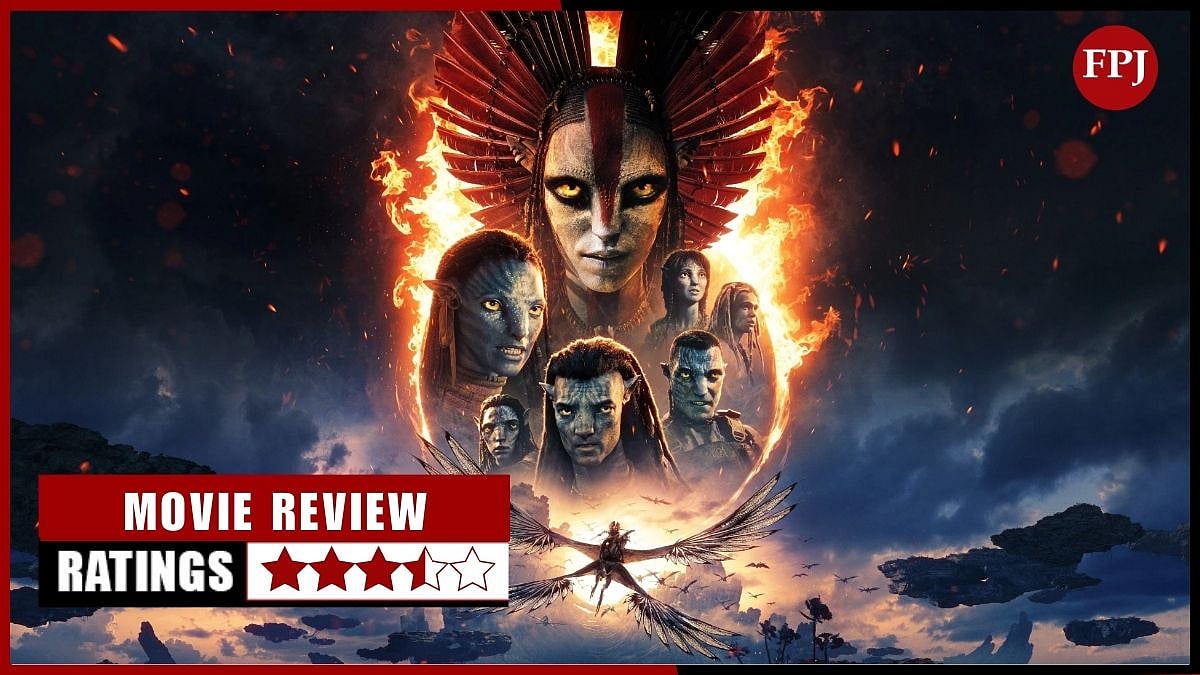
Title: Avatar: Fire and Ash
Director: James Cameron
Cast: Sam Worthington, Zoe Saldaña, Sigourney Weaver, Stephen Lang, Kate Winslet
Where: In theatres near you
Rating: 3.5 Stars
If this third film of the franchise proves anything, it is that James Cameron still believes cinema should overwhelm the senses before it nudges the intellect. Returning to Pandora, Cameron shifts his gaze inward this time, away from the familiar human-versus-native conflict and toward something thornier: civil fracture among the Na’vi themselves. The film opens in the emotional aftershock of personal loss and uses that grief as fuel for a narrative about belonging, inheritance, and the costs of perpetual war.
The plot advances less like a march and more like a tide, swelling, retreating, then crashing again. There are moments when the sheer length tests patience, and stretches of combat risk blurring into one another. Yet Cameron’s control over scale and rhythm keeps the film from sagging. The focus on clan rivalries adds texture, even if the moral binaries remain broad. Fire and Ash is less about surprise and more about immersion, and on that front, it rarely missteps.
Beneath the spectacle, the film carries a quiet but insistent political pulse. The conflict between Na’vi clans mirrors the old tragedy of fractured solidarities, where external threats succeed less through force and more through division. Cameron frames war not as a heroic rite of passage but as an inheritance passed unwillingly to the young, asking what survival costs when tradition hardens into dogma. The Ash People are not merely adversaries but reflections of what prolonged violence can calcify a culture into, making the film less a parable of conquest and more a cautionary tale about internal erosion.
ALSO READ
Actors’ Performance
The returning ensemble performs with the assurance of actors who know both their characters and the digital skin they inhabit. Sam Worthington brings a weathered restraint to Jake Sully, while Zoe Saldaña continues to ground Neytiri’s ferocity in palpable grief. The emotional centre, however, lies with Jack Champion as Spider, whose outsider status becomes the film’s most human dilemma. His struggle for acceptance is played with a vulnerability that cuts through the spectacle.
Among the new faces, Oona Chaplin makes a striking impression as Varang, leader of the Ash People. She resists caricature, lending the antagonist an unsettling calm rather than operatic menace. The supporting cast, including Kate Winslet and Stephen Lang, fit seamlessly into the expanded world without clamouring for attention.
ALSO READ
Music and Aesthetics
Visually, the film is a marvel of technical exactitude. The fusion of advanced motion capture, high-frame-rate photography, and meticulous production design makes Pandora feel tactile rather than ornamental. Cinematographer Russell Carpenter ensures that even chaos is legible. Simon Franglen’s score swells and recedes with classical assurance, enhancing mood without drowning it. In 3D, the film achieves what few others manage: depth that feels purposeful, not gimmicky.
ALSO READ
Final Verdict
Overall, the film stands as both myth and movie. It offers no reinvention, only conviction: familiar patterns, glowing craft, and an undimmed faith in cinema as communal spectacle. Cameron returns to old fires and reminds us he still knows how to make them burn.
RECENT STORIES
-
-
-
-
-