Sengol Included In NCERT Class 9 Social Science Textbook, Traced To Chola Dynasty & Linked To Righteous Governance
Sengol, installed in the new Parliament building in 2023, has been included in the NCERT Class 9 Social Science textbook as a symbol of righteous governance linked to the Chola dynasty. The book also details its association with India's Independence and Jawaharlal Nehru.

Sengol Included In NCERT Class 9 Social Science Textbook, Traced To Chola Dynasty & Linked To Righteous Governance |
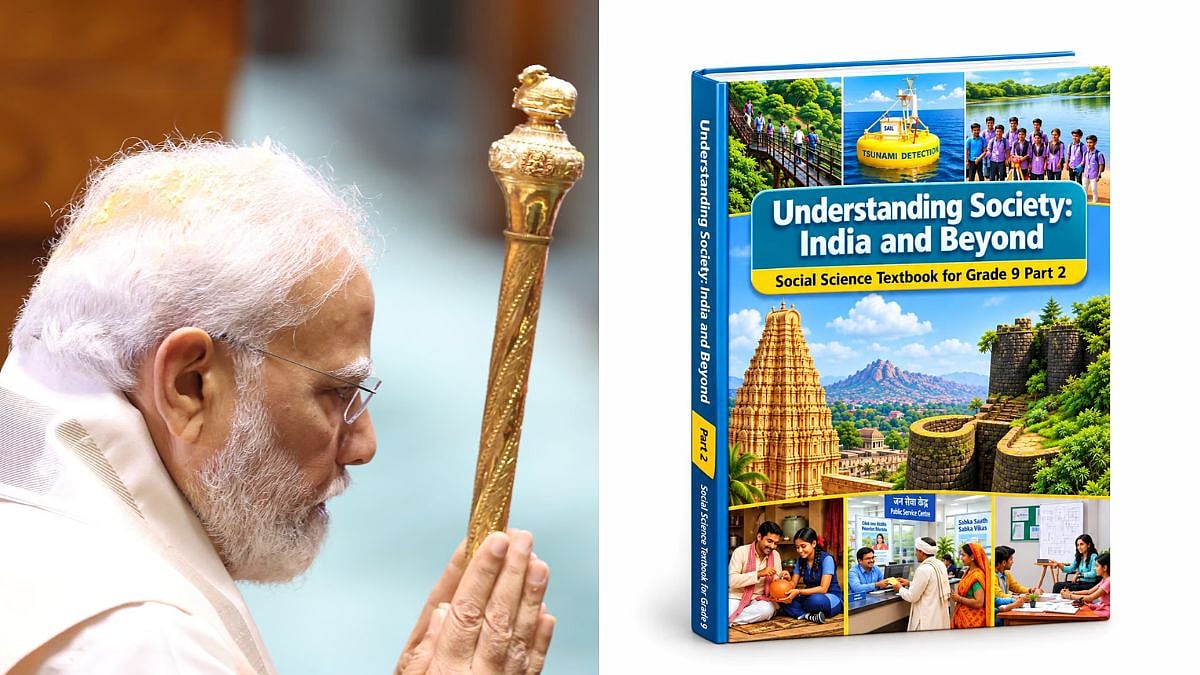
New Delhi: "Sengol", installed in the new Parliament building in 2023, is now part of NCERT's Class 9 Social Science textbook, which describes it as a "cultural marker of rulership and good governance" and links its tradition to the Chola period.
The book titled "Understanding Society India and Beyond-Part 2" was released on Tuesday, six months after the new academic session began. The first part of the textbook was released in June.
Also Watch:
Prime Minister Narendra Modi installed the historic Sengol sceptre in a glass enclosure next to the Lok Sabha Speaker's podium inside the new Parliament building on May 28, 2023.
"The Sengol, a cultural marker of rulership and good governance, was placed in India's newly inaugurated Parliament building in the year 2023 by Prime Minister Narendra Modi. The tradition of using the Sengol as a mark of righteous governance began more than a thousand years ago during the reign of Chola dynasty," the textbook reads.
The chapter also refers to the Sengol's association with the transfer of power during Independence.
ALSO READ
"To mark the occasion of India's Independence, at the stroke of midnight on 15 August 1947, the first Prime Minister, Jawaharlal Nehru, received the Sengol from the Adheenam Saints (an old Shaivite tradition) of Tamil Nadu," it states.
In his address in the Lok Sabha chamber of the new Parliament to mark the inauguration of the building in 2023, Modi had said that the Sengol in 1947 symbolised the transfer of power under the guidance of Rajaji and the Adheenams.
However, Congress has been claiming that there has been no documented evidence of Lord Mountbatten, C Rajagopalachari, and Jawaharlal Nehru describing the sceptre as a symbol of transfer of power by the British to India.
ALSO READ
According to the Ministry of Culture, the Sengol, an august sceptre steeped in the spiritual and cultural traditions of ancient Tamil civilisation, stands as a resplendent symbol of India’s enduring values, where temporal power is guided by the principles of dharma (righteousness).
"Once integral to the coronation rites of Tamil monarchs, the Sengol was not merely a ceremonial object but a profound testament to the ethical responsibilities bestowed upon a ruler. This sacred tradition was momentously revived on the eve of India’s independence in 1947, when a Sengol was solemnly presented to Pandit Jawaharlal Nehru," the ministry said in a description.
Handcrafted by Vummidi Bangaru Chetty and sanctified by the revered seers of the Thiruvaduthurai Adheenam, the Sengol marked the "civilisationally rooted" transfer of authority from colonial rule to a sovereign Indian state, it said.
"It carried with it the blessings of spiritual guardianship and the timeless wisdom of India's sacred legacy," it added.
(Except for the headline, this article has not been edited by FPJ's editorial team and is auto-generated from an agency feed.)
RECENT STORIES
-
-
-
-
-