Michel Danino On NCERT Judiciary Chapter Row: Says He 'Didn’t Expect' Backlash, Defends Withdrawn Section As Accurate
French-born scholar Michel Danino, former NCERT curricular chair, said he did not expect controversy over a withdrawn Class 8 social science subsection on judiciary, which he defends as correct. After Supreme Court of India’s order, he faced professional fallout including IIT Gandhinagar contract termination. He maintains it aimed at promoting critical thinking under NEP 2020.

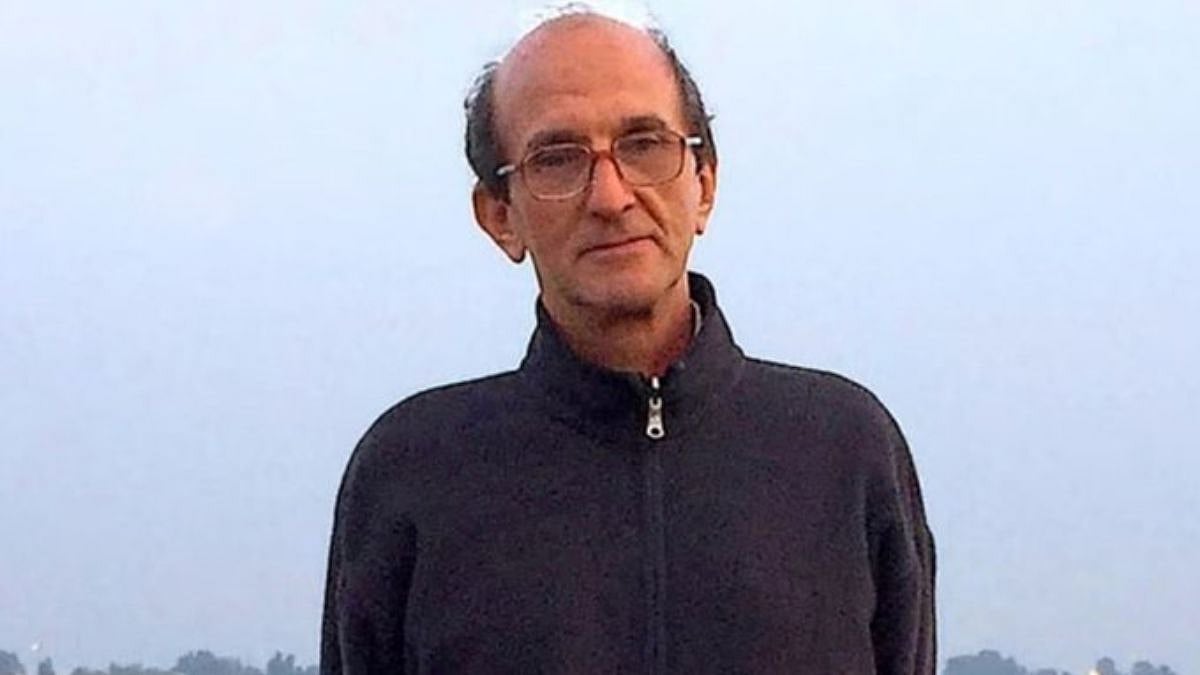
Michel Danino On NCERT Judiciary Chapter Row: Says He 'Didn’t Expect' Backlash, Defends Withdrawn Section As Accurate | X
New Delhi: Michel Danino, one of the three NCERT academics earlier barred for life by the Supreme Court over a controversial chapter on judiciary, has said that he “certainly didn't expect” the now-withdrawn section to trigger a major controversy, asserting that its content was “correct” and he stands by it.
A Padma Shri awardee, French-born Indian scholar Danino was the chairperson of the curricular group tasked with drafting social science textbooks for the National Council of Educational Research and Training (NCERT).
Two other members of the drafting committee -- Suparna Diwakar and Alok Prasanna Kumar -- had also come under fire along with Danino after a controversy stemmed from a subsection in a now-withdrawn chapter of the Class 8 social science textbook on the role of judiciary in society.
Last week, the Supreme Court modified its March 11 order that called for disassociating from the three academicians over the row over the NCERT chapter containing “offending” contents on the judiciary, and left it open to the Centre, states, Union territories, public universities and institutions that receive funds from the Central or state governments to take an independent decision on the issue.
In an interview with PTI, Danino said the Supreme Court's March 11 order barring three NCERT academics had immediate professional consequences for him, including the termination of his guest professor contract at the Indian Institute of Technology-Gandhinagar.
“That contract was instantly terminated after the March 11 order. There were no discussions with me," he said, adding that the institution "rushed to the media to declare loud and clear that they had no association with me anymore".
ALSO READ
He also said that the academics involved were disappointed with the NCERT's handling of the matter.
“We were disappointed because they did not explain the entire process to the court,” he said, asserting that the content for the textbook was finalised not by the NCERT alone, but by overarching committees, i.e., - the Teaching Learning Material Committee (NSTC) and the NCF Oversight Committee (NOC).
“Had we, the active committee members, together approached the Supreme Court and said ‘allow us to explain the context, why this is not derogatory to the judiciary', I am quite sure that the March 11 order would not have been deemed necessary,” he said.
Responding to the Supreme Court's continued observation that the chapter’s content was “wholly undesirable”, Danino said the academicians under question “respectfully disagreed” with the court's assessment in affidavits filed on April 4.
“We do not accept that there was anything fundamentally objectionable,” he said, while conceding that “perhaps a few sentences could have been worded differently”.
“The title of the particular subsection could have been worded differently. But essentially, the content was correct. We stand by it,” he said.
Danino maintained that the chapter relied only on "authentic sources", and that it was not written with any "derogatory intention".
Recalling past textbook debates, Danino said controversies around social science content were not new and had surfaced under different governments since the 1970s.
“I have been observing textbooks in India since the 1990s. I have accumulated a lot of papers. I can assure you that controversies about social science started in India in the 1970s," he said.
Textbooks published during the Morarji Desai government had also triggered a lot of controversies, Danino said, adding that such debates continued as governments and textbooks changed over the years.
ALSO READ
"I did expect some (controversies) on the chapters on history or culture, but I certainly did not expect anything about this particular chapter,” he said.
Danino also claimed that the now-removed chapter was meant to encourage critical thinking and discuss “real-life challenges” with students.
The chapter was prepared in line with the National Education Policy (NEP) 2020 and the National Curriculum Framework for School Education (NCF-SE) 2023, he said.
“The perspective imposed on us by the NEP and the NCF-SE was that we should develop the critical mind of the students, engage them and stimulate independent thinking right from Grade 6,” Danino said.
The chapter didn’t target the judiciary and similar issues relating to other institutions, including Parliament, were also discussed in the book, he said.
Asked about the need to include the judiciary issue in school textbooks, Danino said, “If you are not bringing to the students real-life discussions and some of the challenges facing our country and the world today, you are not doing justice to NEP 2020, and much more so to the students.”
Danino also said that students should be encouraged to discuss “real-life issues” at a “mature age” so that they can grow up to be responsible citizens.
“It’s like you are giving them the sign of trust that we can discuss real issues together, and when they become adults, maybe they can do something about them,” he said.
“Unless we realise the institutional shortcomings, we will never be able to resolve them,” Danino added.
(Except for the headline, this article has not been edited by FPJ's editorial team and is auto-generated from an agency feed.)
RECENT STORIES
-
-
-
-
-