Delhi University's Push For Online Credits Via SWAYAM Triggers Faculty Backlash, Sparks Debate On Future Of Classroom Learning
Delhi University’s proposal to let students earn up to 5% of credits via SWAYAM and other MOOCs has sparked faculty criticism. Teachers warn it could disrupt academic structure, weaken departments, reduce teaching roles, and worsen the digital divide. The plan will be discussed at the upcoming Academic Council meeting.

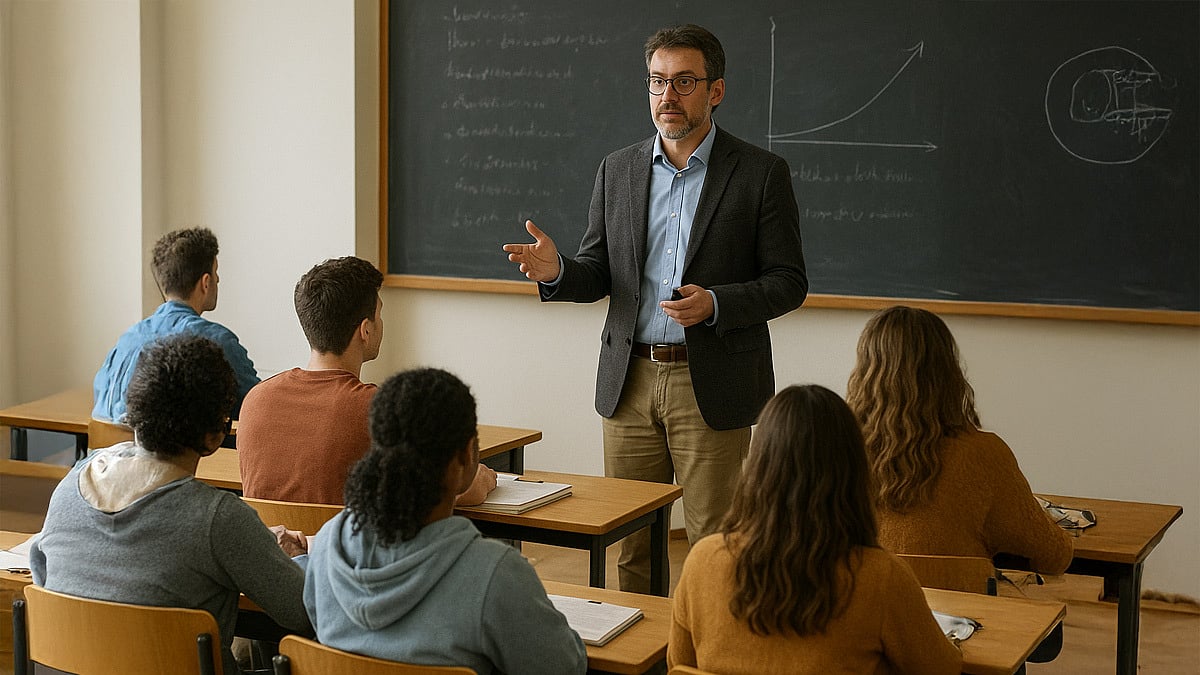
Delhi University's Push For Online Credits Via SWAYAM Triggers Faculty Backlash, Sparks Debate On Future Of Classroom Learning | File Pic (Representational Image)
New Delhi: A proposal by the Delhi University to allow students greater flexibility in earning academic credits through courses offered on SWAYAM and other MOOC platforms has once again drawn criticism from faculty members.
Massive open online courses (MOOCs) are web-based distance learning programmes designed for large-scale, open-access participation.
The guidelines for the recommendation, set to be discussed at the upcoming Academic Council (AC) meeting of the university on Wednesday, have sparked fresh concerns within the teaching community.
According to the agenda for the AC meeting, the University Grants Commission (Credit Framework for online learning courses through SWAYAM) Regulation, 2016, which permitted earning up to 20 per cent of credits from online learning courses, had been adopted by the Delhi University AC and Executive Council in 2019.
ALSO READ
However, in an AC meeting held in July, 2025, the council had suggested that a committee be formed to further examine the proposal on how students can earn up to 5 per cent of the total credits prescribed for a programme through the online courses.
Abha Dev Habib, associate professor of physics at Miranda House, said, "This proposal has been passed by the university a couple of times before, but students never really showed any interest in the courses, so now the university is trying to bring a concrete structure to implement this." The proposal also mentions guidelines to facilitate the integration of Digital Learning Platforms (DLPs) like Study Webs of Active-Learning for Young Aspiring Minds (SWAYAM) or other MOOC portals with students' coursework.
The document to be presented at Wednesday's meeting, mentions that four-year UG programme students can earn up to eight credits through DLP (which amounts to approximately 5 per cent of total 176 credits), two-year PG programme students can earn up to four credits (approximately 5 per cent of 88 credits), and one-year PG programme students can earn up to two credits.
ALSO READ
"In case of scholars enrolled in Ph.D programmes, up to four credits may be earned from DLP," the document proposes.
"When a department or the university makes a syllabus, the aim is to make a cohesive structure through a string of core papers. The agenda mentions that in core courses as well, courses from DLP will be permitted if the similarity of the course is at least 75 per cent to that of a Discipline Specific Course (DSC)," Habib pointed out, adding that this will cause a disruption of flow not only for students, but also in the teacher-student equation.
Other professors also expressed concerns over digital divide that several students will feel on the introduction of higher number of online courses, as well as the repercussions of pushing students to earn more credits through online courses.
"The push for SWAYAM/MOOCs will weaken departments, reduce teaching posts, and accelerate contractualisation, all while ignoring the deep digital divide that still exists among students," Rajesh Jha, a faculty member at the Rajdhani College, said.
ALSO READ
"The proposal to allow even 5 per cent credits through SWAYAM/MOOCs is not insignificant; this is nothing but the gradual outsourcing of education, where teachers are reduced to facilitators and universities risk becoming mere certification centres," Jha added.
Habib further said this might also cause a breakdown in the academic structure, as this is set to change the equation between students, classrooms, and earning credits from the comfort of one's home, thus affecting the social act of learning and interacting in a classroom.
The agenda further pushes for each department to designate a Digital Learning Coordinator to monitor students' progress and facilitate implementation of selected courses offered from DLP. A nodal officer at the university level shall also be designated to oversee the overall coordination, implementation, and monitoring of courses offered from DLP, it adds.
(Except for the headline, this article has not been edited by FPJ's editorial team and is auto-generated from an agency feed.)
RECENT STORIES
-
-
-
-
-