Unclaimed Bank Deposits In RBI's DEA Fund Reach ₹72,454 Crore, Government Promotes UDGAM Portal & Multiple Nominations
As of January 28, 2026, unclaimed bank deposits totaling Rs 72,454 crore — including Rs 60,571 crore from public sector banks, Rs 9,608 crore from private banks, and Rs 2,275 crore from foreign banks — lie with the RBI's Depositor Education and Awareness Fund. The government and RBI are facilitating claims via the UDGAM portal and allowing up to four nominations per account.

File Image |
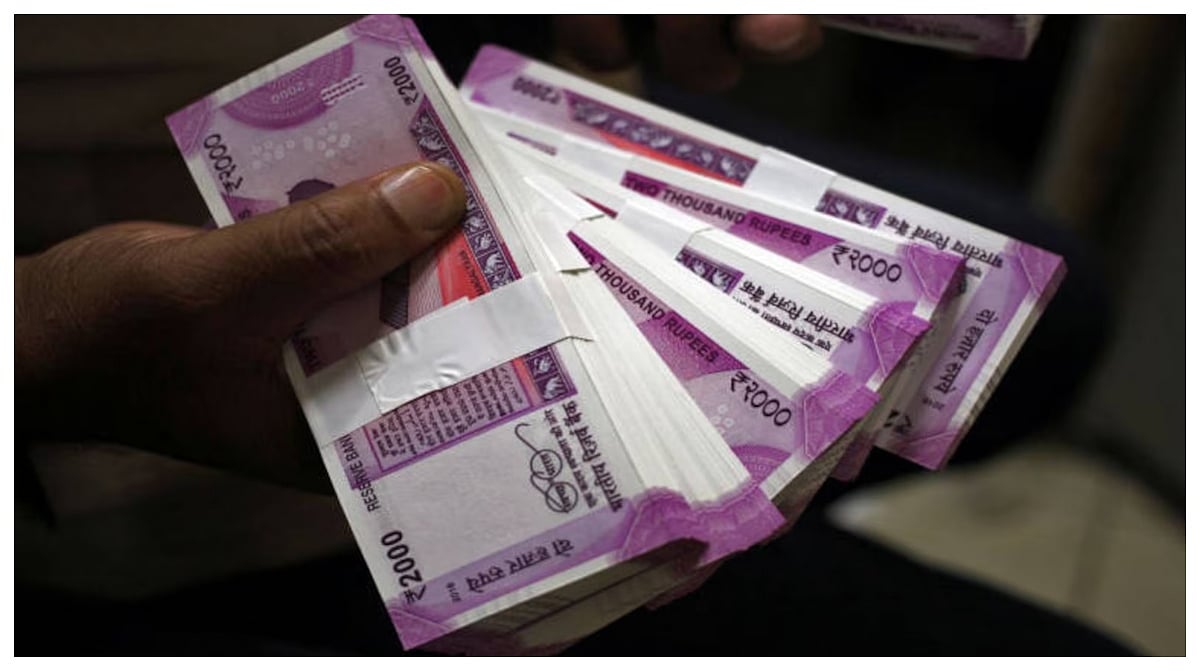
New Delhi: Around Rs 72,454 crore unclaimed deposits of banks, including foreign lenders, are with the Depositor Education and Awareness (DEA) Fund maintained by the Reserve Bank of India (RBI) as of January 28, 2026, Parliament was informed on Tuesday.
The balances in savings and current accounts that remain inoperative for ten years, or term deposits not claimed within ten years from the date of maturity, are classified as unclaimed deposits and subsequently transferred by banks to the Depositor Education and Awareness (DEA) Fund maintained by the Reserve Bank of India (RBI), Minister of State for Finance Pankaj Chaudhary said in a written reply in the Rajya Sabha.
ALSO READ
As per the data shared, outstanding unclaimed deposits of public sector banks were Rs 60,571.02 crore as of January 28, 2026, while those of private sector banks were Rs 9,607.76 crore and foreign lenders Rs 2,275.01 crore. Cumulatively, Rs 72,454 crore has been lying with the DEA Fund as of January 28, 2026. To ensure timely identification of rightful claimants and reduce both the existing stock of unclaimed deposits as well as the fresh accretion to the DEA Fund, the Government of India and RBI have initiated several steps including Centralised Web Portal UDGAM (Unclaimed Depositsâ?" Gateway to Access InforMation) for public use to facilitate and make it easier to search unclaimed deposits across multiple banks at one place.
The Banking Laws (Amendment) Act, 2025, has introduced provisions allowing multiple nominations (up to four successive or simultaneous nominations) for bank customers, he said. Further, financial assistance provided by the DEA funds included conducting programmes for spreading awareness on financial literacy among the excluded sections of the society, holding seminars for depositors/depositors' associations on safe and secure banking, funding projects and research activities relating to depositors' education, he said.
ALSO READ
Replying to another question, Chaudhary said, the Reserve Bank of India (RBI), in consultation with the Government of India, has announced that loans sanctioned by banks to National Cooperative Development Corporation (NCDC) with effect from January 19, 2026, for on-lending to cooperative societies are eligible for classification as priority sector lending under the respective categories.
These apply to banks other than Regional Rural Banks, Urban Cooperative Banks, Small Finance Banks and Local Area Banks. These loans are for purposes and activities as laid down in the Master Direction on Priority Sector Lending, 2025, he said. National Cooperative Development Corporation (NCDC), a statutory corporation under the administrative control of the Ministry of Cooperation, provides financial assistance to cooperatives and contributes directly in accelerating the growth of the cooperative movement, he said.
ALSO READ
The Government of India and RBI have taken various measures to strengthen cooperative banks' financial health, governance and digital inclusion along with enhancing deposit security, credit availability and prudent regulation, he said. In response to another question, Chaudhary said, the total corpus of National Investment and Infrastructure Fund (NIIF) as of December 2025 is Rs 33,249 crore, which includes contributions from the government, sovereign wealth and other investors.
NIIF currently has four funds, namely Master Fund (MF), Fund of Funds (FoF), Strategic Opportunities Fund (SoF) and India Japan Fund (IJF) that have invested across 24 entities covering ports and logistics, renewable energy, roads, digital infrastructure, healthcare, e-mobility and manufacturing, among others spread across various states and UTs, he said.
ALSO READ
Replying to a question, he said, total unsecured personal loans outstanding of scheduled commercial banks (SCBs) was Rs 7,72,025 crore as on March 31, 2023, Rs 9,10,673 crore as on March 31, 2024, and Rs 9,53,181 crore as on March 31, 2025. Share of unsecured retail advances outstanding of SCBs in total retail advances outstanding of SCBs was 25.2 per cent as on March 31, 2025, which has declined from 28 per cent as on March 31, 2023, he said.
Further, he said, the RBI, as part of its regulatory and supervisory framework, takes regulatory measures in response to evolving situations, including a change in risk weights, advising regulated entities to strengthening their internal safeguards and addressing the build-up of risks, and places regulatory restrictions on lending segments/entities, to mitigate systemic risks.
Disclaimer: This story is from the syndicated feed. Nothing has been changed except the headline.
RECENT STORIES
-
-
-
-
-