Purpose, Risk Discipline & Financial Inclusion: Ashish Mehrotra On Building Sustainable Impact
Ashish Mehrotra, MD & CEO of Northern Arc Capital, explains why underwriting rigour, capital efficiency, and social purpose must move together in India’s next phase of financialisation.

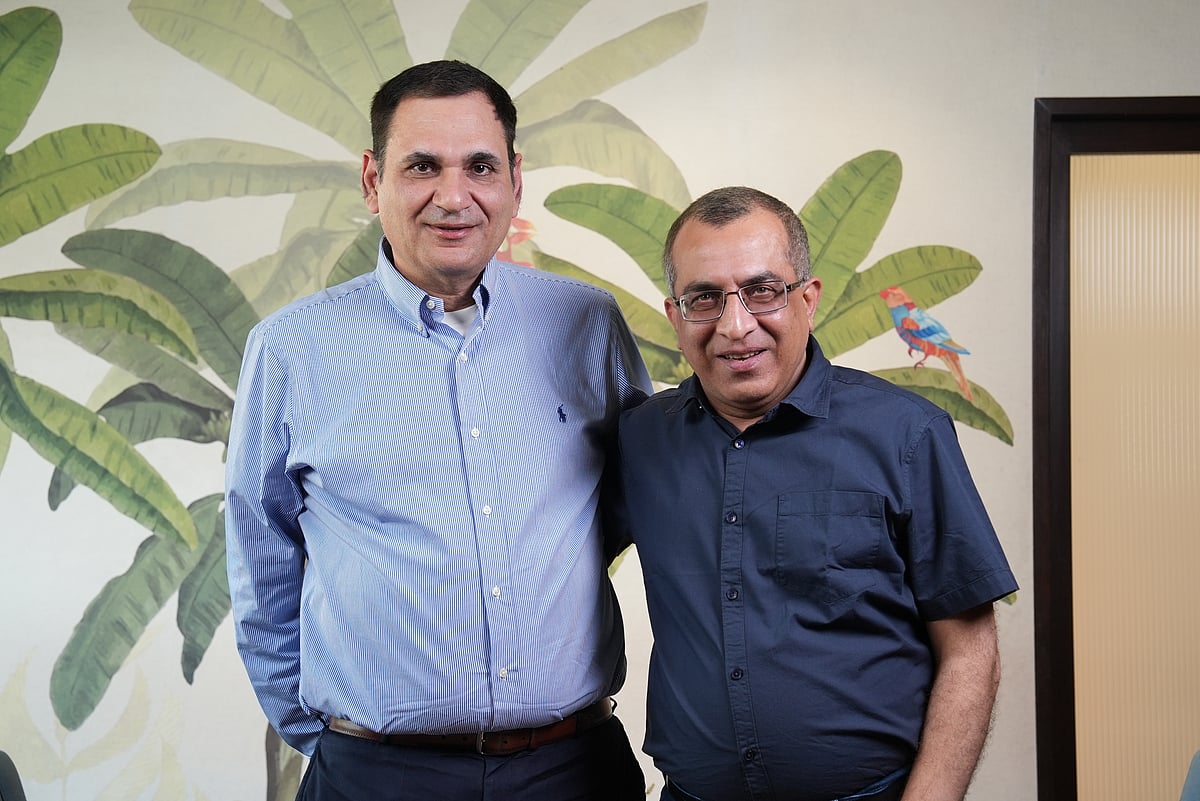
Ashish Mehrotra, MD & CEO of Northern Arc Capital, explains why underwriting rigour, capital efficiency, and social purpose must move together in India’s next phase of financialisation. |
In a detailed conversation on Simple Hai!, Ashish Mehrotra, Managing Director and CEO of Northern Arc Capital, reflected on a three-decade career that spans retail banking, health insurance and impact-focused credit markets. Speaking with Vivek Law, Co-founder and editor-in-chief, Mehrotra outlined a consistent philosophy that has guided his professional journey: that finance must remain anchored in purpose and disciplined risk management.
From Retail Banking to Impact Finance
To Law’s question about his 30 year journey in a demanding industry, Mehrotra responded that clarity of purpose has been the central source of his energy. He began his career in 1994 with Citibank, at a time when consumer lending and credit cards were still in their formative stages in India. Over two decades, he witnessed and contributed to the rapid expansion of structured retail lending, eventually leading Citi’s retail banking franchise in India.
However, he told Law, professional growth alone was not sufficient. He wanted to apply his understanding of risk and distribution to areas that generated measurable social impact. This motivation led him to Bupa, where he helped build a health insurance platform in India around the mission of enabling longer and healthier lives.
The transition to Northern Arc Capital during the Covid period was, in his words, a logical extension of that purpose. The firm’s model, which connects capital providers to underserved borrower segments, allowed him to combine risk expertise with financial inclusion at scale.
ALSO READ
Connecting Capital to Underserved India
Northern Arc Capital, founded 16 years ago, was initially built to address a structural gap. Smaller microfinance institutions required capital, but traditional banks were reluctant to lend due to perceived risk. As Mehrotra explained, the solution lay not merely in raising funds but in developing sophisticated structuring and underwriting capabilities that could price and manage risk accurately.
Over time, the firm expanded into seven sectors, including microfinance, small business loans, vehicle finance, affordable housing, education loans, agri-finance and climate-linked financing. Today, the organisation operates across 680 districts, covering roughly 88 percent of India’s geography, and has enabled financing of more than ₹2.3 trillion, impacting nearly 110 million people.
When Law asked how such a scale can be managed without compromising asset quality, Mehrotra pointed to the depth of data and ground-level intelligence that underpins decision-making. The firm tracks nearly 47 to 48 million loan performance data points across sectors and supplements quantitative models with physical risk assessments in 250 to 270 districts annually. India, he emphasised, is not a monolithic market. Regional climatic conditions, local policy changes and livelihood patterns materially influence repayment behaviour. Incorporating this intelligence into underwriting frameworks reduces volatility and supports long-term profitability.
Risk as Core Financial Discipline
At multiple points in the discussion, Mehrotra returned to a central principle: finance begins and ends with risk. Whether deposits, bonds or microloans, the questions remain constant. How is risk assessed, how is it priced, and how is it managed over time?
Northern Arc’s “Score + NUS” methodology refers to a proprietary, machine learning-based credit underwriting solution that combines leading indicators, information collected at the time of loan origination, with lagging indicators such as bureau history and past performance. This integrated approach enables the firm to determine borrower eligibility, ticket size, pricing and expected probability of default with greater precision.
When Law observed that many institutions underestimate local complexities, Mehrotra agreed, noting that underwriting from a distance without contextual inputs often results in elevated credit losses. Sustainable financial inclusion, he argued, requires disciplined and continuously refined risk frameworks.
ALSO READ
Profitable Impact and Market Access
Northern Arc’s positioning within global impact finance has drawn attention, particularly because the firm has remained profitable quarter after quarter for sixteen consecutive years despite operating in segments often categorised as high risk. When asked about the public listing journey, Mehrotra described it as both demanding and validating. The firm’s operating model is deliberately calibrated. It deploys limited capital from its own balance sheet initially, closely monitors portfolio performance, and subsequently invites larger pools of institutional capital once risk metrics stabilise.
In addition, through its retail bond platform Altifi, the company has widened access to fixed income investments, offering yields in the range of 9.5 to 13.5 percent. This has enabled smaller enterprises to tap bond markets that were historically dominated by large corporates, while also allowing retail investors to participate in diversified credit opportunities.
Wealth Creation: Behaviour Over Hype
Drawing from decades of observing both high-net-worth investors and small borrowers, Mehrotra identified three attributes that consistently differentiate long-term wealth creators. Discipline in asset allocation, clarity of goals aligned with risk appetite, and patience during market cycles.
When asked whether investors should chase high-return opportunities in equity markets, Mehrotra offered a measured perspective. If the Nifty 50 delivers 13 to 14 percent and performing credit instruments offer comparable returns, a balanced allocation can produce a stable blended outcome near 12 percent without exposing the portfolio to extreme volatility. He emphasised that sophisticated investors focus less on headline returns and more on risk-adjusted performance over extended periods.
ALSO READ
Health Insurance as Financial Protection
The conversation also centred on risk at the household level. Many young professionals rely exclusively on employer-provided health insurance. Mehrotra described this as a significant oversight. Insurance eligibility and pricing deteriorate with age and health conditions. Moreover, many credit defaults arise not from mortality but morbidity, when illness disrupts income streams. Personal health insurance, therefore, should be treated as foundational financial infrastructure rather than an optional add-on.
India’s Structural Opportunity
On the broader macro outlook, Mehrotra expressed strong confidence in India’s trajectory. He highlighted the country’s digital infrastructure across payments, capital markets and savings platforms as being globally competitive, if not superior in certain respects.
Mehrotra shared that scale and innovation provide a unique opportunity. Indian fintech and AI capabilities, coupled with practical experience in serving diverse income segments, position the country to replicate its models in other emerging markets. In closing, Mehrotra reiterated that sustainable finance is neither purely philanthropic nor purely profit-driven. It requires rigorous underwriting, disciplined capital allocation and a clear social objective. In India’s current phase of financial deepening, he suggested, institutions that align purpose with risk discipline will define the next chapter of growth.
RECENT STORIES
-
-
-
-
-