‘Mutual Funds Sahi Hai, But Asset Allocation Zaruri Hai’: Why NS Venkatesh Wants Investors To Bet On InvITs
Bharat InvITs Association CEO NS Venkatesh highlights 14-15 percent historical returns, rising retail interest and the role of InvITs in building long-term wealth and steady income.

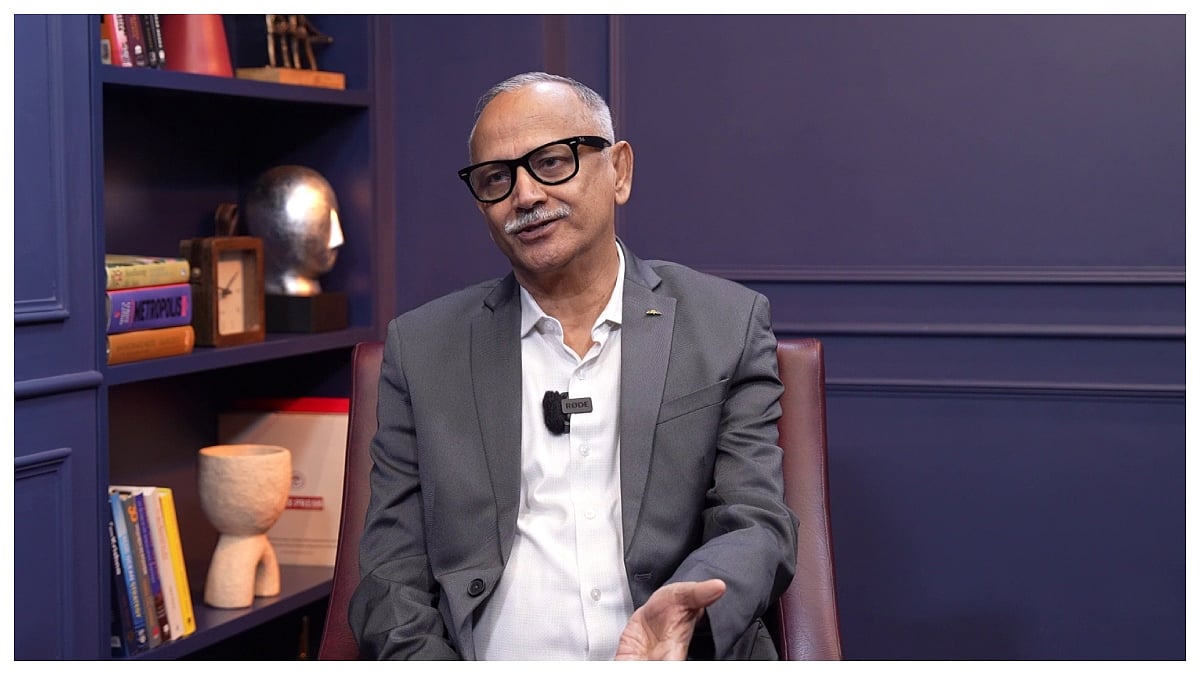
NS Venkatesh, CEO of Bharat InvITs Association. |
Infrastructure Investment Trusts (InvITs) are emerging as an investment option for Indians seeking regular income and long-term wealth creation. In an exclusive conversation with Sheryll D’Souza of The Free Press Journal, NS Venkatesh, CEO of Bharat InvITs Association, explains how investors can own infrastructure assets, earn distributions, diversify portfolios and participate in India's growth story while understanding the risks involved.
You helped popularise the ‘Mutual Funds Sahi Hai’ campaign. What exactly are InvITs, and how are they different from mutual funds?
InvITs are pooled investment vehicles, similar to mutual funds. However, mutual funds invest in financial assets such as shares and bonds, while InvITs invest in operational infrastructure assets, including highways, power transmission lines and telecom infrastructure.
They also help recycle capital. Money invested in existing infrastructure is released to finance new projects, supporting economic development.
What lessons from the mutual fund industry can help InvITs become a household investment product?
Mutual funds took nearly 50 years to reach Rs 10 lakh crore in assets under management. InvITs and REITs have already reached approximately Rs 7.31 lakh crore within a decade.
The biggest lesson is investor awareness. The ‘Mutual Funds Sahi Hai’ campaign made mutual funds part of everyday conversations. We want to create similar awareness around InvITs and encourage greater retail participation.
Retail investor participation has increased by 17 percent. What is driving this interest?
InvITs have delivered approximately 14-15 percent annual returns over the past five years, attracting investors seeking relatively steady income.
Wealth managers, portfolio managers and alternative investment funds are increasingly recommending this asset class. Growing awareness and the importance of portfolio diversification are also encouraging retail participation.
How can an ordinary investor actually own a portion of a highway or power transmission project?
Investors purchase units of an InvIT holding infrastructure assets or concession rights. Through these units, they gain economic exposure to assets such as highways, transmission lines and telecom towers.
ALSO READ
It allows ordinary investors to participate in infrastructure development without directly purchasing or managing these assets.
InvITs must distribute 90 percent of their cash flows. Does this guarantee regular income?
SEBI requires InvITs to distribute at least 90 percent of their net distributable cash flows. Although distributions are mandated periodically, many InvITs distribute quarterly.
Importantly, distributions are not entirely dividends. They can include dividends, interest and return of capital.
Investors must understand these components rather than assuming every distribution represents investment earnings.
Investors often get attracted by headline returns. What should they examine before investing?
I recommend following the SLR principle: Safety, Liquidity and Return.
First, understand the possibility of losing capital. Second, examine whether you can exit your investment without significant costs. Finally, evaluate returns and their sustainability.
Investors should never make decisions based solely on attractive yields. Every investment carries risks.
Where should InvITs fit within a portfolio containing equities, bonds and fixed deposits?
InvITs are complementary investments, not replacements.
They are generally positioned between equities and fixed-income instruments in terms of risk and return.
Historical dividend yields have averaged approximately 9-10 percent, while capital appreciation has contributed additional returns.
However, past performance does not guarantee future results. Investors should allocate according to their financial goals and risk appetite.
How do taxation and government infrastructure monetisation influence InvIT investments?
Taxation depends on whether distributions represent dividends, interest or capital repayment. Investors should understand the applicable treatment of each component.
InvITs also support government asset monetisation. Existing infrastructure can generate capital for new projects without relying entirely on fresh borrowing.
This benefits infrastructure development while allowing investors to participate in operational assets.
Finally, what advice would you give first-time InvIT investors?
Think long term. InvITs are suited to patient investors with horizons extending 25-30 years.
ALSO READ
I would suggest considering an allocation of around 10-15 percent, depending on individual circumstances.
Understand sector-specific risks before investing. Roads, power transmission and digital infrastructure have different challenges.
The objective should be diversification, sustainable income and long-term wealth creation, rather than chasing short-term returns.
RECENT STORIES
-
-
-
-
-