India-EU FTA Nears Final Stage, Expected To Boost Exports, Diversify Trade Amid US Tariffs, & Strengthen Bilateral Ties
India and the EU are in the final stages of FTA negotiations, which would mark India's 19th trade deal. The pact aims to eliminate/reduce tariffs, boost exports in textiles, pharmaceuticals, automobiles, electronics, and services, while helping diversify shipments amid high US tariffs. Bilateral goods trade reached $136.53 bn in FY25 (EU India's largest partner).

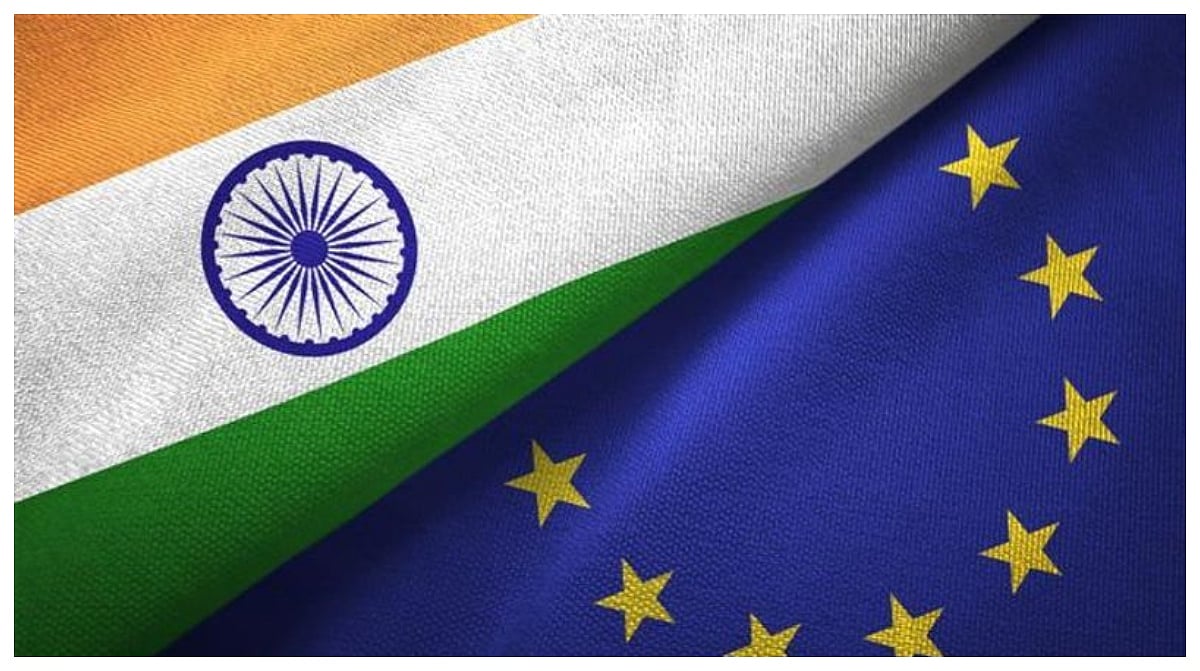
File Image |
New Delhi: India and the European Union (EU) are negotiating a free trade agreement (FTA). Negotiations have reached the final stage. If finalised, this will be the 19th trade deal for India. The FTA is expected to help boost the country's exports to the 27-nation bloc.
Since 2014, India has finalised seven trade pacts -- Mauritius (April 2021 implemented), Australia (December 2022 implemented), UAE (May 2022 implemented), Oman (signed in December 2025), UK (signed in July 2025), EFTA (implemented in October 2025 - Switzerland, Iceland, Liechtenstein, Norway), and New Zealand (talks concluded in December 2025).
Importance of this FTA:
The imposition of high tariffs by the US has disrupted the global flow of goods. India is facing steep 50 per cent tariffs. The FTA is expected to help Indian exporters diversify their shipments. It will also help reduce dependence on China.
ALSO READ
Benefits for India and the EU:
Tariffs or import duties are either reduced or eliminated under an FTA. Therefore, an FTA will open markets, align regulations between the two, and benefit key industries like technology, pharmaceuticals, automobiles, and textiles. Lower duties will make Indian exports, including from labour-intensive sectors, such as garments, leather, pharmaceuticals, steel, petroleum products, and electrical machinery, more competitive in the EU. Similarly, Indian services exports, including telecommunications, business services, and transport, are also expected to grow significantly.
According to think tank GTRI, the EU will benefit from higher exports of aircraft and parts, electrical machinery, diamonds, and chemicals to India. European service sectors such as intellectual property, business services, and IT and telecommunications may also see gains.
Bilateral Trade:
The FTA will significantly boost two-way trade between India and the EU. India's bilateral trade in goods with the EU was USD 136.53 billion in 2024-25 (exports worth USD 75.85 billion and imports USD 60.68 billion), making it the largest trading partner for goods. The EU market accounts for about 17 per cent of India's total exports, and the bloc's exports to India constitute 9 per cent of its total overseas shipments.
ALSO READ
In 2023-24, India exported USD 76 billion in goods and USD 30 billion in services to the EU, while the EU exported USD 61.5 billion in goods and USD 23 billion in services to India. Within the EU, Spain, Germany, Belgium, Poland and the Netherlands are key destinations for Indian exporters.
As per reports, the EU, with a GDP of about USD 19.5 trillion (France, Italy, Germany and Spain are major countries) and a population of over 450 million, is a major global trade player, exporting about USD 2.9 trillion and importing more than USD 2.6 trillion annually. India, with a population of 1.4 billion, exported USD 437 billion in goods and USD 387.5 billion in services. It imported goods worth USD 720 billion and USD 195 billion worth of services in 2024-25.
ALSO READ
India's exports and imports:
Major exports are petroleum products (Diesel and ATF), electronics (including smartphones), textiles, machinery and computers, organic chemicals, iron and steel, gems and jewellery, pharmaceuticals, and auto parts. Currently, India's textile exports to the EU face tariffs between 12-16 per cent, making Indian products less competitive compared to exports from countries like Bangladesh and Vietnam, which enjoy preferential market access under EU trade agreements, a GTRI report has said.
Main imports are Machinery, computers (including turbojets), electronics (including mobile phone parts and integrated circuits), aircraft, medical devices, scientific instruments, rough diamonds, organic chemicals, plastics, iron and steel, cars, and auto parts. India's key services exports to the EU are business services, telecommunication and IT, transportation services, while imports are intellectual property services, telecommunication and IT.
ALSO READ
Alcohol Trade:
Both regions are key players in this segment. India's exports to the EU in 2023-24 included wines (USD 1.5 million), blended whiskeys, vodka, brandy, and liqueurs (USD 64.9 million). Imports included wines (USD 412.4 million), blended whiskeys, brandy, gin, tequila, vodka, and liqueurs (USD 22.3 million).
FDI inflows:
India's cumulative FDI inflows from the EU during April 2000 to September 2024 were USD 117.4 billion, with about 6,000 EU firms present in India. FDI from the EU represented 16.6 per cent of the cumulative amount of FDI equity inflow from all countries, which stood at USD 708.6 billion. According to GTRI, India's FDI outflows to the EU were valued at about USD 40.04 billion from April 2000 to March 2024.
India mainly receives FDI from the Netherland (USD 55 billion) during April 2000 and September 2025), Germany (USD 15.4 billion), France (USD 12 billion), Spain (4.3 billion), Belgium (USD 4.1 billion), Italy (3.65 billion), Sweden (USD 2.8 billion), Denmark (USD 1.44 billion), and Poland (USD 788.75 million).
Long negotiations:
The India-EU FTA negotiations began in 2007. Initially, from 2007 to 2013, multiple rounds of negotiations took place but were hindered by disagreements over market access, intellectual property rights, labour standards, and sustainable development. By 2013, the talks hit a standstill, particularly due to differences over tariffs on automobiles, wine, spirits, data security for Indian IT firms, and public procurement.
Despite efforts to revive negotiations between 2016 and 2020, substantial progress remained elusive. However, post-2020, both India and the EU showed renewed interest in resuming talks. In June 2022, the negotiations were re-launched for a Free Trade Agreement, an Investment Protection Agreement and an Agreement on Geographical Indications (GIs).
Disclaimer: This story is from the syndicated feed. Nothing has changed except the headline.
RECENT STORIES
-
-
-
-
-