High Commodity Prices, El Nino Conditions To Slow APAC Growth In 2026 And 2027: Moody's Analytics
Moody's Analytics expects APAC economic growth to slow to 4.1% in 2026 and 3.6% in 2027 as high commodity prices, inflation, tighter policy settings and El Nino conditions weigh on the region. It said volatile oil prices, geopolitical tensions and weaker crop yields could further dampen growth and keep inflation elevated.

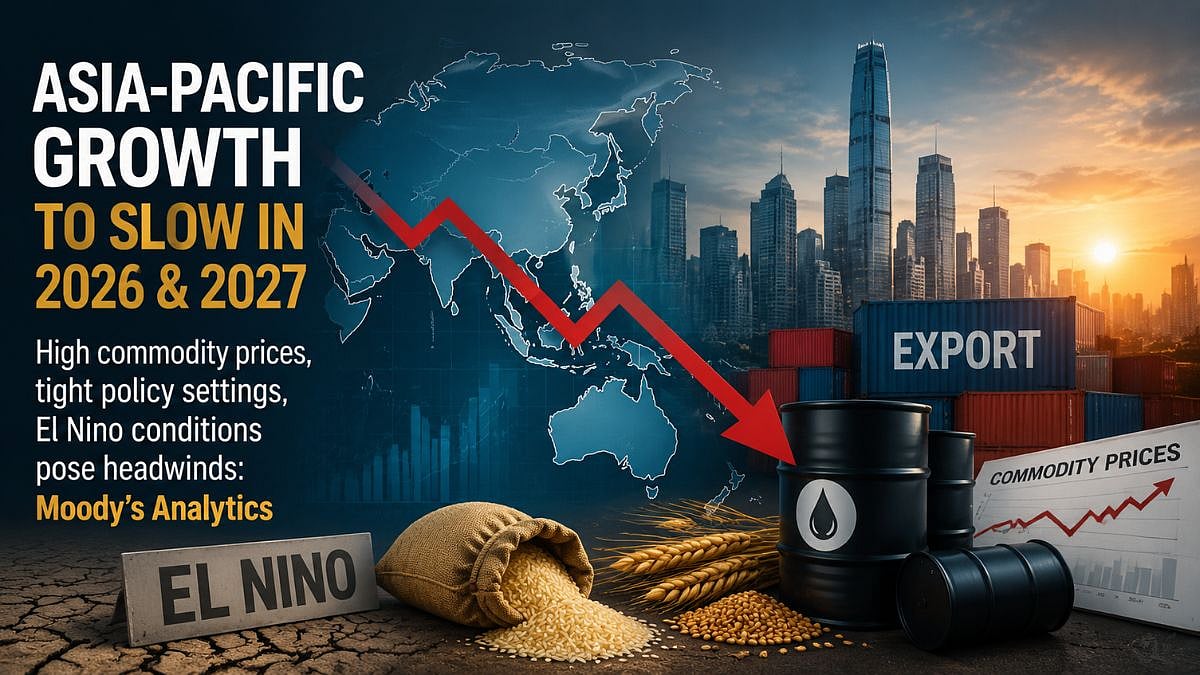
Moody's Analytics projected slower APAC economic growth in 2026 and 2027 amid high commodity prices, inflation and El Nino risks | AI Generated Representational Image
New Delhi, July 30, 2026: Headwinds in the form of high commodity prices, tighter policy settings and unusually hot and dry weather threaten to slow down growth in the Asia-Pacific region in 2026 and 2027, Moody's Analytics said on Thursday.
The Asia-Pacific economy has dodged the sharp slowdown that many feared the West Asia conflict would provoke, it said, adding that the artificial intelligence boom has driven robust export and investment growth, accelerating overall GDP growth across much of the region.
"The challenge is that the list of headwinds keeps growing. Global commodity prices are elevated, US tariffs still cloud the trade outlook and tighter monetary and fiscal policy settings are biting," Moody's Analytics said.
Growth in the APAC region will moderate to 4.1 per cent in 2026 from 4.3 per cent in 2025. It expects growth to slow to 3.6 per cent in 2027 as the AI boost fades.
West Asia Conflict Adds Pressure
Moody's Analytics said the West Asia conflict remains on a knife-edge and the Strait of Hormuz's "full reopening looks set to be a long process, punctuated by setbacks".
In mid-June, the US and Iran announced a ceasefire and a Memorandum of Understanding (MoU) that halted the fighting and reopened the Strait of Hormuz. Shipping through the strait picked up modestly. But by mid-July, that fragile peace was over, with fighting resuming and very few ships transiting the waterway.
The Houthis also attacked Saudi tankers and energy infrastructure along the Red Sea, broadening the regional conflict. On Wednesday, the US and Saudi Arabia jointly launched strikes on Iran-backed militias in Iraq.
Commodity prices, particularly oil, remain highly volatile. Prices eased following the announcement of the Iran-US MoU, but they rebounded after renewed attacks in the Strait of Hormuz. Prices for refined oil and derivative products, including ammonia, urea and sulphur, remain significantly above pre-conflict levels.
Inflation And Interest Rates
Moody's Analytics said the West Asia conflict has driven up inflation across Asia in the past few months, and the resurgence in inflation has put central banks in the hot seat.
"At the start of the year, the question was how quickly they could cut rates. After energy prices jumped, the debate flipped to how long would rates need to stay high," Moody's Analytics said, adding that a prolonged period of high oil prices could keep central banks hawkish.
Central banks in Indonesia, the Philippines, Singapore, Australia, New Zealand, Japan and South Korea have tightened rates recently. Others have signalled a readiness to tighten if inflation proves stickier than expected.
Also Watch:
El Nino Threat Looms
Moody's Analytics further said that another key risk is the developing El Nino weather pattern, which looks set to bring hotter and drier conditions to much of the region in the second half of the year. Lower rainfall could reduce crop yields and hurt food supplies, particularly if conditions prove more severe than anticipated and countries are underprepared.
The last El Nino event, which ran from late 2023 to early 2024, contributed to higher food inflation across several Asian economies, it added.
(Disclaimer: Except for the headline, this article has not been edited by FPJ's editorial team and is auto-generated from an agency feed.)
RECENT STORIES
-
-
-
-
-