AI Investments Surge As India Bets Big On Applications-Led Growth
In a conversation with Rahul Agarwalla, Managing Partner at SenseAI Ventures, Sheryll D'Souza explores AI’s multi-trillion-dollar opportunity. While massive capital flows into infrastructure, long-term value lies in the applications layer, where India is strongly positioned. Agarwalla views AI as a productivity partner rather than a job threat, highlighting ‘vibe coding’, and AI agents.

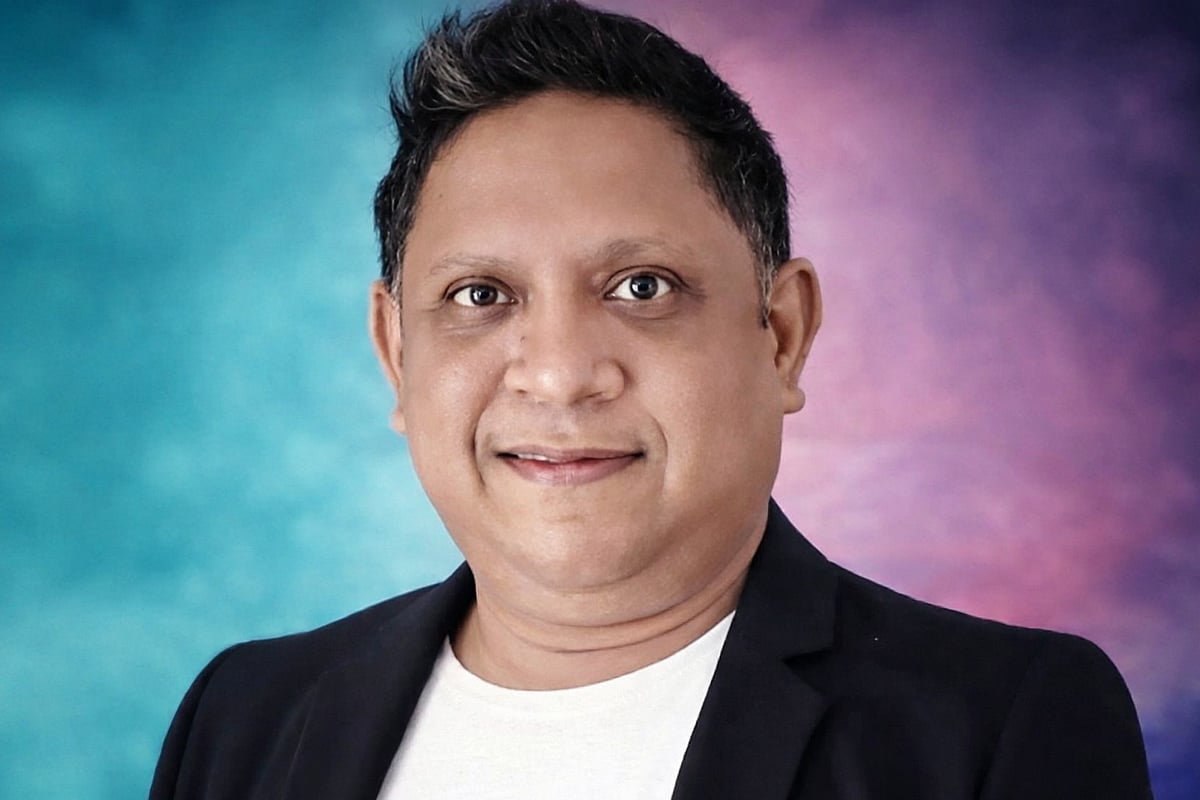
In a conversation with Rahul Agarwalla, Managing Partner at SenseAI Ventures, Sheryll D'Souza explores AI’s multi-trillion-dollar opportunity. |
Artificial Intelligence (AI) is rapidly reshaping industries, investments, and job dynamics globally, with India emerging as a key player in the applications layer of the ecosystem. As capital flows intensify and enterprises accelerate adoption, questions around jobs, productivity, and long-term value creation are gaining prominence. In this conversation, Sheryll D'Souza speaks with Rahul Agarwalla, Managing Partner (SenseAI Ventures), to decode investment trends, India’s positioning, and how AI is redefining business models, workforce structures, and innovation in 2026 and beyond.
AI investments are being described as a multi-trillion-dollar opportunity. How do you see this evolving?
Over the last few years, more than $1 trillion has already been deployed into AI globally, with nearly $800 billion invested just last year. We expect 2026 to take this further, with investments accelerating towards multi-trillion levels by the end of the decade. A significant portion of this capital is going into infrastructure—data centres and foundational layers—while applications continue to emerge as the real drivers of value creation.
Is this an AI 'gold rush' moment, or is the growth sustainable?
This is not just a short-term surge. Historically, every major technological shift—from electricity to the internet—has followed a similar pattern. Large capital investments build infrastructure, but long-term value is created at the application layer. That is where innovation scales, and that is where India has a strong opportunity.
Has India missed the bus on AI, particularly in foundational infrastructure?
Not at all. While India may not dominate the infrastructure layer, it is extremely well-positioned in applications. Nearly 75% of startups we observed are focused on applications, and a significant share of capital is also flowing there. This is where capital efficiency is highest and where real value gets created.
Where exactly is the capital flowing within AI?
The AI ecosystem resembles a pyramid. At the base is infrastructure, where the highest capital—hundreds of billions of dollars—is deployed into data centres. Above that sits foundational AI, and at the top are applications, which solve real-world problems. While infrastructure absorbs large capital, applications ultimately capture the most value.
With rising capital, are mega funding rounds distorting the startup ecosystem?
Large funding rounds are becoming more common, especially in AI. However, capital alone does not determine success—innovation does. While access to capital is an advantage, companies that solve real problems effectively will always outperform those relying purely on funding.
There is concern that AI may reduce jobs, especially in coding. How do you view this?
This concern is understandable but often overstated. Interestingly, coding jobs actually increased in the US last year despite AI advancements. As technology lowers the cost of creating software, demand for software increases. This leads to more opportunities, not fewer. Jobs evolve rather than disappear.
So should AI be seen as a threat or a partner?
AI should absolutely be seen as a partner. It enhances productivity by automating repetitive tasks, allowing individuals to focus on higher-value work like decision-making and creativity. It also democratises access—people with great ideas but limited technical or language skills can now contribute more effectively. AI-native companies are scaling with fewer employees. What does this mean for a labour-rich country like India?
AI-native firms may operate with leaner teams, but they also create entirely new categories of work. As productivity improves, more software and services get created, which expands the overall ecosystem. Over time, this leads to more opportunities across sectors.
What is 'vibe coding,' and how is it changing software development?
Vibe coding essentially allows users to describe what they want, and AI builds it. You no longer need deep programming knowledge. This democratises software creation, much like smartphones democratised photography. The focus shifts from coding skills to product thinking and problem-solving.
How are AI agents changing business processes?
AI agents are automating workflows across functions—marketing, finance, sales and more. They can conduct research, compare products, negotiate deals and streamline operations. While decision-making remains human-led, execution is increasingly automated, improving efficiency across organisations.
Are Indian enterprises ready to adopt AI at scale?
Adoption is accelerating rapidly. Paid AI adoption in businesses has grown sharply in recent years. While companies initially struggled to build in-house capabilities, they are now increasingly adopting solutions developed by specialised startups. This has driven strong revenue growth in the ecosystem.
What trends are emerging in the startup ecosystem?
Enterprise AI solutions have led the growth so far, particularly in SaaS. However, we are now seeing a strong emergence of consumer-focused AI startups. Given India’s diverse and large population, there is immense potential to build solutions tailored to local needs across sectors like education, healthcare and agriculture.
How does India compare globally in AI ecosystems?
Bengaluru remains the leading AI hub in India, with a strong concentration of talent and startups. Mumbai and Delhi are also emerging with distinct strengths—fintech in Mumbai and consumer businesses in Delhi. Over time, we expect multiple specialised clusters to develop.
Finally, how much do you expect India to spend on AI in 2026?
Venture capital investment in applications could reach $3–4 billion this year. Infrastructure investments, particularly in data centres, are expected to run into tens of billions, with long-term commitments exceeding $200 billion. Overall, India’s AI investment trajectory is firmly on a high-growth path.
RECENT STORIES
-
-
-
-
-