Union Budget 2026 Public Speaks: Residents Welcome Price Cut In Cancer Medicine, But Demand Broader Healthcare Reforms
The Union Budget 2026 drew mixed but largely positive reactions across sectors. Education experts welcomed higher funding and industry integration, while healthcare leaders praised support for infrastructure and domestic production.

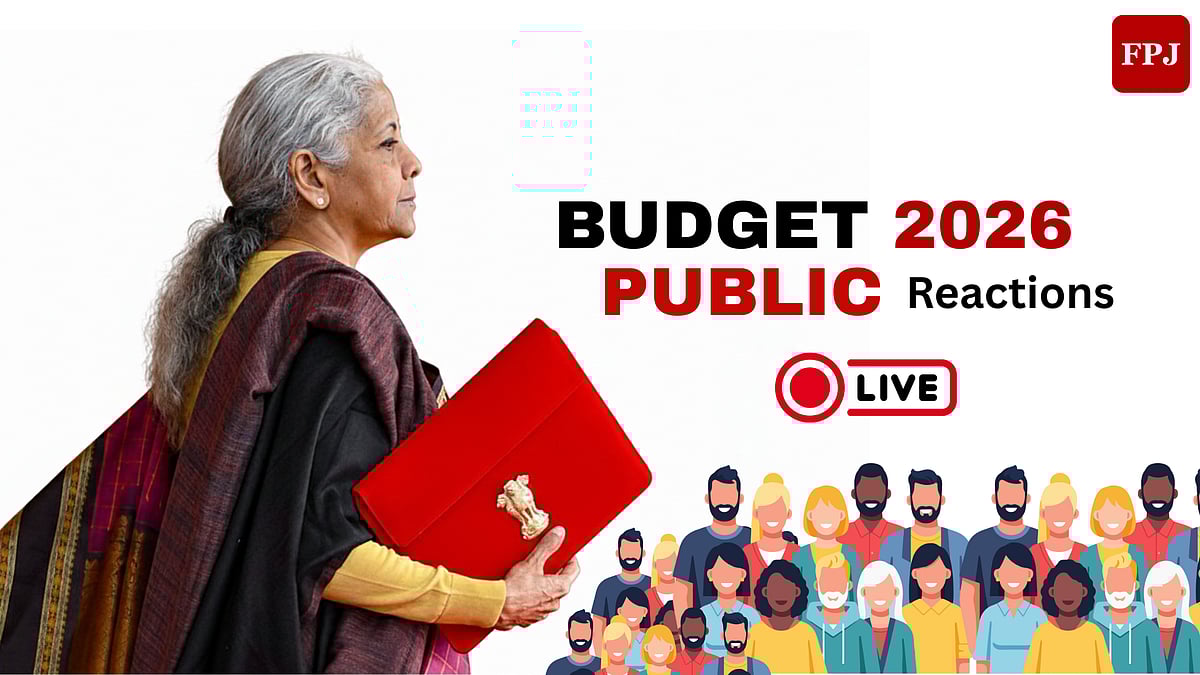
Bhopal/Indore (Madhya Pradesh): As Finance Minister Nirmala Sitharaman presented the Union Budget 2026 on Sunday, it drew a wide range of both-- positive and critical reactions.
People from different sectors shared their views with The Free Press.
Read LIVE reactions here:
Prof. Dr. Sonal Sisodia, Principal, Daly College of Business Management (DCBM)
The 8.27% increase in education funding to ₹1.39 lakh crore marks a strategic shift to break traditional silos, positioning education as a direct feeder system for the health, technology, and tourism sectors. By backing higher education with ₹55,724 crore and launching industry-integrated townships, the Budget ensures that academic learning is no longer isolated from economic demand. This alignment, combined with lower TCS for overseas studies, creates a seamless global pathway from the classroom to the workforce.
Deepti Shishodiya, Chartered Accountant; Director, V Care Hospital
The Union Budget 2026 - 27 reflects a balanced approach towards strengthening healthcare delivery while ensuring financial sustainability. The increased focus on hospital infrastructure, biopharma innovation, and skilled healthcare manpower will directly improve service quality and operational efficiency.
From a financial perspective, the emphasis on domestic production and organised expansion will help control costs and reduce dependence on imports. Overall, the Budget creates a positive environment for hospitals to grow responsibly while delivering affordable, high-quality patient care.
ALSO READ
Ratlam Financial Advisor Sanjeev Gaba
Ratlam Financial Advisor Sanjeev Gaba called the STT increases unexpected and unhealthy for the share market. Raising STT on Futures from 0.02% to 0.05% and on options premium and exercise from 0.1% and 0.125% to 0.15% respectively, will badly hit future and options activities. This is not a positive step, given the consistently high volume of futures and options in stock market activities.
Kar Salahkar Parishad secretary & tax consultant Rakesh Bhatewara
Kar Salahkar Parishad Secretary and Tax Consultant Rakesh Bhatewara welcomed raising the non-audit business return filing deadline from July 31 to August 31 as a practical step. He also appreciated extending the revised return deadline from December 31 to March 31, providing opportunities for taxpayers filing belated returns who previously lost revision rights. Both amendments take effect from returns for the year ending March 31, 2026.
Mandleshwar Tax Consultant Pritesh Jain
Mandleshwar Tax Consultant Pritesh Jain said Budget 2026 did not introduce major, surprising or slab-based relief measures regarding direct taxes. However, several changes were made to simplify the tax system and make it more equitable and taxpayer-friendly.
Measures including Income Tax Act reforms, increased ITR filing flexibility, relief for small taxpayers and TCS reduction are particularly significant. These changes will benefit the middle class and businesses long-term and enhance Indian tax administration transparency.
Dr. Deepak Nahar, MBBS
Dr. Deepak Nahar welcomed the Budget’s reduction in cancer medicine prices but emphasised the need for broader healthcare reforms. He urged the government to enact laws regulating hospital fees, diagnostic test rates, and doctors’ fees. Dr. Nahar stressed that legislative action in these areas is necessary and must be implemented.
Hitesh Thakur, President, Dhar Bar Association
Bar Association district president Hitesh Thakur stated that the 2026 Budget made motor accident claim compensation tax-free and provided concessions for international travellers. However, he noted that apart from these isolated measures, no major relief is visible. Thakur suggested this lack of substantial provisions most likely explained why the Sensex is reacted negatively to the Budget.
3. Darpan Mangal, Tax Consultant
Darpan Mangal said attention should have been given to GST. He welcomed the extended deadline for filing revised returns but noted that no changes were made to income tax, which he felt were necessary.
Nilesh Bharti, District BJP President
District BJP president Nilesh Bharti said the Budget is all-encompassing and will play a crucial role in making India a developed country by 2047. He stated that the Budget has taken care of all sections of society.
Swatantra Joshi, District Congress President
District Congress president Swatantra Joshi said the Budget is disappointing and fails to address farmers’ concerns or those of other sections of society. He found the education and health allocations particularly unsatisfactory, reflecting the government’s failure in these areas.
Manish Agarwal, Managing Director, Satya Group, and President, CREDAI Haryana, said that in the lead-up to the Union Budget 2026, the real estate sector had expected demand-side support, tax incentives, and reforms to ease project delivery and financing. While some expectations were not immediately addressed, he noted that the Budget’s clear commitment to reform - anchored in infrastructure-led growth, a focus on Tier-1 and Tier-2 markets, and a reforms-over-rhetoric approach - provides a strong foundation for sustainable sector growth.
Ankit Agarwal, Managing Director, Alankit Limited, said the Budget sends a reassuring message for the banking and financial services sector. The proposed high-level committee on banking reflects the government’s intent to prepare the sector for the next phase of growth while maintaining stability, inclusion, and customer trust.
Paritosh Ladhani, Joint Managing Director, SLMG Beverages, said the Budget reinforces a manufacturing-first “Make in India” approach, encouraging companies invested in domestic production and supply chains. The rise in capital expenditure to ₹12.2 lakh crore will improve logistics efficiency, distribution reach, and last-mile connectivity, directly benefiting beverage manufacturers.
Satyam Shivam Sundaram, Partner, Government and Public Sector, EY India, said strengthening allied healthcare professionals could transform India’s healthcare system. With only about 8.4 allied health professionals per 10,000 people—far below WHO benchmarks—expanding training, standardising certification, and improving deployment can significantly enhance access, especially in rural and underserved areas.
Amit Vatsyayan, Partner and Leader, Social & Skills Sector, EY India, said the Budget marks a shift from allocation-driven spending to acceleration-oriented reforms. The emphasis on high-value crops such as coconut, cashew, and walnuts signals diversification with strong income potential, subject to better quality control and value-chain integration.
Rahul Kakkad, Tax Partner, Consumer Products and Retail Sector, EY India, said the Budget offers a structural boost to the consumer, products, and retail sector by prioritising textiles, MSMEs, tourism, sports, and agriculture. He welcomed customs rationalisation and direct tax compliance simplification but noted that measures to boost disposable income and attract foreign investment were missing.
Vinay Rustagi, Chief Business Officer, Premier Energies, described the Budget as forward-looking, with a focus on long-term energy security and domestic manufacturing competitiveness. He said increased allocations of ₹27,000 crore for PM-Surya Ghar and KUSUM schemes would support domestic solar manufacturers.
Sudipta Mukherjee, Managing Director, Texmaco Rail & Engineering, said the Budget reinforces railways as a pillar of India’s infrastructure strategy. Announcements of seven high-speed rail corridors, a new Dedicated Freight Corridor between Dankuni and Surat, and a capital outlay of ₹2.65 lakh crore provide strong demand visibility for rail manufacturing and engineering.
Kirthi Chilukuri, Founder and Managing Director, Stonecraft Group, said the Budget’s emphasis on urban development, sustainable infrastructure, and climate-resilient growth supports innovative and human-centric design approaches. The focus on green infrastructure and long-term asset value, he said, enables responsible development where sustainability and economic value go hand in hand.
Rohit Chandra, Co-Founder and CEO, OMC Power, said the Budget reaffirms commitment to clean energy, power reliability, and last-mile infrastructure. Continued support for renewable energy, MSMEs, and infrastructure-led growth creates opportunities for decentralised and hybrid power solutions, strengthening inclusive and low-carbon economic development.
ALSO READ
RECENT STORIES
-
-
-
-
-