'Nari Shakti Vandan Adhiniyam Exists As Law But Political Will Remains Absent,' Says Hard-Hitting Critique
An editorial argued that revisiting the women’s reservation law in Parliament was unnecessary as the law already exists, and the real failure lies in parties not fielding enough women candidates. It said major parties have not matched the Act’s 33% spirit and urged voluntary quotas, especially from the BJP, to ensure immediate representation.

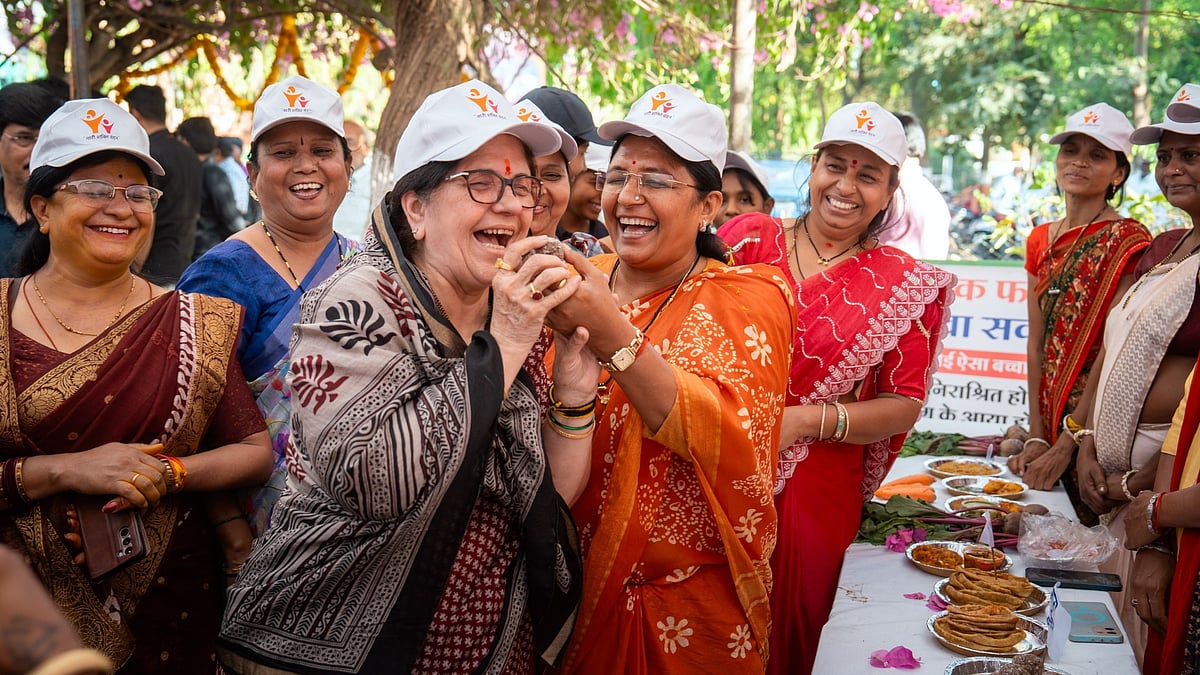
'Nari Shakti Vandan Adhiniyam Exists As Law But Political Will Remains Absent,' Says Hard-Hitting Critique | FP Photo
Technically, the Nari Shakti Vandan Adhiniyam—the historic Women’s Reservation Bill—already stands as a monumental pillar of Indian law. Passed in the Lok Sabha on September 20, 2023, and cleared by the Rajya Sabha the following day, the legislation was the fruit of a high-stakes, five-day Special Session of Parliament. The debate was exhaustive: sixty speakers rose in the Lok Sabha and seventy in the Rajya Sabha to champion a future where one-third of India’s legislative seats are held by women. As many as 454 MPs voted in favour; only two voted against it. When President Droupadi Murmu gave her assent on September 28, 2023, the constitutional circle was closed.
That point having been noted, there was not much point in the bruising legislative theatre seen in the Lok Sabha this past Friday. Revisiting a topic about nine hundred days after it had already received overwhelming assent stretches not only parliamentary resources but also credulity. It borders on the incomprehensible, considering it has already received presidential assent and become the 106th Amendment and serves little purpose other than fatuous performative politics. Let us be clear: the law exists; what is missing is the will to inhabit its spirit.
If we were to look at the subsequent 2024 general elections and the state polls that followed, the gap between parliamentary rhetoric and political reality is pretty cavernous. Despite the thunderous applause in 2023, none of the major national parties have fielded women candidates in numbers even remotely commensurate to the 33% spirit envisioned in the Act. In the 2024 Lok Sabha race, women made up a dismal and pitiful 10% of total candidates.
ALSO READ
Perhaps only the Trinamool Congress has consistently moved the needle, frequently hovering near or above the 33% mark in its nominations. For the rest, the "winnability" argument remains a convenient shroud for patriarchy or worse. Let us be equally clear also that there is nothing stopping parties from implementing a voluntary quota today.
Reforms, as the saying goes, perforce have to begin at home. A party’s candidate list is the truest reflection of its internal democracy and its commitment to social justice. Without wasting further time or ado, India’s political entities must put their money where their mouth is, starting with the BJP. As the governing party that steered this bill to assent, the burden of proof surely lies primarily with them. To champion a law for the future while maintaining a death grip on the status quo in the present is not leadership; it is a stall tactic. The 18th Lok Sabha has been seated, and the 19th is already on the horizon. The time for "technical" passage is over; the time for actual representation is right now.
RECENT STORIES
-
-
-
-
-