Delimitation Bill Would Have Imposed Crushing Financial Burden Of Over ₹11,000 Crore Annually On India's Economy
Concerns have been raised over the financial burden of the proposed delimitation plan, which could cost over ₹11,000 crore annually by expanding MPs and MLAs. Critics say the move, backed by National Democratic Alliance, risks straining public finances amid ongoing political debate.

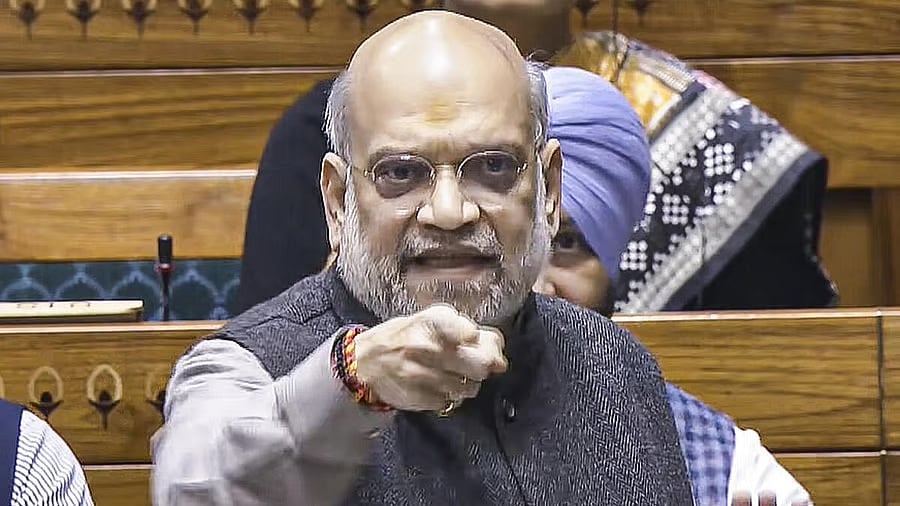
Delimitation Bill Would Have Imposed Crushing Financial Burden Of Over ₹11,000 Crore Annually On India's Economy | PTI Image
With Prime Minister Narendra Modi flaunting the halo of a new messiah for women and the Opposition gloating over its victory in the Lok Sabha by defeating the ruling NDA’s Delimitation Bill, nobody appears to be bothered about the financial catastrophe India has just escaped. The opposition parties may well have good reason to resist the ruling party’s bid to redesign the electoral college to its advantage in the guise of women’s reservation among elected representatives. But this political dispute appears to have quite overshadowed the complete financial lunacy of the threatened delimitation tamasha. Indeed, it underscores the complete callousness of our pampered elected representatives to those who elected them.
A closer examination of the financial load the Delimitation Bill sought to impose on the nation reveals what would have been a crushing blow to the economy. The actual cost of maintaining the new 273 members of parliament and 2000 state assembly legislators, arbitrarily imposed through proposed delimitation, adds up to an astronomic bill. India can ill afford such wasteful expenditure, particularly in these turbulent times of tariff wars and global conflict.
While it is impossible to calculate the exact amounts that the state exchequer would have to dole out for these extra representatives, even broad estimates based on their salaries, allowances, and entitlements are, to put it mildly, hair-raising.
After going through various sources, the annual obvious cost for each MP, including basic salary, allowances, perks, and official travel at work, home or abroad amounts to Rs 4.29 crore, which for 273 of these worthies would amount to a tidy Rs 1,171 crore annually. We have to then add rent-free bungalows or apartments in prime Delhi and free train and air travel for life for self and family, along with free medical for life for self and family. These amount to a conservative estimate of Rs 60 lakh annual benefit, which amounts to Rs 164 crore for the additional 273 MPs. Finally, there is the whopping 5 crore annual amount doled out under the MPLAD scheme for each MP to do as he will in his own constituency. This amounts to a mind-boggling total amount of Rs 1899 crores. Which means that the total amount the government will have to find every year for the new members of Parliament alone would be a minimum Rs 3234 crore.
For the 2000 new state legislators the cost will, of course, magnify because of the vast numbers, although slightly mitigated because of lesser salaries and allowances at the assembly level. Broadly, the annual cost for salaries, perks, and official travel at home or abroad for all the state legislators, amounts to Rs 3500 crores. Rent-free houses and apartments in prime areas of state capitals across the country and free train and air travel for life for self and family along with free medical for life for self and family are estimated to be around Rs 400 crores. Finally, the state legislators too have a scheme like the MPLADS which offers them up to 2 lakhs for each constituency, and this alone will cost the state exchequer Rs 4000 crores annually. We are, therefore, looking at spending each year an extra Rs 7,900 crore for the new expanded state assemblies.
We have still not considered several hidden costs. With extra expenditure by the central government as well as state governments on the council of ministers, especially in the cabinets of both, it would be obvious that additional funds would be required for 41 ministers in Delhi and 300 across state capitals all over the country. These are bound to further raise the cost of the back-breaking delimitation financial load by several hundred crores every year.
Then there is the infrastructural cost that has to be added to the Parliament in New Delhi and various state assembly buildings in different parts of India. The country’s capital has indeed a large, spanking new parliamentary edifice, but one is quite certain that the horde of 273 new Members of Parliament, including 40-odd ministers, will make costly demands to register their presence. In the states, the situation is even worse with no new buildings to accommodate the fifty per cent extra rush of legislators, and entire new edifices for them may have to be constructed. The crores spent on the delimitation will continue rising in spurts everywhere.
There is also reason to worry that if at some future date the delimitation bill is reintroduced and passed, there is bound to be pressure from the Rajya Sabha, which will be completely dwarfed by a giant Lok Sabha and will require it to be commensurately expanded. This will also hold true for the legislative councils attached to various state assemblies. One can well imagine the delimitation bill mounting higher and higher.
Interestingly, the entire budget allocation for the Ministry for Women and Child Development for the year 2025-26 is Rs 26,290 crores. It would be shameful if money spent on an arbitrary expansion of our elected representatives would rob around half the annual budget for women and child development. This is particularly ironical, considering the Modi government had sought to push through delimitation in the guise of welfare for women.
ALSO READ
The argument in favour of delimitation has been that with the population rising in leaps and bounds, our parliamentary and assembly constituencies have become far too large and unwieldly for the same number of elected representatives to manage. Unfortunately, judging by the history of Indian politics, most MPs and MLAs, barring a few honourable exceptions, have a dismal record on the ground of nurturing their constituencies. Nor is their performance in Parliament and state assemblies notable—much of it is spent in mudslinging by political rivals and very rarely debating bread-and-butter issues that concern the people they represent.
In fact, there is a good chance that a larger Parliament or state assembly could either lead to larger chaos as witnessed today or a total lack of debate if the BJP has its way in manipulating numbers to cram Parliament and many assemblies to completely outnumber the Opposition.
Senselessly increasing elected representatives and raising an impossible financial burden will not help Indian democracy. Instead, the MPs must stop being parasites and actually work for the people they represent.
The writer is a senior journalist.
RECENT STORIES
-
-
-
-
-