Two Miles To Supreme Court: Inside Firing Of Pam Bondi And Trump’s Growing Cabinet Crisis
The ouster of Attorney General Pam Bondi highlights a growing crisis within the Trump administration, as the president grapples with whether a controversial legal agenda or ineffective recruits are to blame for failing to prosecute his perceived political enemies

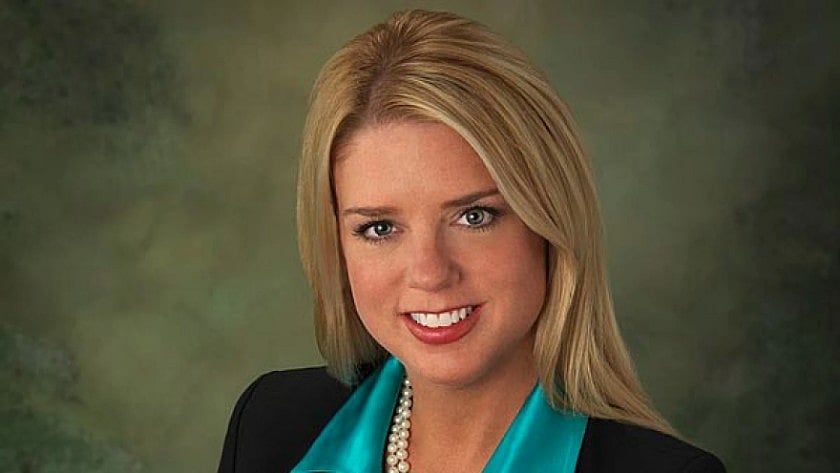
Pam Bondi | Wikimedia Commons
On April 2, 2026, the second Trump administration underwent its most significant tremor yet. Attorney General Pam Bondi was unceremoniously ousted during a two-mile limousine ride to the Supreme Court, ending a 14-month tenure defined by a desperate attempt to balance legal reality with presidential demand. Her departure—following closely on the heels of Homeland Security Secretary Kristi Noem.
What happened and who is involved?
The dismissal was delivered with the trademark suddenness of a reality TV exit. As reported by The Wall Street Journal, President Trump told Bondi, “I think it’s time,” while travelling in the presidential limousine known as "The Beast." The move was immediately formalised via Truth Social, where Trump praised Bondi as a "Great American Patriot" while simultaneously installing his former defence attorney, Todd Blanche, as interim Attorney General.
The fallout has been chaotic. While Bondi attempted to project a positive image—texting reporters that her next role in the private sector is "ALL so positive"—the reality within the Department of Justice (DOJ) is one of upheaval.
Career prosecutors had already been reeling from what The Guardian described as "large-scale firings" of staff deemed insufficiently loyal. Now, the department faces a leadership vacuum as Trump weighs permanent replacements, with EPA Administrator Lee Zeldin emerging as a frontrunner despite having limited legal experience outside the JAG Corps.
Why did the president lose confidence?
The relationship between Trump and Bondi soured over a "steady drip of frustrations" rather than a single event. According to reports, the friction centred on two primary failures in the president’s eyes.
Bondi initially excited the Trump base by suggesting she had a "client list" related to Jeffrey Epstein on her desk. When the DOJ later argued against the release of certain files—calling them "child pornography that nobody wants to see"—Trump felt she was protecting his enemies and keeping his own past association with Epstein in the news.
Trump’s impatience was frequently made public. In September 2025, he accidentally posted a private message to Bondi on social media, urging her to charge former FBI director James Comey and Senator Adam Schiff, writing, “We can’t delay any longer, it’s killing our reputation.” Bondi’s inability to secure sustainable indictments against these "political enemies" was seen by Trump as a lack of "bulldog" aggression.
Is the problem the agenda or the recruits?
The 'Bondi experiment' highlights a fundamental conflict in the administration's DNA. Critics, including Senate Minority Leader Chuck Schumer, argue that the agenda itself is the problem. They contend that using the DOJ as a "tool for revenge" creates a structural impossibility for any Attorney General. The law simply does not support the personal vendettas the president demands. Even when Bondi hung a giant banner of Trump’s face on the DOJ building, her "weak probes" into his targets were frequently blocked by judges for lacking evidence.
Conversely, the issue might be the recruitment itself. Trump’s first choice for the role, Matt Gaetz, was derailed by misconduct allegations. Bondi was a 'trusted fallback' that Trump liked but lacked the ruthless execution he required. As Trump now looks toward figures like Zeldin or even Jeanine Pirro, he appears to be doubling down on a recruitment strategy that prioritises media-savvy loyalty over the ability to handle the complex bureaucracy of federal law.
How does this affect the broader cabinet?
The "thin ice" is not limited to the Justice Department. Recent reports from Politico and The Guardian indicate that Trump is "very angry" with several other high-ranking officials. The administration is currently contending with concerns over DNI Tulsi Gabbard’s refusal to condemn former aides and Defence Secretary Pete Hegseth’s handling of classified data.
Labour Secretary Lori Chavez-DeRemer is facing a workplace conduct investigation, while Commerce Secretary Howard Lutnick has reportedly disappointed the president on performance metrics.
Trump recently quipped to Press Secretary Karoline Leavitt that she was doing a "terrible job" in the face of negative media coverage.
Where does the administration go from here?
This high-level shuffling represents a "major attempted reset" for an administration facing low approval ratings and an ominous midterm election forecast.
By removing Bondi and Noem, Trump is signalling that "loyalty" is no longer the only metric. It is "results"—measured by the successful prosecution of adversaries and the silencing of scandals like the Epstein files—are the new requirement.
However, as The Guardian points out, firing Bondi may backfire by inviting renewed scrutiny into the very files she was accused of mismanaging. With the House Oversight Committee still expecting Bondi to testify under oath on April 14, her exit from the cabinet may only be the beginning of her time in the headlines.
Published on: Friday, April 03, 2026, 06:18 PM ISTRECENT STORIES
-
-
-
-
-